The 8 Best Receivers
Updated by · How we research

Stereo and five- to nine-channel receivers compared on honest power ratings, gaming inputs and room correction. The Denon AVR-X1700H suits most living rooms. When users buy our independently chosen editorial picks, we may earn commissions to help fund the Wiki.
The two numbers on a receiver, like 7.2, count powered speakers and subwoofer outputs, and that first number decides how much surround and overhead sound you can run. Power ratings deserve the same care, since some brands quote one channel at a time. This list covers home theater receivers for most budgets, plus one stereo model for music lovers.


Editor's Notes
October 23, 2026, by Ezvid Wiki Admin:
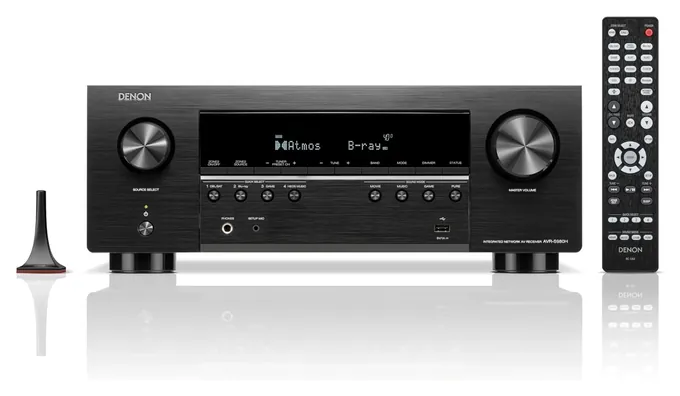
The Denon AVR-X1700H moves to the top because it gives an ordinary living room seven channels, Dolby Atmos and modern gaming inputs without flagship money. Nothing from the old list survived. The Denon AVR-X6700H, Denon AVR-X4700H, Marantz AV SR5015, Integra DRX-7.1, Denon AVRA110GS Limited Series, Pioneer Elite VSX-LX104, Sony STR-DN1080 and Yamaha RX-V685 have been discontinued or replaced, and the Yamaha Aventage CX-A5200 and Marantz AV7705 are preamp-processors that need separate amplifiers, which few readers want.
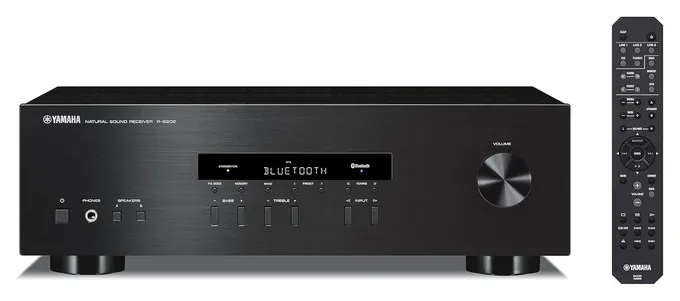
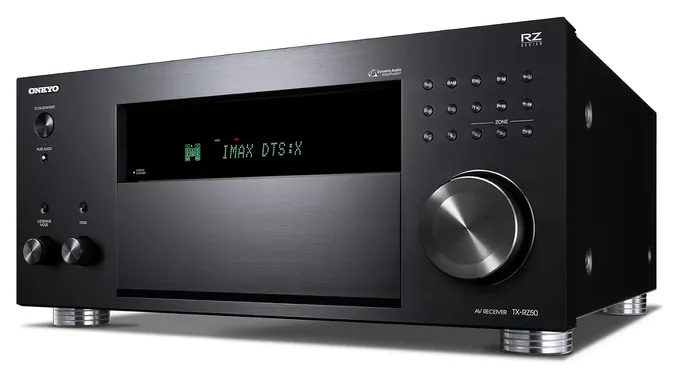
Readers mostly ask about stereo, 5.1 and 7.1 receivers, so the new list runs from the Yamaha R-S202BL for music up to the nine-channel Onkyo TX-RZ50. We wanted Denon's AVR-X1800H, the X1700H's successor, but couldn't confirm a current price for it, so it's named here rather than ranked.
Power claims were the hardest part. Sony's figure counts one channel at 6 ohms, while Denon's counts two channels across the full audio range, so we read every rating for its test conditions before comparing. We weighed those specs against What Hi-Fi, CNET and Wirecutter's picks, specialist dealer guides and a recall check for every brand.
November 10, 2020:
The big advancement in AV receivers since our last visit to the ranking has been multiple brands' realization that they need to start preparing for the eventual 8K revolution. While there are precious few ways to even shoot video in 8K, let alone display it properly, savvy consumers interested in future proofing would do well to consider models like the Denon AVR-X6700H or the Marantz AV SR5015. It is important to note that most of the 8K-capable receivers out there only offer a single 8K HDMI input and output, so once you have a streaming box, cable box, and game system that can all put out 8K, you'll want to upgrade, but that's a long ways out.
For media nuts on a budget, we included the Yamaha RX-V685 from our previous ranking and upgraded the Sony we'd had to the Sony STR-DN1080. As a result, we don't have a single 5.1 receiver on this list, but the advances in features and sound quality when you start going up in channel number lost them a shot to be included. Fortunately, we do have a 5.1 receivers list already.
Keep an eye out for how your speakers will be connected, as well. Some units, like the Yamaha Aventage CX-A5200, utilize XLR cables, which are certainly a little more unwieldy than regular speaker wire, but that have the advantage of a reverse signal pathway that cuts down on noise and lets you maintain fidelity over a greater distance. Others have wireless capabilities with their company's surround sound satellites.
May 22, 2019:
Compared to our last ranking, 100 percent of our previous selections have been replaced, as each of the brands we included last time around have seen upgrades. In some cases those upgrades are less obvious than in others. The Onkyo RZ810, for example has been replaced with the 830, and the newer version has a slightly different balance in its watts per channel depending on the speakers you employ, and it now can be used as a hub for a household Sonos system. Other than that there aren't a lot of changes. The differences between the Yamaha 683 and 685 are similarly minimal. Conversely, the Yamaha 1080 has added support for an additional subwoofer to enhance the bass in your home theater, and they've interestingly taken away an HDMI input, presumably out of respect for the fact that cord cutters are consolidating the number of input devices they use.
Special Honors
Marantz Cinema Series Marantz shares parts and setup software with Denon but tunes its receivers for a warmer sound and gives them a curved front with a porthole display. The Cinema line runs from slim models for small rooms to big nine-channel units, and the upper models offer Dirac Live as an upgrade. They cost more than comparable Denons, which is why they sit here rather than on the list. marantz.com
Arcam AVR Series Arcam, a British maker now part of Harman, builds high-end receivers such as the AVR5 with Dirac Live room correction included and a reputation for clean, detailed sound. They're priced well beyond most living-room budgets and are sold mainly through specialist dealers. arcam.co.uk
Reading 5.2, 7.2 And 7.2.4
A third number, used with Dolby Atmos, counts height speakers, either in the ceiling or firing up from the top of your front speakers.
The first number is how many speakers the receiver can power. The second is how many subwoofer outputs it has. A third number, used with Dolby Atmos, counts height speakers, either in the ceiling or firing up from the top of your front speakers. So 5.1.2 means five main speakers, a subwoofer and two heights.
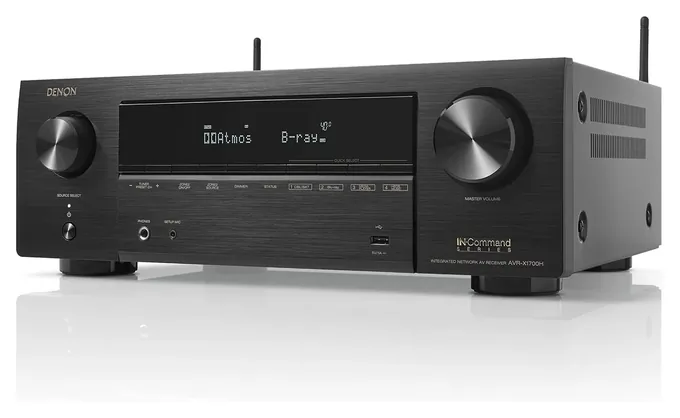
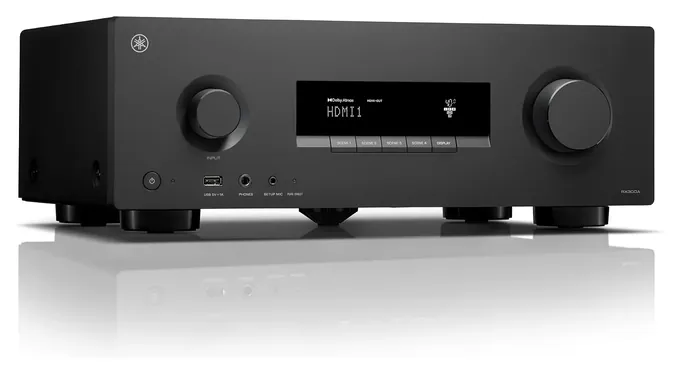
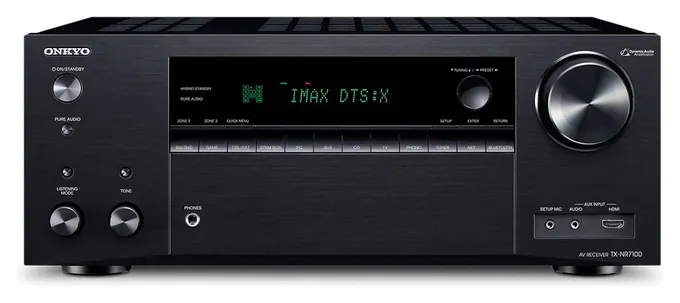
The catch is that height speakers need their own amp channels. A five-channel receiver like the Yamaha RX300A can play Atmos only as 3.1.2: left, center, right and two heights, with no rear surrounds. A seven-channel model such as the Denon AVR-X1700H can run 5.1.2. For a real overhead effect, the guide at easyhometheater suggests at least a 5.2.4 layout, which takes a nine-channel receiver like the Onkyo TX-NR7100 or an external amplifier.
If you don't plan to add height speakers, Atmos adds little, and a plain 5.1 setup in a small room is still a big step up from a TV's own speakers or most soundbars.
Watts On Paper, And What Your Room Needs
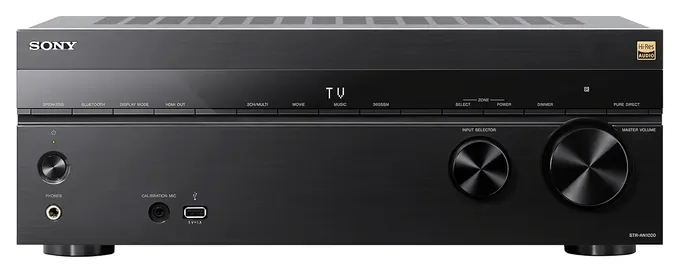
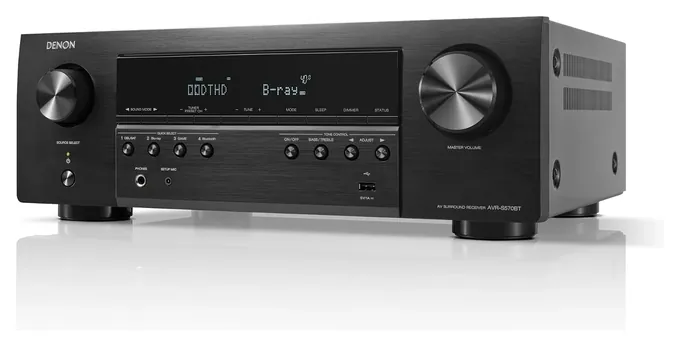
Receiver power figures are hard to compare because makers measure them differently. The useful version is watts per channel into 8 ohms, across 20 Hz to 20 kHz, with two channels driven at low distortion. Denon rates the AVR-S570BT at 70 watts that way, according to Celsus Sound. Sony's 165-watt figure for the STR-AN1000 is measured at 6 ohms, at a single frequency, with one channel running, which flatters it. Ignore any "1,000 watts peak" claim altogether.
For most living rooms, around 75 watts per channel is plenty, which is also easyhometheater's suggested minimum. Speaker sensitivity matters as much as watts: efficient speakers play loud on little power.
Check that your speakers' impedance suits the receiver, since many models ask for 6 ohms or more. Give the receiver open air above it, don't stack gear on top, and twist speaker wire ends so no stray strand touches the next terminal. A short can trip the protection circuit or damage the amp.
HDMI 2.1, eARC And Room Correction
HDMI 2.1 matters if you game. A PlayStation 5, Xbox Series X or gaming PC needs it for 4K at 120 frames per second and variable refresh rate. Count how many inputs support it: all four on the Denon AVR-S570BT do, while some receivers reserve it for two or three. 8K video barely exists yet, so it shouldn't decide a purchase.
The receiver's HDMI output should support eARC, and so should the TV input you plug it into. That link is what carries full-quality surround sound, including Atmos, from the TV's own streaming apps back to the receiver.
Room correction uses a small microphone to measure each speaker at your seat, then sets distances, levels and equalization. Denon and Marantz use Audyssey, Yamaha uses YPAO, and Sony has its own system. Dirac Live, which the Onkyo TX-RZ50 includes, is the most capable of these, and high-end Marantz and Denon models offer it as an upgrade, as World Wide Stereo explains in its guide.
How we researched this
We compared 16 stereo and AV receivers from Denon, Sony, Yamaha, Onkyo, Marantz and Pioneer, read each maker's specs with attention to how every power rating was measured, and checked them against picks from What Hi-Fi, CNET, Wirecutter and Crutchfield, reviews and guides from Celsus Sound, easyhometheater and World Wide Stereo, and recall records from the U.S. Consumer Product Safety Commission, which list no receiver recalls for these brands. No independent lab measurements of power or distortion were available to us for these models, so the order rests on published specs and reviews.
Sources (8)
Frequently asked questions
What do 5.1, 7.2 and 7.2.4 mean on a receiver?
The first number is main speakers, the second is subwoofers, and a third, if there is one, is Atmos height speakers. A 7.2 receiver powers seven speakers and has two subwoofer outputs.
Do I need Dolby Atmos?
Only if you'll add height speakers, either in the ceiling or up-firing modules on top of your front speakers. Without them, Atmos tracks still play, but you lose the overhead effect.
Is an AV receiver or a stereo receiver better for music?
If you only listen to music on two speakers, a stereo receiver like the Yamaha R-S202BL is simpler and puts its money into two channels. Choose an AV receiver if the system also serves a TV.
Do I need HDMI 2.1 or 8K?
HDMI 2.1 matters for 4K gaming at 120 frames per second and variable refresh rate. 8K content is rare, so treat 8K support as a bonus, not a reason to buy.
Can I plug a turntable into a receiver?
Only if it has a phono input or the turntable has a built-in preamp. None of the receivers on this list has a phono input, so most record players need a separate phono preamp.
Can I use any speakers with a receiver?
Check the impedance. Most receivers work with 6- to 8-ohm speakers, and some 4-ohm speakers can make an amp run hot or shut down at high volume.