The 9 Best Refrigerant Recovery Machines
Updated by · How we research

Nine portable recovery machines for HVAC and car A/C work, compared on A2L approval, speed, weight and warranty. The Fieldpiece MR45 leads for field techs. When users buy our independently chosen editorial choices, we may earn commissions to help fund the Wiki.
New home heat pumps now run on mildly flammable A2L refrigerants such as R-454B, and a recovery machine has to be rated for them, because an ordinary motor can spark. This list covers portable machines for HVAC technicians and car shops, from light A2L units to proven R-410A workhorses and a complete car A/C kit.


Editor's Notes
October 23, 2026, by Ezvid Wiki Editors:
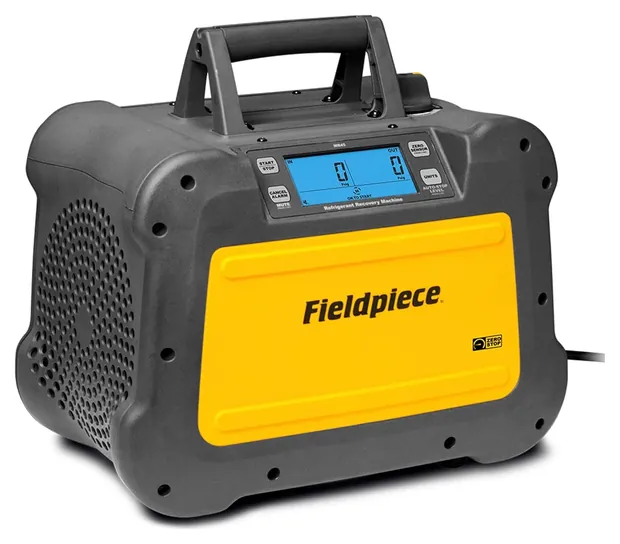
The Fieldpiece MR45 stays on top, but for a new reason. New residential systems have moved to mildly flammable A2L refrigerants like R-454B, so a recovery machine now needs its maker's A2L rating, and the MR45 has one along with a light frame and a brushless motor. For this update we went through each maker's spec sheet and A2L statement, ACHR News coverage of the first A2L-ready tools, EPA's equipment certification rules, and an HVAC School race between two popular twin-cylinder machines.
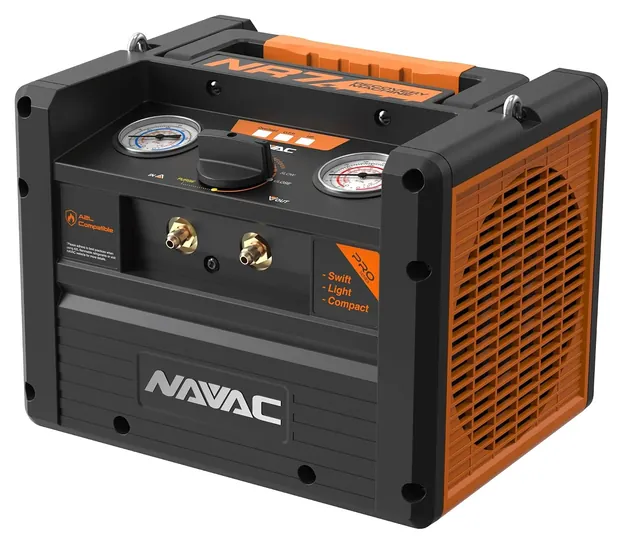
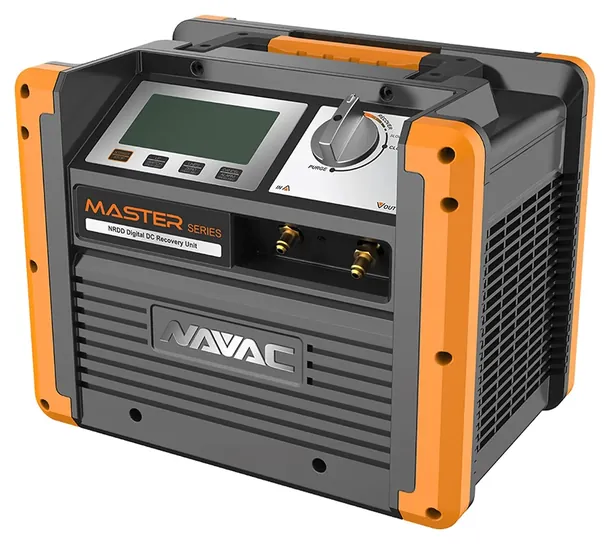
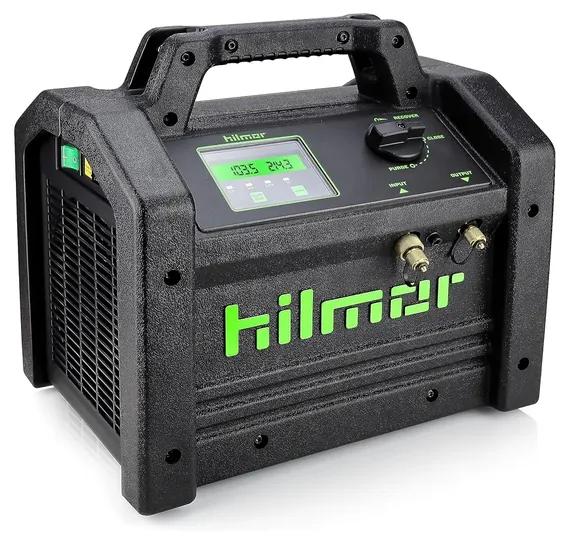
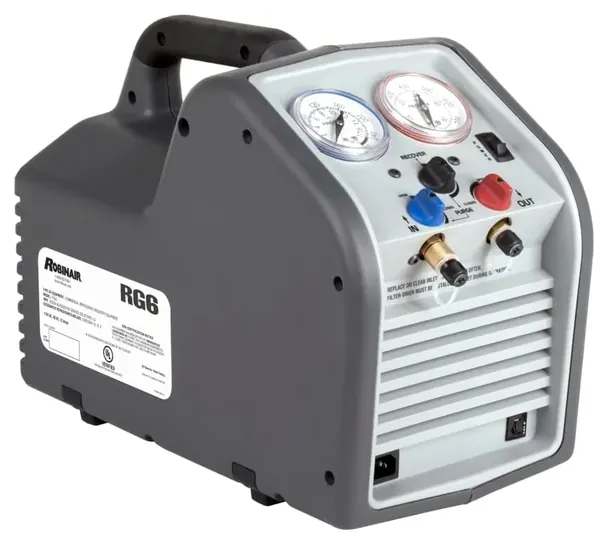
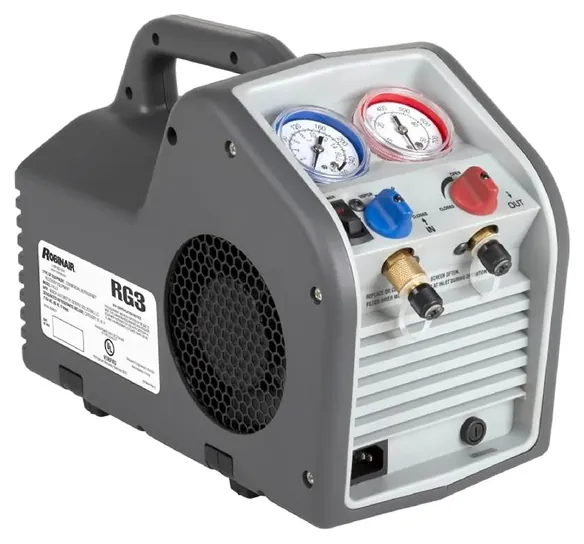
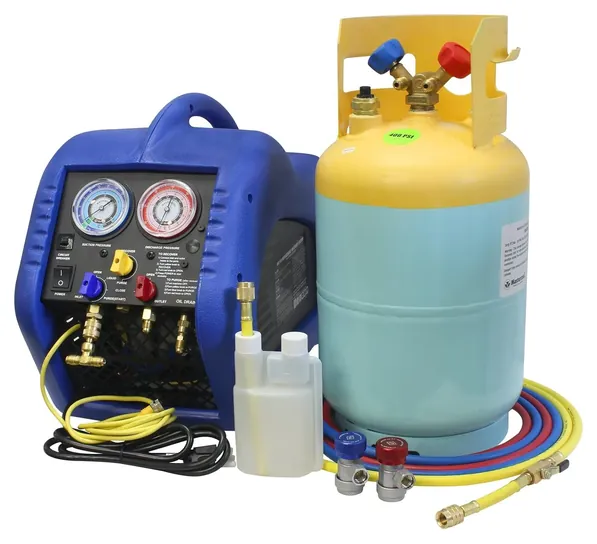
New to the list are the NAVAC NR7, the NAVAC NRDD, the Hilmor 1950536 and the Robinair RG3. The Robinair RG6 and RG3 have no A2L rating, so they're here for techs who still mostly work on R-410A and older refrigerants. The Mastercool 69110 stays as the car A/C kit.
We dropped the Robinair Premier, which is a full recover-recycle-recharge station rather than a portable machine, the Bacharach Stinger, which is no longer made, and the DreamJoy LRR-1A, which is no longer available. The old Yellow Jacket XLT entry had no current price, so Yellow Jacket's newer recovery machines now sit in special honors. We also passed on several cheap no-name machines that say they handle flammable refrigerants but carry no certification mark we could find.
Earlier notes
January 27, 2021, by Kaivaan Kermani:
I was fairly satisfied with the selections from the previous update, and I've left them as they were. Unlike with refrigerant identifiers, recovery machines tend to be less discriminating in terms of which coolants they'll work with, and while some may be designed for R134a-only use in automotive applications, many models, especially the portable ones, will be suitable for all of the most common CFCs, HFCs and HCFCs, like R12, R22, R134, R407C and R410A; though, you’ll need a different kind of unit for flammable HFO and HC refrigerants, like R1234yf.
While the Robinair Premier is in fact an RRR (Recovery, Recycling & Recharging) machine – which is why it’s so large- most of these models are recovery-only machines, though, if you are looking for an RRR machine, both Robinair and Mastercool make some state of the art ones with user-friendly interfaces.
January 8, 2020, by Will Rhoda:
During this round of updates, we determined that our previous selections for this category were all still applicable, and we added the Mastercool 69110 to our rankings – a 1/2-horsepower offering that comes with just about everything you'll need to get started on your refrigerant recovery, including a 30-pound, liquid-propane tank and three hoses. We also added two new special honors pointing toward companies that specialize in top-end equipment – primarily for the benefit of established mechanic-shop owners and extreme gearheads who don’t mind paying significantly more to get the best of the best.
You’ll notice a lot of commonalities between many of our choices for this wiki, but there’s some important differentiators to keep an eye out for as well:
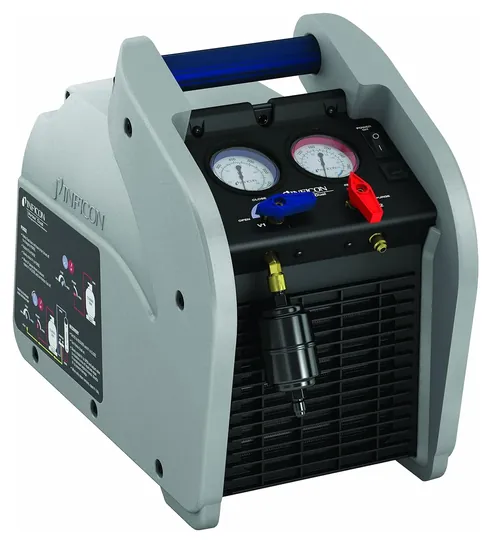
Power: This rating speaks directly to a given model’s extraction speed, which in turn will speak directly to your job efficiency and thereby your bottom line, so pay close attention to this. Basic models like the Yellow Jacket XLT and DreamJoy LRR-1A feature 1/2-horsepower compressors, but others like the Bacharach Stinger and Inficon Vortex boast stronger, single-horsepower equipment. Larger models built for industrial use often include multiple-horsepower compressors in their designs.
Control and Display: While our last point was a utilitarian consideration, this one’s all about user experience (not that it comes without its own intrinsic, practical merits). While none of our selections for this category (perhaps with the exception of the Robinair Premier) should be terribly difficult to figure out control wise, fans of minimalist designs and good-old-fashioned simplicity might have their interests sparked by options like the Bacharach Stinger – which feature single-knob control. Similarly, while most users won’t have trouble keeping up with the oil-filled gauges that seem to be standard issue in this category, digital-readout fans will likely be interested in choices like the Fieldpiece MR45 – which include LCD screens.
Portability: Most of our rankings for this category have sensible carrying handles built into their housings, but some are 50% heavier than others, so be mindful of each model’s product weight prior to purchasing. One exception to this is the Robinair Premier, but it’s lack of handle is easily compensated for by its castors and tires. The Bacharach Stinger, DreamJoy LRR-1A and Inficon Vortex take their portability a step further by coming with a convenient carrying strap.
Special Honors
Yellow Jacket Yellow Jacket's TurboRecover and HORNET RecoverXLT machines are sold mostly through HVAC supply houses. The company lists them among its A2L-compatible service tools, along with gauges and cylinders for the newer refrigerants. yellowjacket.com
Robinair AC1234-9 Busy car shops that service R-1234yf systems use a full station rather than a portable machine. Robinair's AC1234-9 recovers, recycles, evacuates and recharges in one cart, with a touchscreen and a built-in refrigerant identifier. robinair.com
RefTec International Systems This Florida company builds recovery and reclaim equipment for commercial and industrial work, including low- and medium-pressure units for chillers and recovery-recycling systems that go well past what a portable machine can handle. reftec.com
A2L Refrigerants Changed What To Buy
Brushless DC motors are the usual route to a spark-free design, and sealed electronics and covered switches finish the job.
Since 2025, new home air conditioners and heat pumps in the U.S. have largely moved to R-454B or R-32. Both are A2L refrigerants: mildly flammable, unlike R-410A and R-22. A spark from a brushed motor, a relay or a switch can ignite them in the right mix, so a recovery machine for this work needs to be designed and listed for A2L use. ACHR News explains why the machine choice matters, and its roundup of A2L-ready tools names machines from Fieldpiece, NAVAC, Yellow Jacket and Mastercool.
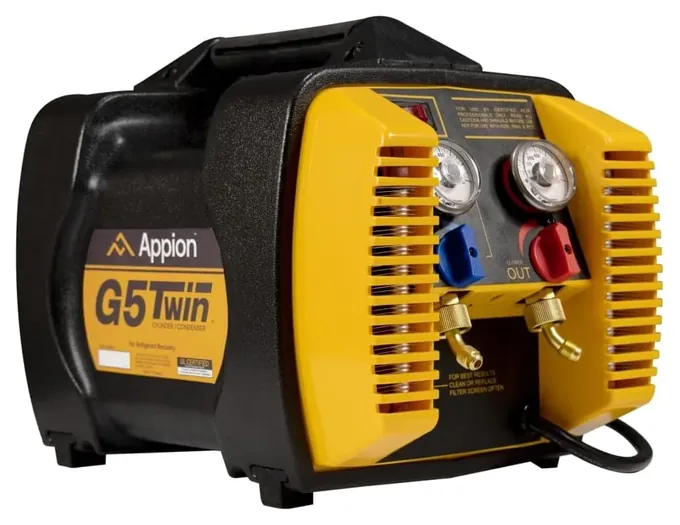
Look for the maker's own statement and a certification mark, not just a refrigerant name in a product title. Brushless DC motors are the usual route to a spark-free design, and sealed electronics and covered switches finish the job. A2L recovery cylinders are different too: they have left-hand valve threads and a red band or top. None of these machines is meant for propane or other A3 hydrocarbons, and both Fieldpiece and Appion say so.
If you only service older R-410A and R-22 systems, an A1-only machine still does the job and often costs less. Just keep it off A2L equipment.
Speed, Weight And Cylinders
Recovery speed depends on the refrigerant, whether you're moving liquid or vapor, the hoses and the outdoor heat, so maker ratings only compare fairly within the same conditions. Liquid moves many times faster than vapor. NAVAC, for example, rates the NR7 at about 12 pounds a minute on direct liquid and 17 in push-pull mode, but only about half a pound a minute on vapor. Push-pull, which uses the machine to pull liquid out of the system with the tank's vapor pressure, is the fastest way to clear a big charge.
Twin-cylinder machines move more refrigerant than single-cylinder ones and suit larger systems. A single-cylinder unit is lighter and cheaper and makes sense for appliances, window units and small splits. ACHR News also suggests weighing the machine against where you work: 20-some pounds is easier on a ladder than 30. Self-purge, which clears refrigerant out of the machine at the end of a job, saves time and keeps you from mixing refrigerants on the next one.
Check the high-pressure shutoff too. Most machines stop around 550 to 560 psi, which protects the machine and the cylinder if a valve is left closed or the tank gets hot.
Using A Recovery Machine Legally And Safely
In the U.S., venting most refrigerants is illegal, and technicians need EPA Section 608 certification to handle them on stationary equipment. The recovery machine itself must be certified by an EPA-approved testing organization such as AHRI or UL to the AHRI 740 standard, and the certification label belongs on the machine (EPA). Car A/C work falls under Section 609 and its own SAE standards.
Fill a recovery cylinder to no more than 80 percent of its capacity, use a float switch or a scale, and check that the cylinder's hydrostatic test date is current. Never mix refrigerants in one cylinder. Recovered refrigerant can go back into equipment owned by the same customer; otherwise it goes to an EPA-certified reclaimer (EPA service rules).
Change the inline filter-drier often, since debris and acid from a burned-out compressor will wear the recovery compressor fast. Cooling the cylinder, even with a bucket of ice water, speeds recovery on hot days. Purge the machine before switching refrigerants, and use a heavy enough extension cord for AC-motor units.
How we researched this
We compared 18 recovery machines, read the spec sheets and A2L statements for the 9 finalists, used trade coverage from ACHR News and a timed HVAC School race, checked EPA's certification and service rules, analyzed owner feedback, and checked every brand against CPSC recall records.
Sources (16)
- Fieldpiece: MR45 recovery machine
- Appion: G5Twin features
- NAVAC: NR7 recovery unit
- NAVAC: NR7 spec sheet
- Hilmor: 1950536 brushless recovery machine
- Hilmor: A2L tools
- Robinair: RG6
- Robinair: RG3
- Yellow Jacket: A2L-compatible service tools
- HVAC School: recovery machine speed race
- ACHR News: cool new tools for A2L refrigerants
- ACHR News: recovering A2L refrigerants
- ACHR News: what to look for in a recovery machine
- EPA: recovery equipment certification
- EPA: stationary refrigeration service requirements
- CPSC SaferProducts
Frequently asked questions
What does a refrigerant recovery machine do?
It pumps refrigerant out of an A/C or refrigeration system into a separate recovery cylinder, so the gas isn't vented. It doesn't clean or recharge the refrigerant; that takes a recycler or a full recover-recycle-recharge station.
Do I need an EPA-certified recovery machine?
Yes, for work on stationary systems. The machine must be certified by an EPA-approved organization such as AHRI or UL, with the label on the unit. Owners no longer have to send EPA a form saying they have one.
Can I use my R-410A recovery machine on R-454B or R-32?
Only if the maker says the machine is A2L-compatible. Those refrigerants are mildly flammable, and an older machine's motor or switches can spark.
Can one machine recover different refrigerants?
Yes. Most handle R-410A, R-22, R-134a and similar refrigerants. Purge the machine and hoses between types, and never mix two refrigerants in one cylinder.
How long does a recovery take?
It depends on the charge, the outdoor heat and whether you're moving liquid or vapor. Liquid and push-pull recovery can take minutes; vapor recovery of the same charge takes much longer.
Which machine is best for car A/C?
A kit certified to SAE standards for automotive recovery, like the Mastercool 69110, for R-134a. For R-1234yf, shops usually buy a full recover-recycle-recharge station.