The 10 Best Rock Tumblers
Updated by · How we research

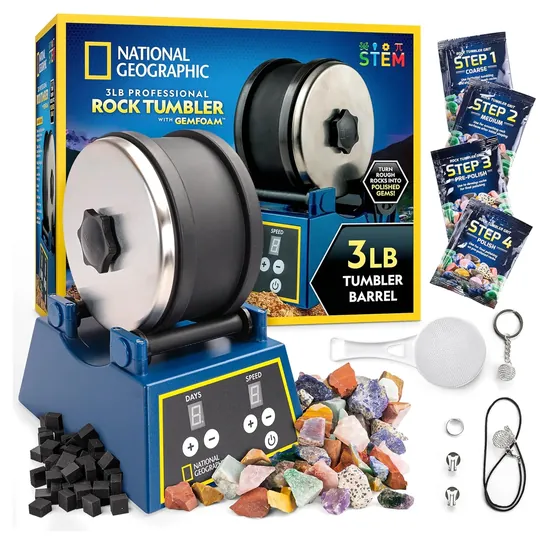
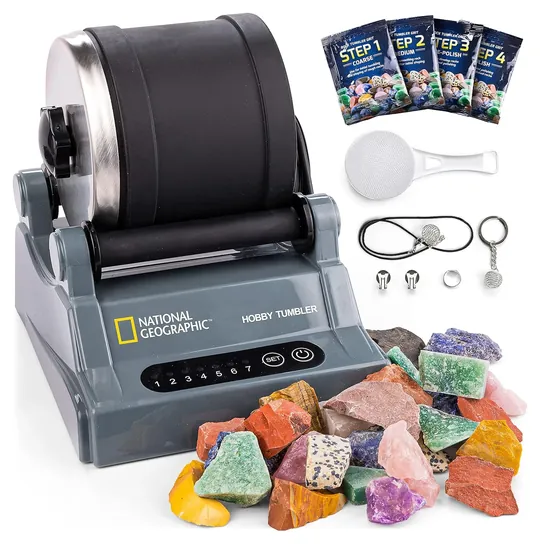
Ten rock tumblers for polishing stones and sea glass compared, from kids' kits to big hobby machines. The National Geographic 3 Lb. Kit suits most beginners. When users buy our independently chosen editorial selections, we may earn commissions to help fund the Wiki.
A rock tumbler needs about a month to turn rough agate or jasper into polished stones, running four grit stages of roughly a week each, day and night. Guides suggest a three-pound barrel for a first machine, since toy-size ones polish only a handful at a time. These picks cover kids, adult hobbyists, big batches and sea glass.


Editor's Notes
October 26, 2026, by Ezvid Wiki Editors:
The National Geographic 3 Lb. Kit takes the top spot. Its three-pound barrel is the size rockhound guides tell beginners to start with, and it comes ready to run with stones, grit, a timer and polishing foam. The old leader, the National Geographic Starter Kit, is gone; its small barrel makes it a lesser version of the National Geographic Hobby Kit, which stays as the pick for kids.
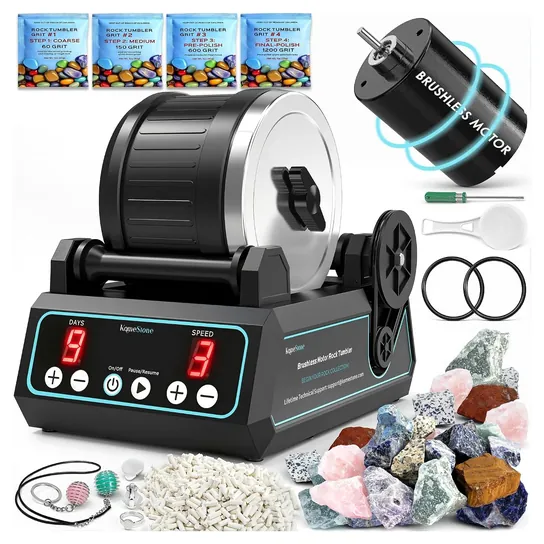
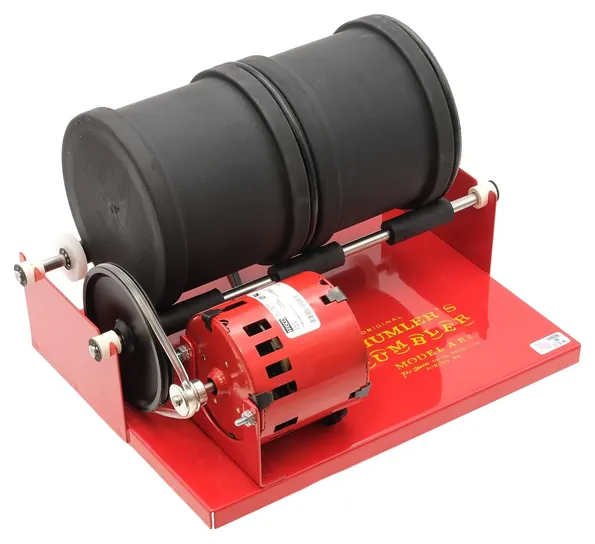
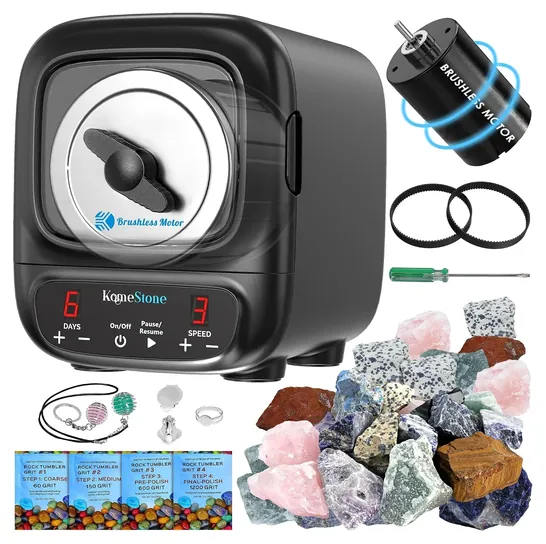
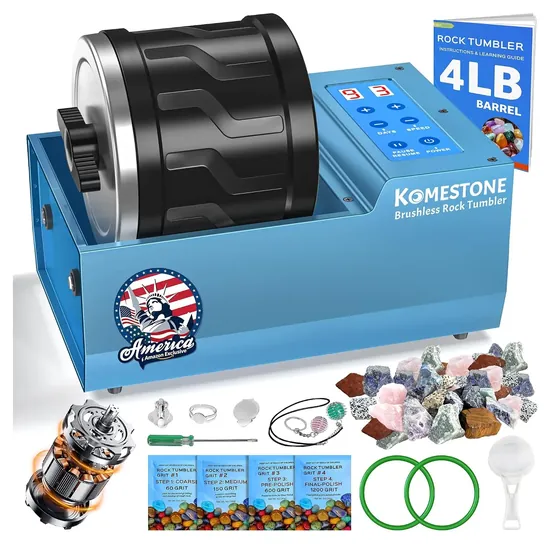
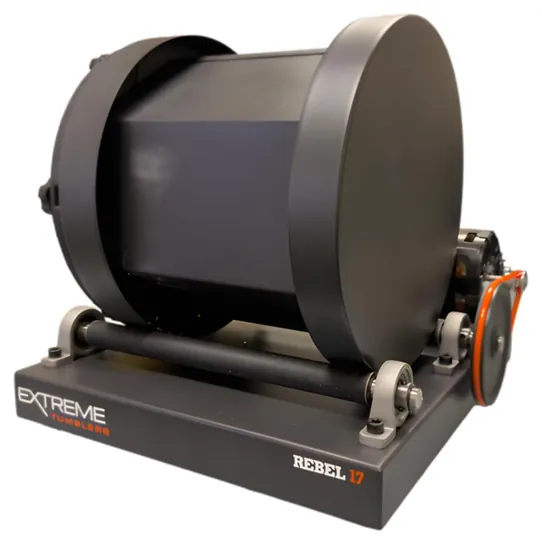
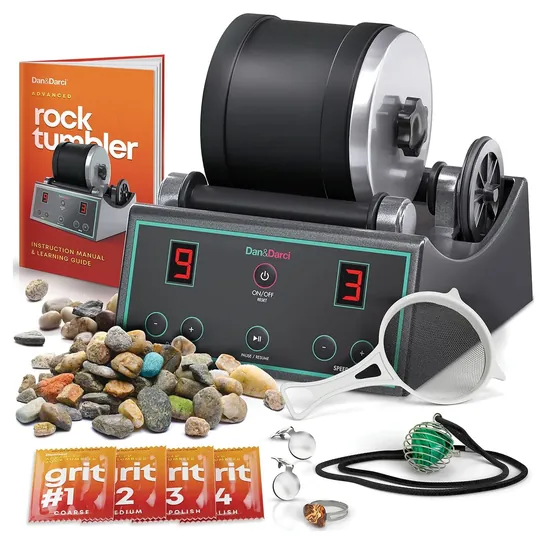
The Lortone 3A and Lortone 33B are out of stock where we link, and the Discover with Dr. Cool Pro is no longer sold, so they're off the list. Lortone still sells through lapidary dealers and now has a Special Honor. We cut the MJR Tumblers Commercial because its description contradicts itself about barrels and capacity. New are the KomeStone K1 Pro for adults starting out, the KomeStone K2 Elite for quiet, the KomeStone G1 for bigger loads on a budget, and the Extreme Tumblers Rebel 17 for very large batches. The Thumler's A-R2, Thumler's Model B, Raytech TV-5 and Dan&Darci Advanced stay.
No lab has measured rock tumblers, so we leaned on Thumler's and Diamond Pacific's published specs, the kit makers' parts lists, a craft site's side-by-side noise and handling comparison, two rockhound guides, and a Thumler's dealer's pages on sea glass and barrel gas.
Earlier notes
October 8, 2020, by Melissa Harr:
While you would think that a rock tumbler would be unbreakable and virtually foolproof — they're strong enough to work with hard rocks, after all — these are still pieces of machinery that require correct usage for a long lifespan. You should carefully read all instructions included with the unit before you start, paying attention to capacity and other specs. This can help you avoid costly breakages, such as occur when you forget to seal something correctly or overload the machine. The manual will also provide crucial safety information. Rock tumblers can run hot, for instance, so you need to be careful about where you keep one while it's running.
With that said, models from top names Thumler's, Lortone, and National Geographic still make great choices. Beginners, especially, might consider the National Geographic Starter Kit or the National Geographic Hobby Kit. Although the machine each comes with has a relatively small capacity, these kits provide an easy entrance into the hobby, and even arrive complete with tumbler grit. The Dan & Darci Advanced is also a full-featured kit, but its unit has occasional belt issues, so true newbies might find it frustrating.
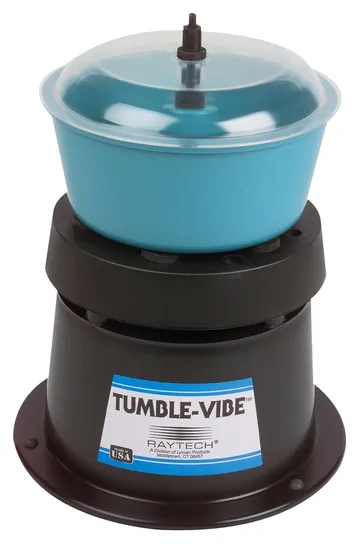
As for machines sold without accessories, it's hard to go wrong with the Lortone 3A, for a single-barrel choice, or the Lortone 33B, for a double barrel. The Thumler's A-R2 is another double-barrel option that's fairly popular, but not everyone finds it perfectly intuitive to use. We also decided to add a vibratory model at this time, the Raytech TV-5. These types are better for polishing than for shaping, and are generally recommended for those who have experience, rather than novices. Note that this model wasn't made to be used with either steel or ceramic media.
June 6, 2019, by Taber Koeghan:
Rock tumbling is a simple activity, but it requires reliable machinery and the right supplies. These tumblers range in capacity from one to 15 pounds, so whether you process gemstones professionally or just for fun, you'll be able to locate a fitting machine here. There are kits geared towards kids that provide education and entertainment at the same time, as well as no-frills, heavy-duty models for adults. Virtually all of the products chosen come with grit packets to facilitate the tumbling process.
The Discover with Dr. Cool Hobby has been removed, as it appears to be identical (except for its color) to the National Geographic model. The MJR Tumblers Dual Barrel and Dan & Darci Advanced have been added, the former because of its large capacity and the latter for its dependable build and extensive list of included accessories. The National Geographic Starter Kit was moved to the number one spot because of its simple, intuitive design and popularity among beginners and experts alike.
Special Honors
Diamond Pacific 65T Diamond Pacific's 65T is a commercial rotary tumbler for clubs, shops and anyone who processes rock by the bucket. The maker lists a 65-pound industrial polyethylene barrel, rollers on bronze bearings, and a one-third horsepower motor housed in the base. Lapidary dealers sell it. diamondpacific.com
Lortone Lortone has made lapidary equipment since 1979, and its 3A single-barrel and 33B twin-barrel rotary tumblers are long-running hobby standards. They're often out of stock at big online stores, so the maker's dealer list is the place to look. lortone.com
Tumble-Bee Tumble-Bee sells rotary tumblers with one or two rubber barrels in 2-pound and 4-pound sizes from its own store. A craft site that compared several machines side by side named its twin-barrel model its top pick. tumble-bee.com
Barrel Size, Fill Level And What The Kit Leaves Out
Most kits include grit for one run and no ceramic media, so plan on refills from the start.
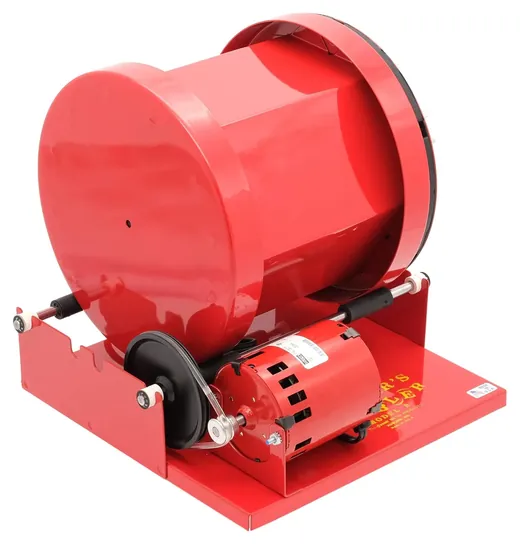
Barrel size decides how many stones you get from each month of tumbling. Rock Hound Resource's gear guide recommends a 3-pound barrel as a first machine and warns that 1-pound toy tumblers finish only a few stones per run (Rock Hound Resource). Bigger machines, such as Thumler's 15-pound Model B, hold about 10 pounds of rock at a working fill (RockTumbler.com).
Load the barrel between two-thirds and three-quarters full, and keep stones under about half the barrel's width so they can tumble instead of jamming (Your Rock Artist). If you don't have enough rock to reach that level, ceramic pellets fill the gap and cushion the stones (RockTumbler.com).
Most kits include grit for one run and no ceramic media, so plan on refills from the start. ABCrafty's polishing guide uses about 2 tablespoons of grit per pound of rock at each stage (ABCrafty). Keep a spare drive belt, too, since belts on small machines can slip or break mid-run. For a machine that runs for weeks at a time, a fan-cooled motor with overload protection, like the ones on Thumler's models, is worth having (Thumler's Tumbler).
Rotary Or Vibratory, And Tumbling Sea Glass
Almost every kit is a rotary tumbler: a rubber or plastic barrel rolls on two rods, grinding stones from rough to round over several weeks. A vibratory tumbler shakes a bowl instead. RockTumbler.com, a Thumler's dealer, says vibratory machines process rock in less than half the time and use less than half as much grit and polish, but they need more attention and it recommends them for adults (RockTumbler.com). For most people, a rotary is the place to start.
Sea glass needs a slow rotary. The same dealer suggests about 50 barrel turns per minute or less; Thumler's lists its A-R2 at 35 and its Model B at 20. Glass is softer than agate, so skip the coarse grit, and fill the barrel with chunky pieces. Thin, curved bottle glass makes fragile, sharp results (RockTumbler.com). On kits with a speed setting, use the slowest one for glass.
A Month Of Tumbling, And Habits That Keep It Safe
A full rotary run has four stages: coarse grit to shape, medium and fine grit to smooth, and polish to shine, about a week each. Wash the stones and barrel thoroughly between stages, because one stray coarse grain scratches a polished batch. Hard stones such as agate and jasper, about 7 on the Mohs scale, may need an extra week or two of coarse grit (ABCrafty).
Some materials make gas in a sealed barrel: man-made glass, especially colored glass, obsidian and Apache tears, metallic ores, slag and nephrite. A bulging barrel or mud around the lid means pressure. Open it outdoors or over a tub, pointed away from you, with eye protection (RockTumbler.com). Wear a dust mask when adding grit and polish, and don't pour the used slurry down a drain, a warning tumbling suppliers repeat.
Kits sold for children are labeled for ages 8 and up and still need an adult for grit and cleanup. Thumler's rates its larger machines for adults only. Set any tumbler on a hard, level surface away from anything flammable, since it runs unattended for days. We found no recalls for these brands in the U.S. Consumer Product Safety Commission's database (CPSC).
How we researched this
We compared 18 rock tumblers, from kids' kits to commercial machines, read the makers' specifications, parts lists and warranty terms, a craft site's side-by-side comparison, rockhound guides and a Thumler's dealer's pages on sea glass and barrel gas, looked at owner feedback patterns, and checked each brand for recalls with the U.S. Consumer Product Safety Commission. Updated October 26, 2026 by Ezvid Wiki Editors.
Frequently asked questions
How long does it take to tumble rocks?
About four weeks in a rotary tumbler: four stages of roughly a week each, running day and night. Hard stones with rough shapes can need one or two extra weeks of coarse grit. A vibratory tumbler finishes in less than half the time.
What is the best rock tumbler for sea glass?
A slow rotary tumbler, turning at about 50 barrel revolutions per minute or less, such as the Thumler's A-R2 or Thumler's Model B. On kits with speed settings, use the slowest one. Skip the coarse grit and avoid thin bottle glass. Man-made glass can make gas, so check the barrel daily.
Are rock tumblers loud?
Yes. Every tumbler makes noise because stones knock together. Rubber barrels are quieter than hard plastic, and an enclosed housing like the KomeStone K2 Elite's helps, but most people run them in a garage, basement or closet.
Can kids use a rock tumbler?
Kits made for children, like the National Geographic Hobby Kit, are labeled for ages 8 and up. An adult should handle the grit, the slurry and any barrel that seems pressurized. Larger machines such as the Thumler's Model B are for adults.
What rocks are best for tumbling?
Agate, jasper and quartz are the classic choices because they're hard and take a good polish. Tumble stones of similar hardness together so soft ones don't wear away, and be careful with obsidian, ores and glass, which can build gas in a sealed barrel.
What are rock tumblers used for besides rocks?
Vibratory tumblers like the Raytech TV-5 also polish jewelry, brass and metal castings, and big rotary machines such as the Diamond Pacific 65T are used for deburring and finishing metal parts.