The 7 Best Rotary Egg Beaters
Updated by · How we research

Hand-crank and push-down egg beaters compared by gears, grip, cleaning and build. The OXO Good Grips Egg Beater leads for its sealed gears and upright handle. When users buy our independently chosen editorial choices, we may earn commissions to help fund the Wiki.
The hand-cranked rotary egg beater dates to patents from the 1850s, and it still does a few jobs well: beating a handful of eggs, whipping cream and taking egg whites to soft peaks with no cord. It needs two hands and a deep bowl, and it can't cream butter or mix cookie dough. It suits small kitchens, campers and power outages.


Editor's Notes
October 23, 2026, by Ezvid Wiki Admin:
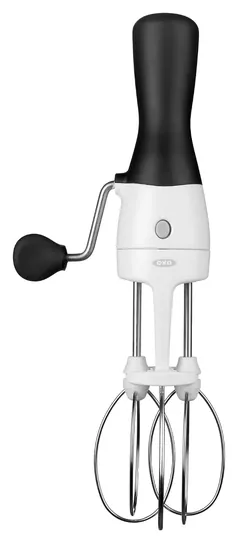
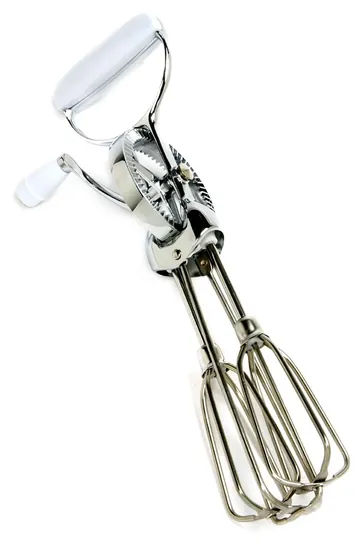
The OXO Good Grips Egg Beater stays on top. Its sealed gears and upright handle fix the two oldest gripes about hand-crank beaters, gunked-up gears and sore hands, and no other beater here has as long a record of happy cooks. The Norpro Hand Crank, now listed as the Norpro 2268, stays too, but its nylon gears are a known weak spot, so it sits below the cheaper Progressive PrepWorks BA-3021.
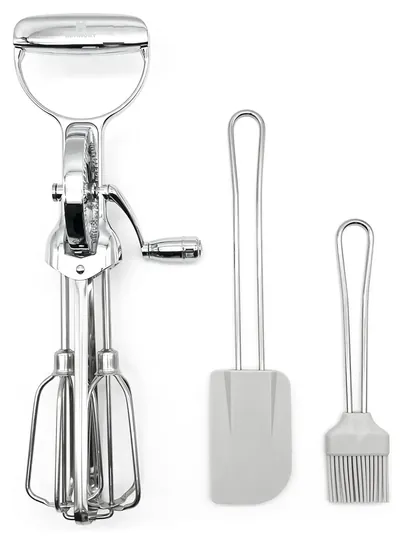
We dropped the Starfrit Super-Fast and the RSVP International Endurance because of availability concerns: neither could be confirmed as still sold. New picks are the Hommony 7705ACH, which comes with a spatula and brush, the Italian-made Kings County Tools KC3908-09, and the CYX DDQ-B5, a push-down whisk for anyone who'd rather skip the crank.
Evidence was thin for a tool this simple. Makers publish little beyond materials and dishwasher claims, and no lab has compared hand-crank beaters, so the order leans on gear design, materials and years of owner reports about which gears wear out. If you want an electric option, see our hand mixers page.
August 24, 2020:
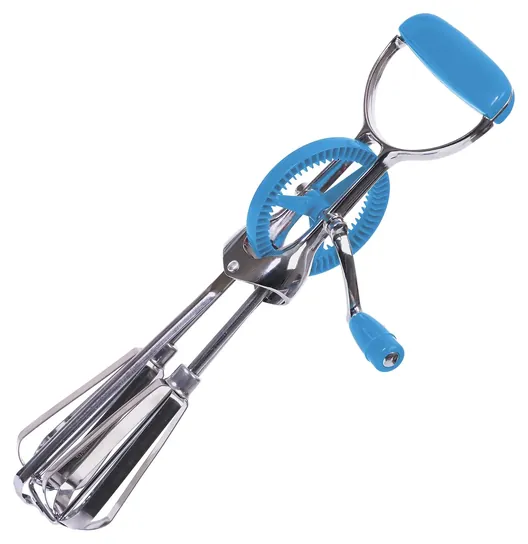
In today’s update, we kept the best-selling Oxo 1126980 in the top spot, since it’s hard to beat when it comes to ease of use, ability to keep arm fatigue at bay, and removable parts for an easy cleanup. This is a great choice if you prefer a selection with wiry whisks for the beaters, which comes in handy for those who frequently use it for dishes like omelettes. If you prefer instead a model with thicker beaters, which proves useful when you’re whipping up pancake batter, check out Norpro Hand Crank, which is made by a manufacturer of kitchen tools that’s been in business for almost five decades. In addition to its heavy-duty stainless steel blades, it features smooth, plastic handles for a comfortable grip. Today, we updated the list with a newer model of the Progressive Prepworks BA-3021 and moved it into a higher spot. Its vibrant blue handles and gears help it to stand out in a crowded kitchen drawer, and they’ll make it look nice on your countertop as well. A simple turn of the handle sets the smooth-turning gears in motion, and when you’re done, it’s conveniently safe for the dishwasher.
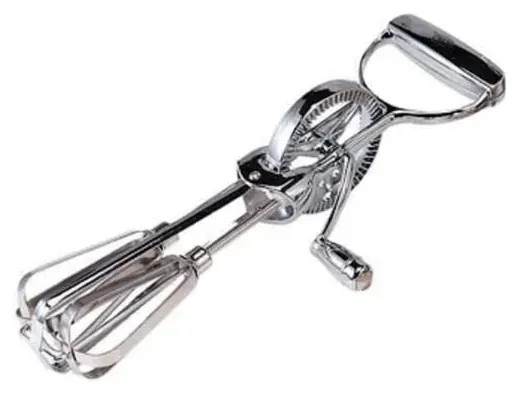
For a sleek design with an all-metal look, check out the Danesco 1304071SS, which is from a company that’s been producing kitchen gadgets since 1963. This lightweight choice is made of stainless steel with hard-wearing chrome handles, and its compact build makes it well suited for those with little storage space or who wish to take it on camping trips.
In today’s update, we considered adding in one of the newer models that features a built-in cup (so you won’t need to bother with a separate bowl), with an arm that turns on the top to rotate the whisks, but since not much testing and reviews have been done yet on these, the jury’s still out and we will hold off and possibly include one in our next update.
August 03, 2019:
Before the invention of the manual eggbeater in 1857, it took 90 minutes to whip egg whites into a stiff meringue, as the story goes. By the middle of the following century, electric mixers made the process much easier, yet some cooks occasionally still prefer the simplicity of using and cleaning a rotary model. There are not many more than a handful of choices sold today, but there are still some durable designs that will help you achieve a plate of fluffy scrambled eggs, as well as smooth puddings, creams, frostings, cake batters, and more.
Joining our list in today’s update is the Starfrit Super-Fast, which boasts two strong, efficient whisk beaters that will make quick work of producing well-blended, lump-free mixtures. If you worry about arm fatigue, this might be the best selection for you, as it’s designed to keep spinning even when you rest it on the bottom of your bowl. Unlike some others, however, the beaters are non-removeable. (The ability to remove them can be convenient for washing them – or for when you want to lick the batter.)
Moving into the top spot is the Oxo Good Grips, which, like the Starfrit model, can be placed on the bottom of a bowl while it’s spinning, thanks to a supportive metal bridge beneath the beaters. This one conveniently does have removeable parts. Moving into the second spot is the Norpro Hand Crank, which is made of heavy-duty stainless steel gears, with smooth plastic handles for a comfortable grip. Leaving the list today are the DAmzon JH-WHISK-02 and the Magnicfly Hand Held, due to availability concerns.
If you have little helpers in the kitchen, always supervise them when they are using a rotary egg beater, or any other gadget that spins or features sharp edges.
Special Honors
Lehman's Stainless Steel Egg Beater Lehman's, the Ohio store known for goods that work without electricity, sells a heavy hand-crank beater with a die-cast frame, zinc-finished gears and stainless steel beaters. The store says an Amish family rebuilds an imported beater with heavier beaters, and the store lists it as made in the U.S. It costs several times as much as a typical beater, so it suits bakers who crank often. lehmans.com
What A Rotary Beater Does Well, And What It Can't
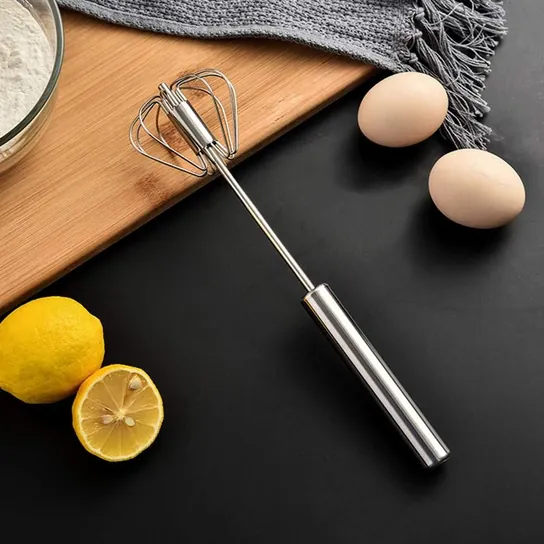
A push-down spring whisk frees one hand, but its small head is slow on more than a few eggs.
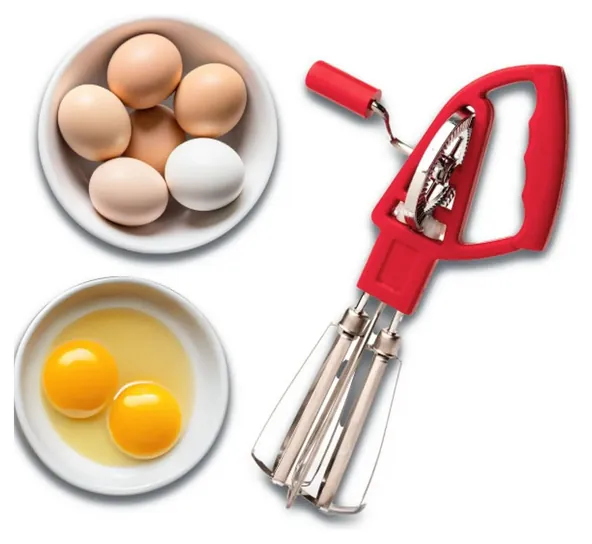
A rotary egg beater is a hand tool with a crank on the side. Turning the crank spins a toothed wheel, and the wheel drives two wire beaters that mesh as they turn. The idea is old: a Baltimore tinsmith patented a mixer with rotating parts in 1856, and the Dover beaters of the 1870s made it a staple of American kitchens (Wikipedia).
It's at its best with small, thin mixtures: two to six eggs for an omelet, pancake or crepe batter, a vinaigrette, a cup of whipping cream, or egg whites taken to soft or medium peaks. A writer at The Kitchn who went back to her grandmother's beater found it handled everyday whisking in a few minutes (The Kitchn).
It won't cream butter and sugar, mix cookie dough or replace a stand mixer, and forcing it through thick batter is the fastest way to strip a plastic gear. It also takes two hands, one to hold the grip and one to crank, so the bowl needs to sit steady on a towel. Use a bowl deeper than the beaters are long, or a tall measuring jug, to keep splatter down. A push-down spring whisk frees one hand, but its small head is slow on more than a few eggs.
Gears, Grips And Cleaning
The gears decide how long a beater lasts. Classic open-wheel beaters, like the Norpro and Danesco, show the big drive wheel, which makes them easy to wipe but lets batter reach the teeth. Enclosed designs, like the OXO and Kings County, hide the gears inside a housing. Many modern beaters use nylon or acetal plastic gears, which don't rust but wear faster than metal. Heavy die-cast beaters with zinc-finished metal gears still exist, such as the one Lehman's sells, but they cost several times as much.
Look for stainless steel beaters. Norpro specifies 18/10 steel and Hommony 304 steel, both standard food-grade grades. Chrome-plated frames look good but can spot or pit if they stay wet. A grip that stands upright, like the OXO's, keeps your wrist straight; a flat loop handle on top is the traditional shape and suits smaller hands.
Check the care advice before you buy. OXO says only the detachable base goes in the dishwasher, Kings County allows a gentle cycle, and Norpro and Fox Run advise hand washing. Even when a maker allows the dishwasher, rinsing the beaters right after use and drying the gear area keeps old egg from hardening in the teeth.
Raw Eggs And Kitchen Hygiene
Beaters spend most of their life in raw egg, so cleaning matters. Clean, uncracked eggs can still carry salmonella, which is why the U.S. Department of Agriculture's Food Safety and Inspection Service says to refrigerate eggs and cook them thoroughly (FSIS). Wash the beaters, bowl and your hands in hot, soapy water after they touch raw egg.
For anything you won't cook, such as mousse, eggnog, Caesar dressing or some frostings, use pasteurized eggs. Pasteurized eggs in the shell can be used safely without cooking. For dishes that do get cooked, such as custards, quiches and casseroles, a food thermometer should read at least 160 degrees Fahrenheit in the center (UConn Extension). Young children, older adults, pregnant women and people with weak immune systems face the highest risk from undercooked eggs.
None of the brands on this list had a recall for an egg beater when we checked U.S. Consumer Product Safety Commission records in October 2026.
How we researched this
We compared 15 hand-crank and push-down egg beaters, read the makers' and sellers' specifications for the 7 finalists, looked for independent tests, analyzed patterns in owner feedback, especially gear wear, and checked every brand against U.S. Consumer Product Safety Commission recalls. Food safety advice comes from the USDA and a university extension service.
Frequently asked questions
What is a rotary egg beater?
It's a hand tool with a side crank that turns a gear wheel, which spins two wire beaters that mesh as they turn. You hold the grip with one hand and crank with the other. The design goes back to U.S. patents from the 1850s.
What is a rotary beater used for?
Beating a few eggs for scrambles or omelets, mixing pancake and crepe batter, whipping cream, beating egg whites to soft peaks, and blending dressings and sauces. It isn't meant for creaming butter or mixing dough.
Can a hand-crank beater whip cream and egg whites?
Yes. Cream and egg whites are thin enough for a rotary beater, and it's quicker than a balloon whisk. Use a cold, deep bowl for cream, and expect a few minutes of steady cranking for stiff peaks.
Is a rotary egg beater better than an electric mixer?
Not for big or heavy jobs. A rotary beater needs no outlet or batteries, is quiet, stores in a drawer and has nothing to burn out, which suits small kitchens, camping and power outages. An electric hand mixer is faster and handles cookie dough and frosting.
What's the difference between a push whisk and a rotary beater?
A push whisk spins its small wire head when you press the handle down against a spring, so it needs only one hand. A rotary beater uses a crank and gears to drive two larger beaters, which moves more liquid per turn.
Can I put an egg beater in the dishwasher?
Check the maker's advice. Some are fully dishwasher safe, some allow only a gentle cycle or a detachable part, and others should be hand washed. Rinse right after use and dry the gears to stop egg from hardening there.