The 9 Best Spark Testers
Updated by · How we research

Is the ignition sending spark? Nine in-line, adjustable-gap, fixed-gap and bench testers compared for fit, coil-on-plug use and safety. The Lisle 20610 leads. When users buy our independently chosen editorial picks, we may earn commissions to help fund the Wiki.
A flashing bulb proves spark is reaching the plug, but not that it's strong enough, which is why some technicians prefer a tester that makes the spark jump a wide gap. Either way, a spark tester is often the first check when a car, mower, chainsaw or outboard won't start, and it lets mechanics and homeowners rule the ignition in or out.


Why the Lisle 20610 is our top pick
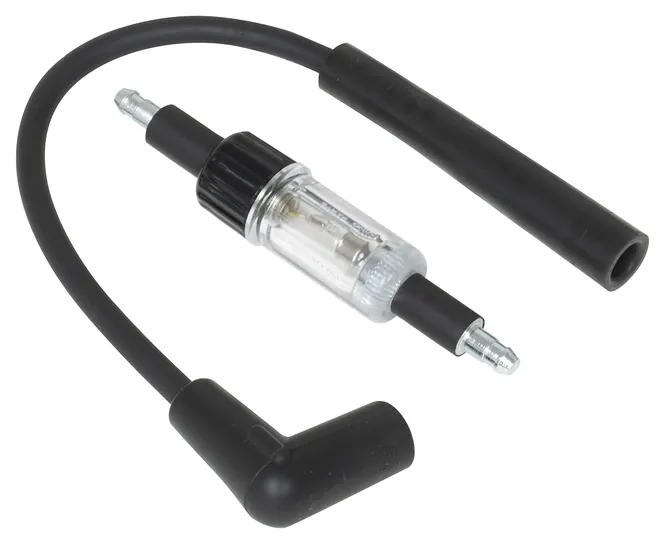
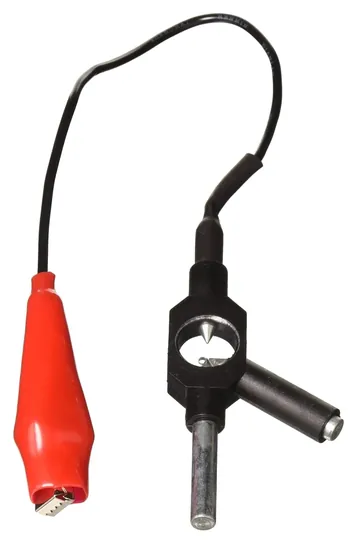
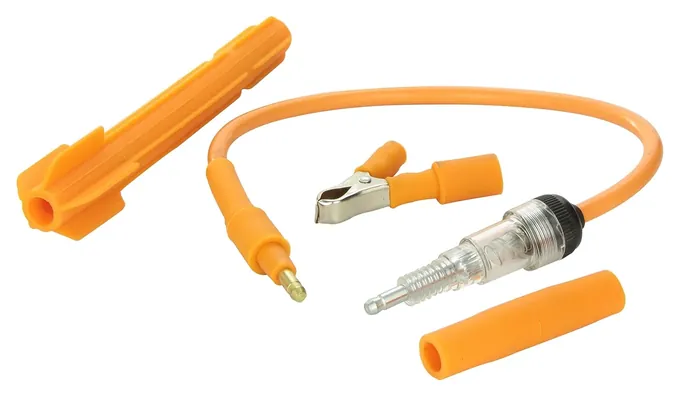
Both top picks are in-line bulb testers that flash when spark reaches the plug, so the 20610 wins on backing, not on what it can detect. Its maker documents a double-ended lead with one straight and one 90-degree boot,1,2 sells the bulb as spare part 20680,1 and covers its tools with a lifetime warranty against defects in material and workmanship.3 Our runner-up, the Ram-Pro 2331, is a seller's brand: we found no maker page, spare-part number or warranty terms for it, and look-alike testers sell under other names.
Our pick also has an independent record. Cycle World's 2009 review called it a simple way to check for spark without risking a shock, and noted that the flash is easier to see than a bare spark in bright light.4 It also plugs into a motorcycle's stick coil,4 but coils set deep in a car's head need the longer extension wire that comes in Lisle's 20580 kit.2
Neither tester measures spark strength. A tool owner reviewing the 20610 at SVT Performance warned that a heavily fouled plug may not fire even while the bulb lights,5 so when a bulb test passes and the engine still won't run, a gap tester further down the list is the next step.
| Lisle 20610 | Ram-Pro 2331 | |
|---|---|---|
| Test type | In-line bulb | In-line bulb |
| Boots | Straight and 90-degree | No maker spec found |
| Spare bulb | Lisle part 20680 | No part number found |
| Warranty | Lifetime, against defects | None found |
| Independent review | Cycle World, 2009 | None found |
From the manual
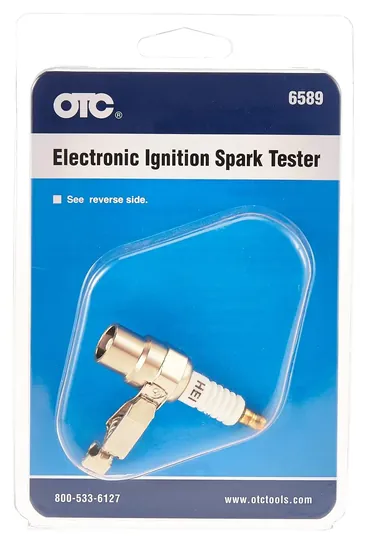
- Navistar lists this tester as an essential tool for troubleshooting spark on its 2015 PSI 8.8-liter engine. p. 1
- Hookup is two steps: push the tester into the plug boot being checked, then clip it to a suitable engine ground. p. 4
- On that engine, the plug boots come off with separate boot pliers, which don't come with the tester. p. 3
- The sheet calls for eye protection during the check, as for any vehicle maintenance. p. 2
Editor's Notes
November 4, 2026, by Ezvid Wiki Editors:
We rechecked this page against Lisle's, Tool Aid's and Oregon's own pages, Lisle's catalog and warranty, and Navistar's instruction sheet for the OTC 6589. That corrected a few details: the ANCEL box runs from a wall outlet, the Lisle 20700 fits coils because it's built for them, and our October note was wrong that the Tool Aid 36350 doesn't test spark. We added a section on why the Lisle 20610 leads and an ASE master technician's advice on spark checks.
October 17, 2026, by Ezvid Wiki Editors:
Because it's cheap, takes straight and angled plug boots on one tool and keeps your fingers off the live lead, the Lisle 20610 is the new No. 1. Three entries from the 2021 list no longer belonged. The OTC 3634 is a circuit test light, not a spark tester. The Tool Aid 36350 is mostly a noid-light kit for fuel injectors; its spark checker is the Tool Aid 23970, which is on the list by itself. The GearWrench 2756D listing has no price or stock, so it's out for now.
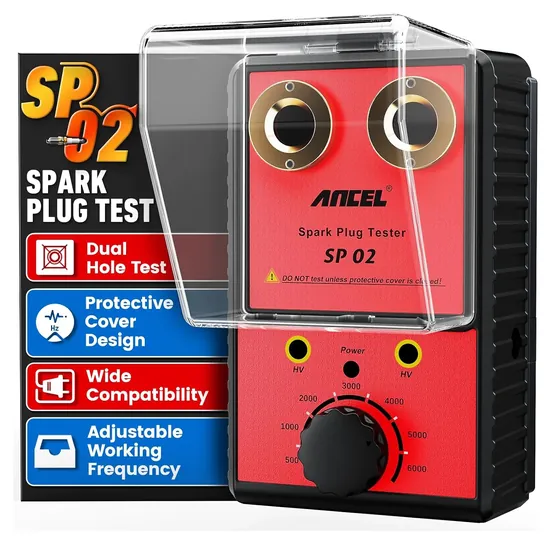
The big change in cars since the old list is coil-on-plug ignition, which has no plug wires for an in-line tester to sit on, so the Lisle 20580, which adds a coil-on-plug lead, is new. So is the ANCEL SP02, a bench box for people who want to test the plugs themselves.
The OTC 6589 drops from the top, mostly on price. Fixed-gap testers like it and the Oregon 42-087 are still a tougher test than a bulb, and the guide explains why.
A warning on evidence: nobody we could find has lab-tested spark testers. We worked from Lisle's own spec pages, a few independent reviews and explainers, mechanics' forum threads, owner feedback and recall checks, and we say where a fact comes only from the seller.
Earlier notes
March 17, 2021, by Christopher Thomas:
As complicated as cars get, most still run exclusively on fuel, air, and spark. Many of these spark checkers, or ones very, very similar to them, have made the rounds in amateur and pro toolboxes for years. They're not terribly expensive, although there are a few different styles. The primary difference between them all is their shape and size, which can affect exactly which vehicles they work with. [2026 update: the bigger difference is what each type can show. A bulb only proves spark is reaching the plug, while a gap tester makes the spark jump open air, a tougher test.]
The major changes we made this time around include the removal of the ABN Automotive 4269 due to reliability and availability issues. In its place came the Tool Aid 36350, which is costly, but allows home and working mechanics to use it easily on almost any make or model of vehicle. Otherwise, all our choices remain the same.
September 12, 2019, by Rafael Perez:
Removed the Performance Tool 84800 because it is essentially a clone of the Lisle 20700. Removed the Tool Aid 36350 because it includes noid lights which are used to test injectors in the fuel system.
During a no-start problem with internal combustion engines, if the engine cranks at all, then the problem is narrowed down to either a fuel delivery issue, no spark in the combustion chamber, or a compression problem. Spark testers allow you to quickly determine whether the ignition system is the culprit. If there is plenty of spark, you can move on to diagnosing the other systems. If there is no spark, you can begin to run other tests to figure out which ignition component has failed.
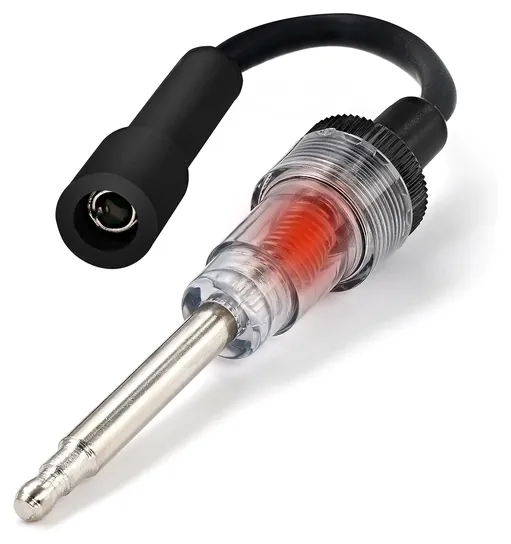
Spark testers like the OTC 6589 are the most reliable and easy to use since you don't have to rely on specific connector styles, unlike inline models such as the Ram-Pro Diagnostic Detector which may not work on some cars and may light up even if the current is too weak to create an arc at the spark plug. We included the OTC 3634 because, even though it is actually just a test light, it can easily be used to test for spark.
Working on electrical systems is very dangerous and should only be done by trained technicians to avoid personal injury or damage to equipment.
Match The Tester To Your Engine
For lawn mowers, trimmers and chainsaws, a fixed-gap tester in the Briggs & Stratton 19368 style is the standard, and a cheap bulb tester works too.
Start with how the engine's coil reaches the plug. Older cars, motorcycles and most small engines run a rubber plug wire from the coil to each plug. An in-line bulb tester such as the Lisle 20610 slips between that wire and the plug, and Lisle's inline spark tester page describes a double-ended lead with a straight and a 90-degree boot so it fits both wire styles.
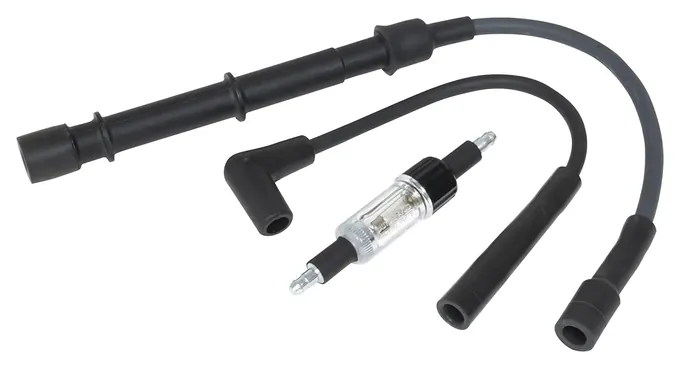
Many newer cars use coil-on-plug ignition, with one coil sitting directly on each plug and no wire between them. A plain in-line tester often has nothing to attach to there. A tool owner at SVT Performance put it bluntly in a 2023 review of the Lisle 20610: it won't work for coil-on-plug cars, though Cycle World says it also plugs into a motorcycle's stick coil. For coils set deep in the head, get a kit with a coil-on-plug extension, like the Lisle 20580, or an adjustable tester built for coils, like the Lisle 20700.
Deep, recessed plugs are another trap. Members of the Garage Journal forum recommend testers with a flexible lead and a separate ground clip for plugs a rigid tester can't reach. For lawn mowers, trimmers and chainsaws, a fixed-gap tester in the Briggs & Stratton 19368 style is the standard, and a cheap bulb tester works too. Diesel engines have no spark plugs, so none of these tools apply to them.
Bulb, Gap Or Bench: What Each Test Can Tell You
There are three main kinds of spark tester, and they don't tell you the same thing. A bulb tester flashes whenever current passes, so it shows that spark is reaching the plug. It doesn't show how strong that spark is. In an iboats forum thread, an outboard technician described a fouled plug firing at about 2,000 volts, enough to trigger a timing light but not to jump the plug's gap.
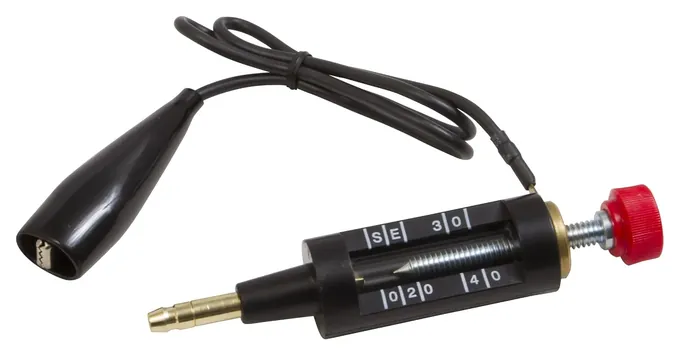
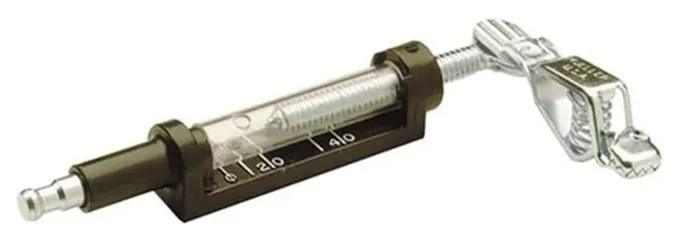
A gap tester makes the spark jump through open air between two electrodes. A fixed-gap tester makes it jump a set distance; OTC's 6589 is preset at about a quarter inch, per ITM's listing, and Briggs & Stratton's Vanguard service FAQ says that if spark jumps the tester's gap, the ignition is working; uneven sparks with the plug installed point to a misfire. An adjustable tester lets you widen the gap to see how far the coil can push a spark, a rough test of strength. Roy Dennis Ripple, a Ford Senior Master Technician and ASE Master Technician, wrote in an October 2024 article on misfires for Vehicle Service Pros that he checks for spark with the Lisle 20700. He added that a good spark at the coil doesn't prove it reaches the plug's tip, because a carbon track from the coil boot down the side of the plug can carry it straight to ground. The engine-diagnostics maker GTC explains these types in a 2025 guide, though it also sells its own analyzer.
A bench tester, such as the ANCEL SP02, fires plugs you've removed from the engine, often two at a time. It's the only kind that tests the plug itself. But an open-air spark is easier to make than one inside a compressed cylinder, as Jalopnik notes, so a good bench result doesn't prove the plug will fire in the engine. Jalopnik also points out that many car owners can skip testing and replace worn plugs, and that a scan tool's misfire data can point to the cylinder with a problem.
Using A Spark Tester Safely
Ignition systems produce thousands of volts. The old trick of holding a plug against the engine while someone cranks it can deliver a painful shock, and Cycle World noted in its review of the Lisle 20610 that even a small magneto can bite. An in-line or clip-on tester keeps your hand off the plug, but the wire and coil are still live, so keep fingers, jewelry and loose sleeves clear while the engine turns over.
Open-gap testers need extra care. Never crank an engine with an open spark near an uncapped plug hole, spilled fuel or fuel vapor, and on small engines, consider shutting off the fuel first. Don't open an adjustable gap beyond the maker's guidance: GTC warns that very wide gaps can damage a coil's insulation, and open arcs give off ozone and ultraviolet light, so a tester with a clear window is the better choice. Navistar's instruction sheet for the OTC 6589 calls for eye protection, and safety glasses make sense for any spark test.
If there's no spark, check the simple things before buying parts: the kill switch or safety switches, the wire connections and the coil. If there is spark, move on to fuel and compression. In November 2026 we searched the U.S. Consumer Product Safety Commission's recall database for every brand on this list, Ram-Pro and ANCEL included, and found no spark tester recalls.
How we researched this
Sixteen spark testers, plug testers and related tools were compared for this list, plus look-alike models. We read Lisle's product pages, its 2022 catalog entry and warranty terms for the 20610, 20580 and 20700, Tool Aid's and Oregon's product pages, and Navistar's tool instruction for the OTC 6589; the Thexton, Ram-Pro and ANCEL picks have no maker manual we could find, and OTC's own product page is gone, so their details come from retailer spec text. Cycle World's review of the 20610, an ASE master technician's 2024 misfire article, Briggs & Stratton's ignition FAQ and GTC's tester guide shaped the advice. A November 2026 search of the CPSC recall database found no spark tester recalls for any of these brands.
Sources (22)
- Lisle: 20610 inline spark tester
- Lisle: 20700 coil on plug spark tester
- Cycle World: Lisle 20610 spark tester review (2009)
- SVT Performance: Lisle 20610 review (2023)
- Jalopnik: is a spark plug tester necessary? (2026)
- GTC: what a spark test is and which tester to use (2025)
- Vanguard (Briggs & Stratton): servicing the spark plug
- Garage Journal: ignition spark testers
- iboats: does an inline tester show spark quality?
- CPSC recalls
- Lisle: 20580 inline spark tester with coil-on-plug wire
- Lisle: 2022 catalog, spark testers on p. 44 (PDF)
- Lisle: lifetime warranty terms (LMR copy)
- Tool Aid: 23970 in-line spark checker kit
- Tool Aid: 36350 kit, which includes the 23970
- Oregon: 42-087 in-line spark tester
- Navistar: OTC 6589 tool instruction (PDF)
- ITM: OTC 6589 specs
- Eisenking: Thexton 404 specs
- Auto Scan Tool: ANCEL SP02 specs
- Briggs & Stratton: ignition system theory and testing
- Vehicle Service Pros: diagnosing an engine misfire, Roy Dennis Ripple (2024)
Frequently asked questions
What is the best spark plug tester?
For most engines with plug wires, an in-line bulb tester like the Lisle 20610 is cheap and simple. For coil-on-plug cars, get one with a coil-on-plug lead, such as the Lisle 20580.
What does a spark tester show?
Whether the ignition system is sending a spark to the plug. It doesn't test fuel, compression or timing, and a bulb tester doesn't show spark strength.
If the tester lights up, is my spark plug good?
Not necessarily. An in-line tester checks the ignition, not the plug. A fouled or worn plug can still misfire, so inspect or replace the plug if the engine still won't run.
What is the best spark tester for small engines?
A fixed-gap tester in the Briggs & Stratton 19368 style, like the Oregon 42-087, gives a firm answer on mowers, trimmers and chainsaws. A basic in-line bulb tester also works.
Do spark testers work on coil-on-plug ignition?
Only with the right lead or tester. A plain in-line tester is made to sit between a plug and its wire, and it may not reach a coil set deep in the head. A kit with a coil-on-plug extension, like the Lisle 20580, or an adjustable tester built for coils, like the Lisle 20700, does the job.
Is there an alternative to a spark tester?
On newer cars, a scan tool's misfire data can point to a problem cylinder. Mechanics sometimes use starting fluid to separate fuel from spark problems, which carries its own fire risk.