The 10 Best Toilet Flush Levers
Updated by · How we research

Ten toilet flush levers compared by mount type, arm material and fit, from universal kits to factory parts. The Korky StrongARM 6054 fits most tanks. When users buy our independently chosen editorial selections, we may earn commissions to help fund the Wiki.
A toilet handle that sticks or flushes weakly is often fine; the chain, flapper or water level is the usual culprit. When the handle itself is cracked, loose or corroded, a new one costs little and swaps in minutes. The nut inside the tank is reverse-threaded, so it loosens clockwise. These picks cover front, side and angled tanks.
At a Glance


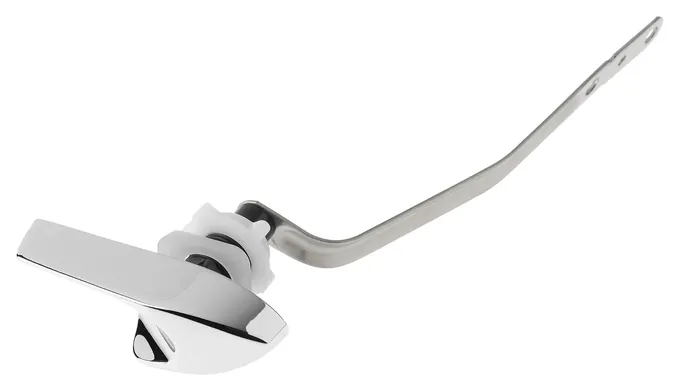
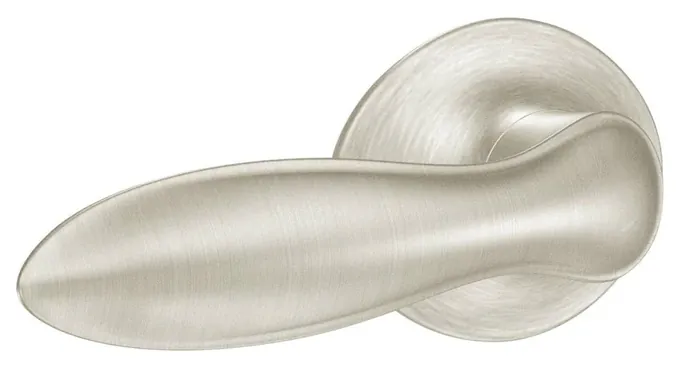
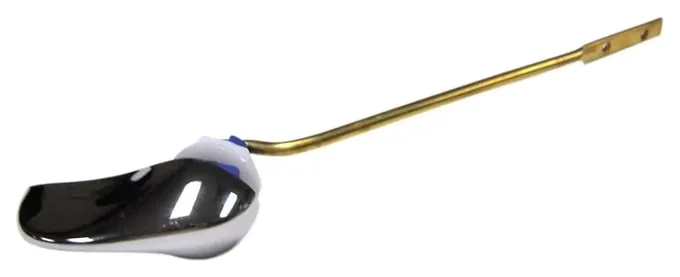
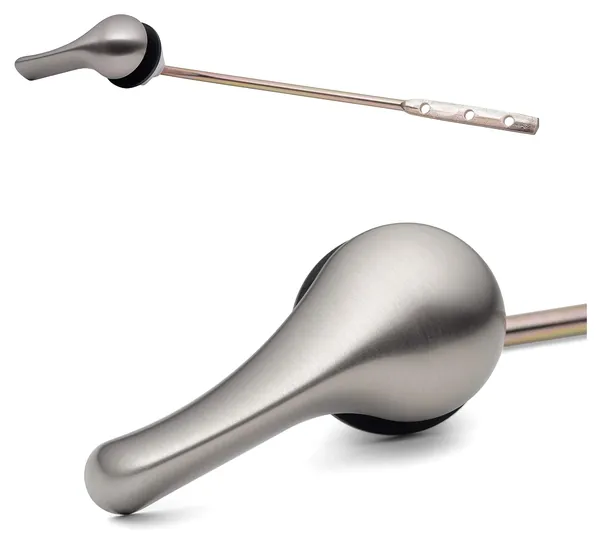
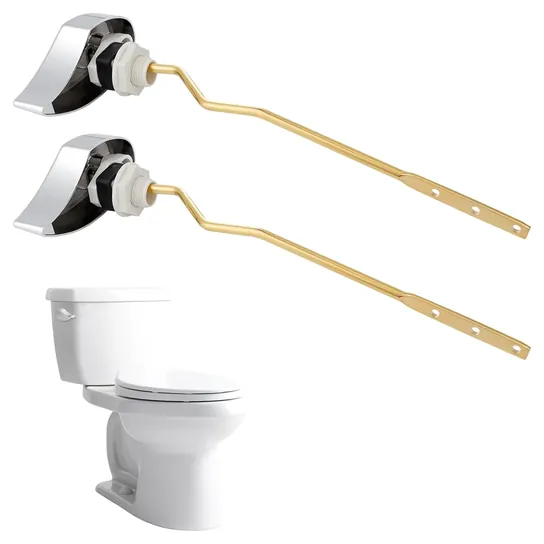
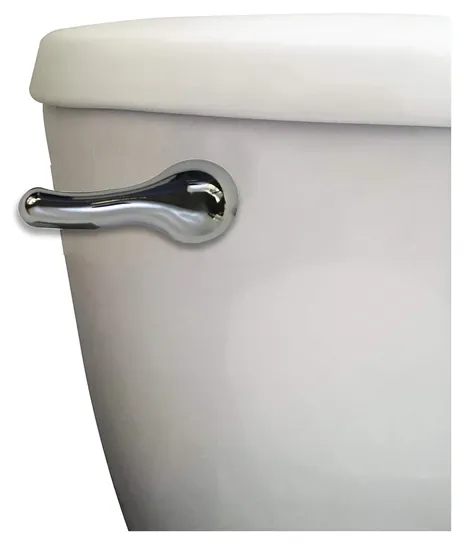
Editor's Notes
October 26, 2026, by Ezvid Wiki Admin:
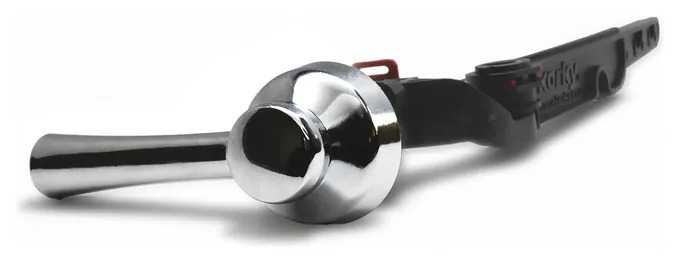
The Korky StrongARM 6054 now leads, since one metal kit sets up for front, side, angled and right-hand tanks, and Korky builds it in Wisconsin. It's the same StrongARM as before, now listed in chrome. The Fluidmaster 641 Perfect Fit and the Qualihome Brushed Nickel stay, and the Hibbent THU068 Replacement stays as the pick for TOTO tanks.
We dropped the Techo Automatic, a battery sensor kit rather than a lever, and the Plumb Pak PP835-69L push button, which suits commercial-style tanks better than homes. The Fluidmaster 698 Universal went because of early-break reports at its price, and the Qualihome Flush Lever, Plumb Pak Decorative and Canomo 2 Pack could no longer be confirmed as sold. New picks add factory parts, the Kohler 87115-CP and the American Standard Champion 738772, for tanks a universal arm won't suit, plus the Moen Eva YB2801BN for a matched nickel bath.
Nobody seems to lab-test toilet handles, so the ranking leans on Korky's and Fluidmaster's fit charts and install guides, a plumbing supplier's guide to lever types, and a clear pattern in owner complaints: cheap zinc handles that snap when the nut is cranked down, and arms that stick on parts inside the tank.
October 02, 2020:
A flush lever, although small and seemingly insignificant has a vital role in the correct operation of a toilet. Its purpose is to mechanically operate the flush valve, allowing waste to be washed away, hence its failure could leave you and your family in a predicament. With the vast array of toilets and flush valves available nowadays, choosing a suitable replacement requires a little bit of forethought as many are not universal, the location of the lever on the cistern, and the angle of the flush arm are imperative to a successful installation. In this ranking, we selected a range of alternatives, some of which are brand specific, and others which can be adjusted for differently-shaped toilets and valves. the visible part of the lever is often available in a range of styles and finishes, and can easily be matched to your faucets and hardware.
All the major sanitary-ware brands supply a replacement lever for their models. The Hibbent Trip Lever and the Qualihome Flush Lever are specifically designed for use on Toto and American Standard toilets, respectively. The location of the lever on the cistern will usually dictate the style of replacement needed. For a front mounting toilet, the Plumb Pak Decorative should be a straight swap, and is available in a number of metallic finishes. The Qualihome Brushed Nickel and the Canomo 2 Pack can be purchased for either front or side mounting, the latter of which comes with two stainless steel flush chains. For true versatility, many replacements now feature fully adjustable arms that allow them to be installed on almost any toilet. The Korky Strongarm uses high-strength materials to eliminate breakage at common stress points, and is available in two different designs and seven different finishes. The Fluidmaster 698 Universal and the Fluidmaster Perfect Fit are both fully adjustable options that can be ordered in multiples of up to five. If you are looking for an alternative to a lever, the Plumb Pak PP835-69L converts the mechanism to a push-button, but is only suitable for flapper valves, whereas, the Techo Automatic uses a motion sensor to make the operation completely hands-free.
Special Honors
PlumbingSupply.com Tank Levers For an odd tank that no universal kit suits, this specialty plumbing retailer sells model-specific levers for older Kohler, American Standard, Eljer, Gerber and TOTO toilets, and its guide explains each mount type with photos. plumbingsupply.com
Front, Side Or Angled: Match The Mount First
The model number is usually stamped inside the tank, behind the water line.
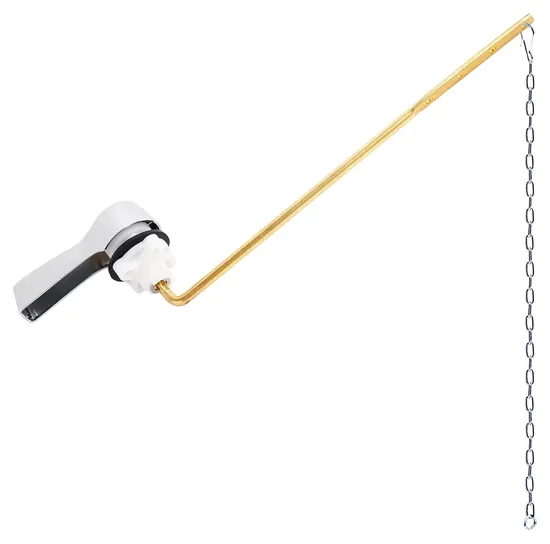
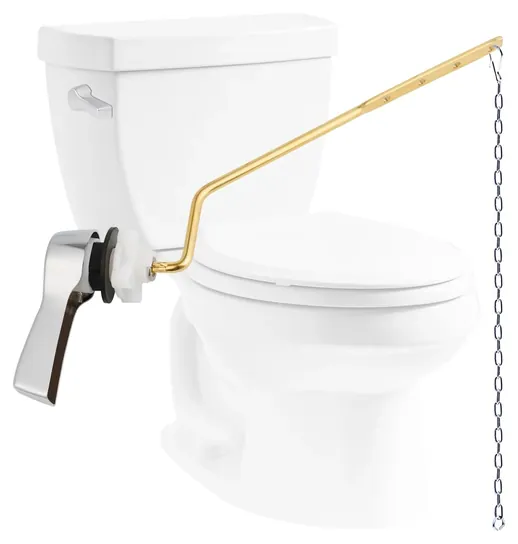
Look at where the handle sits. A front-mount handle comes out of the front face of the tank, and its arm runs along the inside of that wall. A side-mount handle comes out of the side wall, and an angle mount sits on the front corner, with an arm bent about 45 degrees to reach a flush valve in the middle of the tank (PlumbingSupply.com). A front-mount lever won't work on a side-mount tank, and left-hand and right-hand versions aren't interchangeable either.
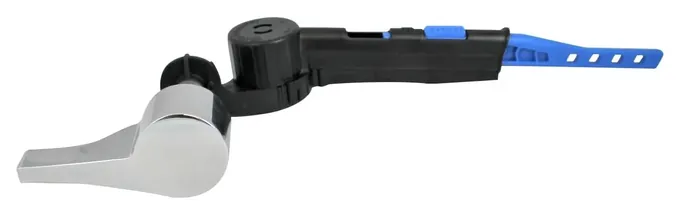
The mounting hole is close to standard, so most handles screw into most tanks. The arm is what varies: its length, its bend and where the chain hangs. Before you buy, pull the tank lid and measure the old arm from the hole to the chain hook. Universal kits such as the Korky StrongARM 6054 and the Fluidmaster 641 Perfect Fit solve this with an arm you cut or slide to length. Some tanks, mostly older or one-piece models from Kohler, American Standard and TOTO, need the maker's own lever with its exact bend. The model number is usually stamped inside the tank, behind the water line.
Metal, Plastic And The Nut That Cracks Handles
Handles come in three builds. All-metal levers pair a brass or zinc handle with a brass or steel arm, and they last the longest (PlumbingSupply.com). Hybrids put a plastic handle or plastic arm on metal parts, and all-plastic levers cost the least. An adjustable plastic arm isn't a flaw on its own; it's how universal kits fit so many tanks.
Most broken handles crack at the mounting nut. Zinc is brittle, and cranking the nut down splits the handle's threaded neck. Hand-tight is enough. Korky's warranty excludes damage from overtightened nuts, and it also excludes damage from bleach or chlorine tablets dropped in the tank, which corrode chains, flappers and arms (Korky). If you use a cleaner, choose one that clips to the bowl rim instead.
Finish is mostly looks. Chrome hides water spots well, brushed nickel matches many newer faucets, and oil-rubbed bronze and matte black versions exist for the same Korky lever. Buy the finish that matches your faucet; it won't change how the toilet flushes.
Before You Blame The Handle
A handle that's hard to push, sticks down or gives a weak flush is often fine. Check the chain first. Korky's install guide says to hook it to the arm hole closest to the center of the flapper and leave one or two links of slack (Korky). Too much slack gives a short, weak flush. Too little holds the flapper open, so the tank keeps running. A worn or warped flapper, a low water level, or an arm that rubs the fill valve or the lid can cause the same symptoms.
To swap the handle, unhook the chain, then loosen the nut inside the tank. It's reverse-threaded, so turn it clockwise to loosen. Slide the new handle through, tighten the nut by hand, hook the chain and test a few flushes. The water supply can stay on.
For accessible bathrooms, the 2010 ADA Standards require the flush control on the open side of the toilet and operable with one hand, without tight grasping, pinching or twisting of the wrist (U.S. Access Board). A lever qualifies. Battery-powered touchless kits are another route, but they're a sensor and motor, not a handle, and they need fresh batteries.
How we researched this
We compared 25 toilet handles and trip levers, from universal kits to factory parts for Kohler, American Standard and TOTO tanks. We read the makers' fit charts, install guides and warranty terms, a plumbing supplier's guide to lever types and the ADA rule for flush controls, looked for patterns in owner feedback, and checked every brand for recalls with the U.S. Consumer Product Safety Commission. We found no independent lab tests of toilet handles.
Frequently asked questions
Are toilet flush handles universal?
Mostly, for the handle itself: the mounting hole is close to standard. The arm is not. Its length, bend and side vary, so a front-mount lever won't fit a side-mount tank. Universal kits use an arm you cut or adjust; some Kohler, American Standard and TOTO tanks need the maker's own part.
What is the flush handle on a toilet called?
Plumbers and parts stores call it a tank lever, trip lever or flush handle. The handle is the part you push, and the arm inside the tank lifts the chain and flapper.
Which way do you turn a toilet handle nut?
The nut inside the tank is reverse-threaded on most toilets. Turn it clockwise to loosen it and counterclockwise to tighten it, and stop at hand-tight so a zinc handle doesn't crack.
Why is my toilet handle hard to push or sticking?
Usually the chain, not the handle. A chain with too little slack, a worn flapper or an arm rubbing the fill valve or lid can all cause it. Leave one or two links of slack and check that the arm moves freely before you buy a new handle.
Is Korky or Fluidmaster better for a toilet handle?
Both make reliable universal levers. The Korky StrongARM 6054 has a metal handle on a reinforced metal arm and is made in the U.S. The Fluidmaster 641 Perfect Fit uses a plastic arm that adjusts without cutting and carries a three-year warranty.