The 10 Best Walkie Talkies
Updated by · How we research

Ten radios compared by tested range, waterproofing, battery and license rules. The Rocky Talkie Mountain Radio leads for hikers; GMRS picks reach farther. When users buy our independently chosen editorial picks, we may earn commissions to help fund the Wiki.
The miles printed on the box assume a clear line from one mountaintop to another. In independent field tests the best radios reached six to ten miles across open ground, one to three miles in wooded hills and under a mile in town. These picks suit hikers, skiers, boaters, families at a campground and crews on a job site.


Editor's Notes
October 26, 2026, by Ezvid Wiki Admin:
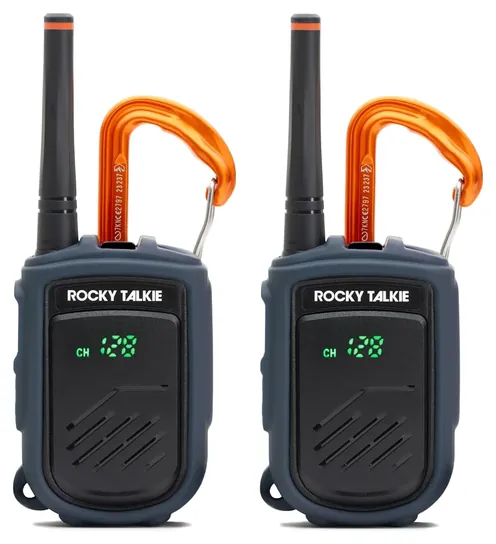
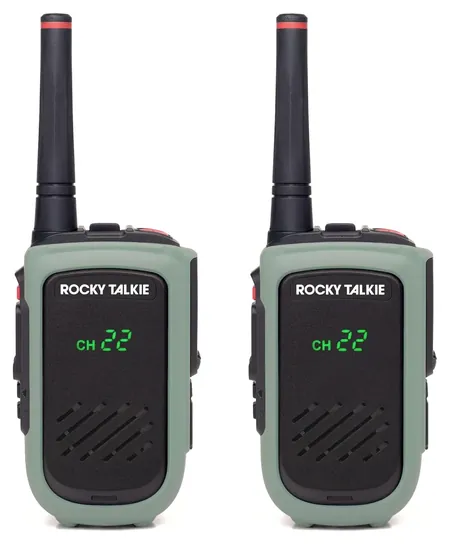
The Rocky Talkie Mountain Radio now leads. It came out on top in the most thorough field trial we found, where reviewers carried 11 radios through mountains and forest to measure range and battery life, and it needs no license.
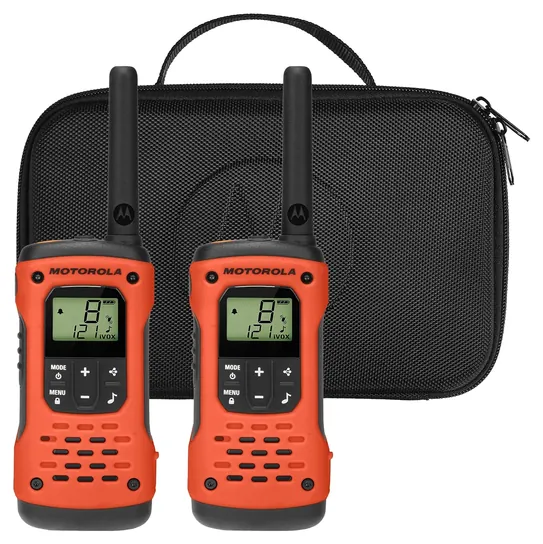
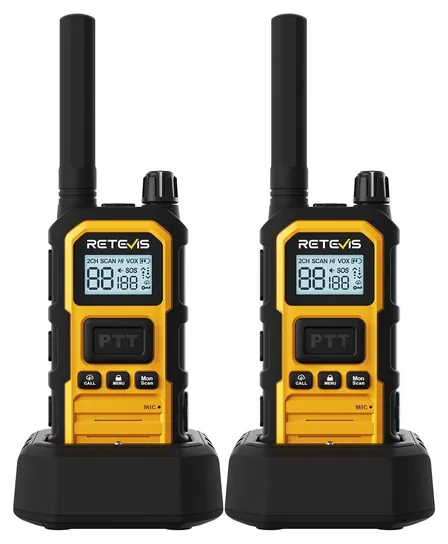
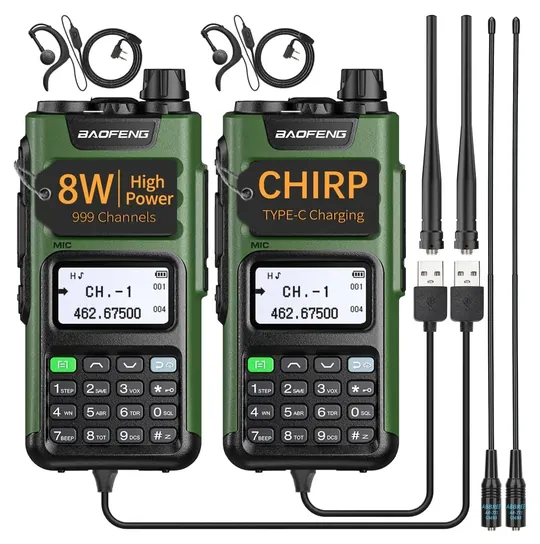
Eight of the ten earlier picks are out. The Kenwood TK-3402 ProTalk, Uniden SX507 and Retevis RT48 have disappeared from sale, and the Motorola T482 Emergency has no current price. The Motorola T260 Talkabout's pair price jumped well above normal, so the Motorola Talkabout T605 H2O, which floats, takes its place. The Baofeng Rechargeable BF888S isn't certified for license-free use, the Motorola RMM2050 On-Site is a business radio that can't talk to family radios, and a close sibling of the Midland X-Talker T71VP3 managed about a mile in a range test, so all three are out.
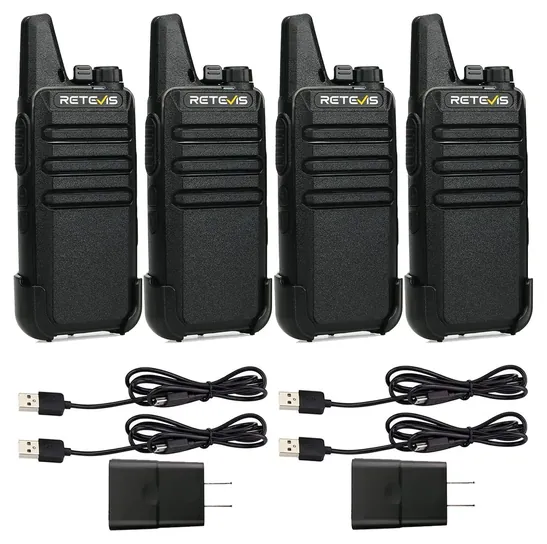
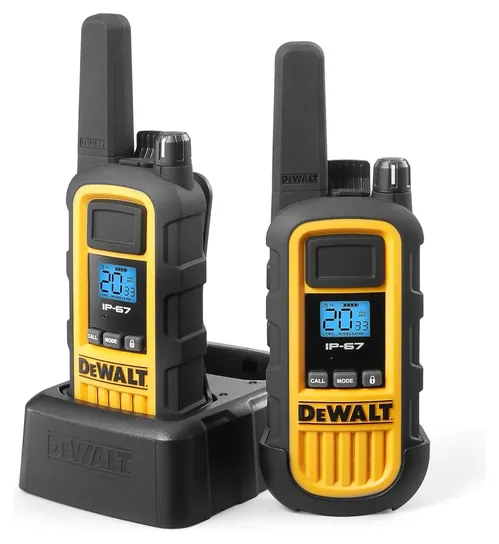
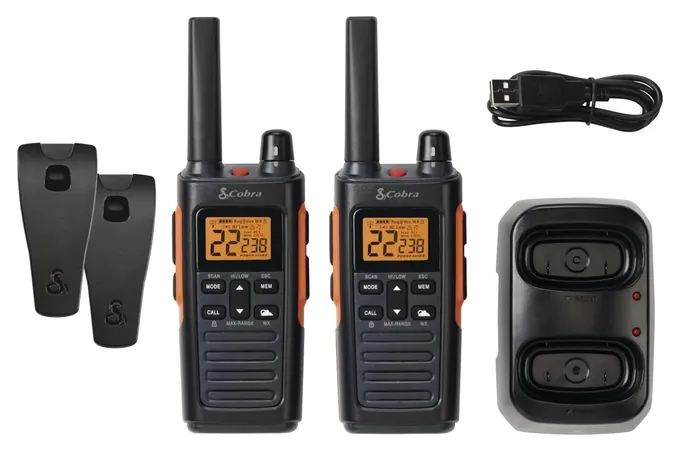
The DeWalt DXFRS800 and Cobra RX680 stay. New picks add GMRS radios for longer reach, led by the Rocky Talkie Expedition, and a cheap four-pack, the Retevis RT22, for families and small shops.
October 28, 2020:
While there weren't a lot of big shake-ups in this category, we did see fit to make a few pointed changes. For starters, we removed the Arcshell Long Range and replaced them with the Kenwood TK-3402 ProTalk, which boast the maximum power allowed in a handheld unit like this, and that offer superior build quality from a more reliable brand than Arcshell. Sure, they're undeniably more expensive, but we already have a few good budget offerings that exceed the Arcshell's capabilities in the Motorola T260 Talkabout and the Cobra RX680.
We also upgraded the Motorola T460s to the Motorola T482 Emergency, which have similar range and clarity across their channels, but that also incorporate a couple of items that could prove useful in a crisis, like an emergency checklist and a whistle built into the belt clip. Another upgrade came in the Retevis RT48, replacing the company's RT21 models included last time around. For a marginal increase in investment, these offer significantly more water and dust resistance, as well as charging bases designed to plug into USB ports, so you can charge them using anything from a car adapter to a portable power pack if you're out in the field without access to an outlet.
November 21, 2019:
Going over the contents of our previous ranking, there was a certain level of redundancy, particularly with the inclusion of the Proster Original, the Arcshell Long Range, and the Baofeng BF888S, all three of which are literally the same walkie with three different brand names slapped on them — same appearance, same specs, and virtually the same price. Now, we ditched two kept the Baofeng for a pair of reasons. One, it's the most trusted name of the three, and two, I've owned these exact walkies for about two years and can testify to their good qualities and their bad.
Unfortunately, much of that previous list contained either outdated models from decent brands or offerings from brands that have no place on a list like this, and as a result we sent a lot of them packing. We also decided not to include any kids' models on this list, as the prices for adult models have brought them within reach for most kids, and as we already have a dedicated page for kids' walkie-talkies. In their places you'll fine models like the Uniden SX507, the Motorola 22-Channel, and the Dewalt DXFRS800, all offered by respectable, reliable companies with reputations you can trust.
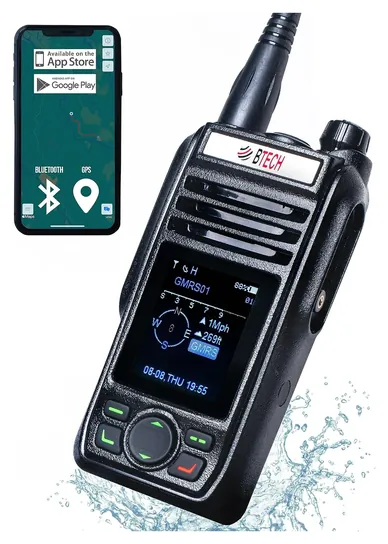
Another important factor in selecting the models for this list was that they had to be useful without an FCC license. To make this simple, if you see FRS anywhere in a listing or description, you're in the clear. That stands for Family Radio Service, and it pertains to the FM frequency range the FCC has set aside for private, non-commercial use. Within that band, however, is a range referred to as the General Mobile Radio Service, which is often accessed by devices with at least two or three watts of power behind them. You'll need a license to safely and responsibly broadcast on GMRS channels. Now, some of the models on our list offer GMRS coverage, but none are exclusive to it, so as long as you pay attention to you manual (or go out and get a license), you'll be in the clear. Never operate on restricted FCC bands without proper licensing.
Special Honors
BCA BC Link Mini Backcountry Access, an avalanche-safety maker, sells this small license-free radio for skiers and climbers. In OutdoorGearLab's field tests it held a signal past four miles through trees and lasted most of a day, with a body that shrugs off snow. backcountryaccess.com
Garmin inReach Mini 2 Not a walkie-talkie, but the answer for anyone who wants a satellite link. This pocket messenger sends texts, tracks your route and can call for rescue from almost anywhere with open sky. It needs a paid satellite plan. garmin.com
How we researched this
We compared 20 radios, read makers' specs and Motorola's data sheet, used OutdoorGearLab's field tests of range and battery life, Field & Stream's guide and independent reviews of the BTECH GMRS-PRO and Midland GXT1000VP4, checked the FCC's FRS and GMRS rules, and searched the Consumer Product Safety Commission's recall records for every brand. Several lower-cost picks have no independent test, so their text leans on makers' specs. Updated October 26, 2026 by Ezvid Wiki Admin.
Sources (12)
- OutdoorGearLab: The Best Walkie Talkies
- Field & Stream: The Best Walkie-Talkies
- Motorola Solutions: Talkabout T600 series data sheet
- Miklor: BTECH GMRS-PRO review
- ExploringNH: BTECH GMRS-PRO review
- Outdoor Empire: Midland GXT1000VP4 review
- FCC: General Mobile Radio Service
- FCC: Family Radio Service
- ARRL: Personal radio service revisions
- Wikipedia: General Mobile Radio Service
- National Weather Service: NOAA Weather Radio
- U.S. Consumer Product Safety Commission: Recalls
Frequently asked questions
How far do walkie-talkies really work?
Much less than the box says. Independent field tests found about 6 to 10 miles across open ground for the best radios, 1 to 3 miles in wooded hills and about half a mile to a mile in towns or thick forest. Height and a clear path help more than extra power.
Do I need a license for a walkie-talkie?
Not for FRS radios, which most family pairs are. GMRS radios need an FCC license, which has no exam, lasts 10 years and covers your immediate family. Ham radios need an exam.
Can FRS and GMRS radios talk to each other?
Yes, on the 22 channels they share. The GMRS user needs a license, but the FRS user doesn't.
Is there a satellite walkie-talkie?
Not in the usual sense. Satellite messengers such as the Garmin inReach Mini 2 send texts and SOS calls from almost anywhere, but they need a subscription and don't work like push-to-talk radios. Satellite phones exist, but they cost far more.
What works best for couples or a small business?
Any license-free FRS pair with simple controls and earpieces suits a couple. A shop or small crew is usually well served by a multi-pack of FRS radios on one channel; business-band radios need their own FCC license.
How can I get more range?
Get higher, keep the antenna upright, and avoid talking through buildings or hills. With a GMRS license, a repeater can stretch range across a town or valley.