The 8 Best ATV Seed Spreaders
Updated by · How we research

Rack-mount, hitch and tow-behind spreaders for seed, fertilizer and salt, compared on hopper size, real throw and motor life. The Buyers ATVS100 leads on value. When users buy our independently chosen editorial selections, we may earn commissions to help fund the Wiki.
Most ATV spreaders promise a 30-foot throw, but that figure assumes light, round granules on a calm day. Seed usually lands in a much narrower strip, and heavy salt falls shorter still. These picks suit food-plot hunters, small farms and anyone salting a long drive, from a cheap 12-volt bucket to a variable-speed rig.


Editor's Notes
October 23, 2026, by Ezvid Wiki Admin:
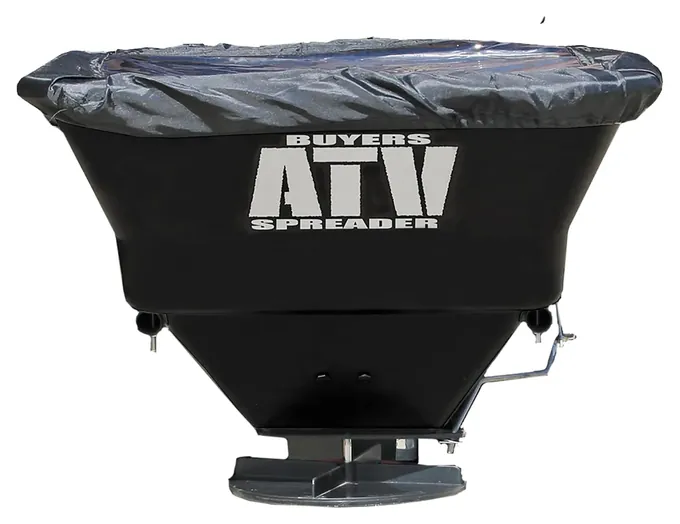
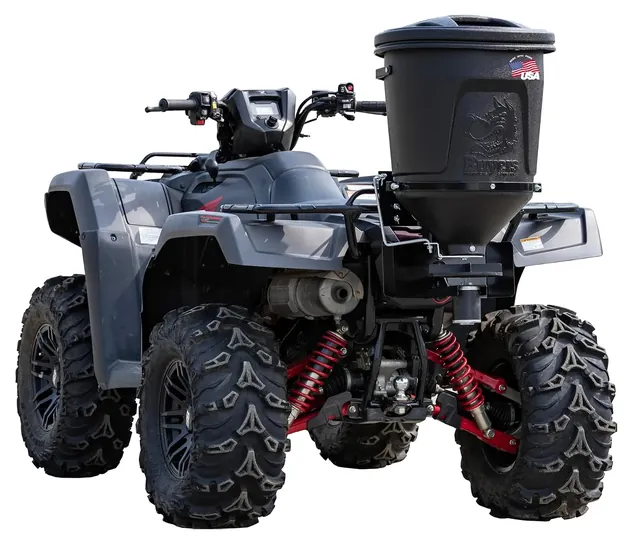
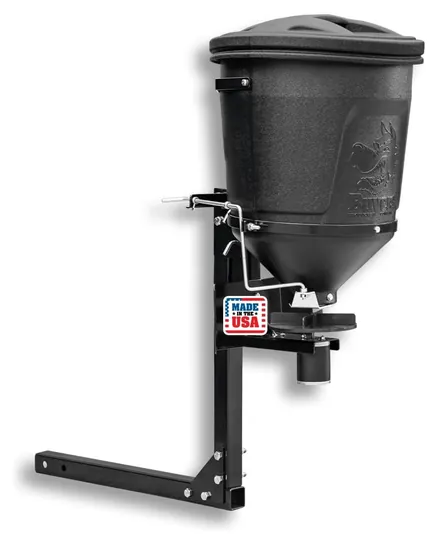
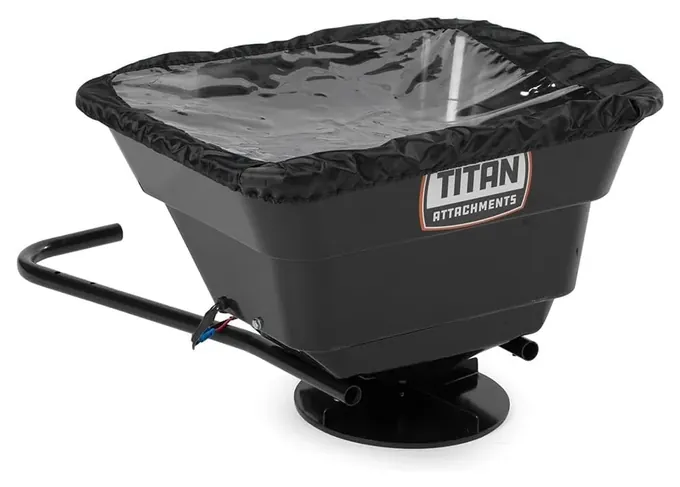
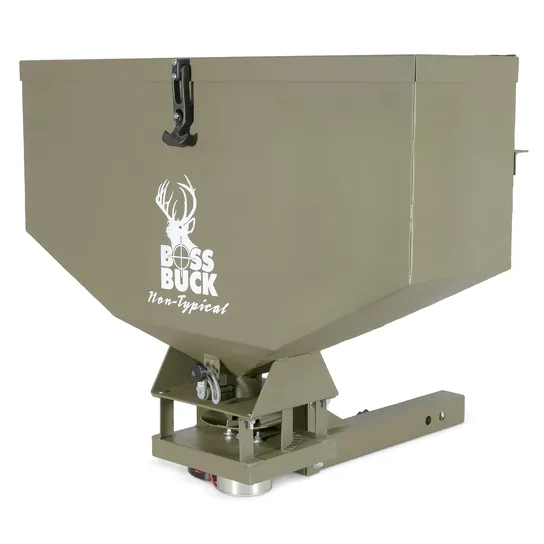
The Buyers ATVS100 takes the top spot. It's a plain 12-volt bucket on a rack, but nothing cheaper holds up as well, and food-plot forum regulars have run them for years, swapping in a low-cost motor when lime finally killed the old one. The Buyers ATVS15A, Agri-Fab 45-0329 and Fimco ATV-DMS-12V stay on. The Swisher 19920 Commercial Pro and the Moultrie Food Plot came off because we couldn't find either for sale at a current price, and the Brinly BS36BH is no longer available. The Guide Gear and Field Tuff models went too: they appear to share one 80-pound body, and the Titan Attachments 12V Spreader sells a version of it for less. New are the Buyers UTVS16 for side-by-sides with a hitch, the Boss Buck BB-1.80 with its wireless remote, and the low-cost Agri-Fab 45-0463. Our evidence was spec sheets from Buyers, Agri-Fab and Fimco, two long habitat-forum threads on burned-out motors and small seed, and one trade review of a Moultrie spreader; no magazine or lab has put these head to head.
February 28, 2021:
If you have a large property to maintain, and an ATV, then one of these seed spreaders is a smart piece of equipment to have. They make the task reseeding or fertilizing large areas quick and easy. During this update, we didn't wind up removing any of our previous recommendations. We did, however, add a few items as we noticed a distinct lack of tow-behind models.
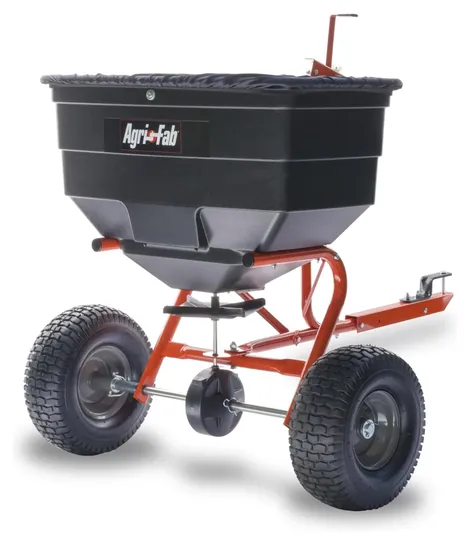
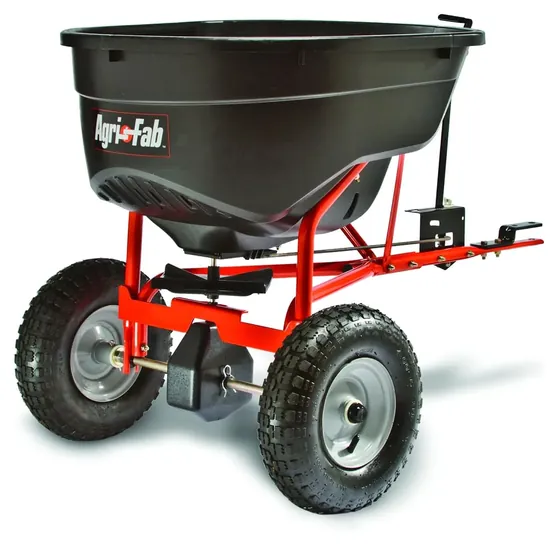
One of our new additions is the Agri-Fab 45-0329, which has large wheels to travel over a variety of terrains, even very uneven ones, but perhaps most importantly, it spreads its contents evenly across its distribution path. It is also smartly designed with a raised gate control lever, which makes it easy to access. This is quite unlike the poorly-placed control lever found on the Brinly BS36BH, which is another new addition. Despite this drawback, we like this model for its adjustable spread pattern and patented feed stop mechanism that helps prevent wasting its contents and, if using it for fertilizer, accidentally burning the grass.
The Moultrie Food Plot is ideal for those who are on a tight budget and don't have a very large property, as it has a small 50-pound capacity. It also boasts a quick-release mechanism for the hopper, which is a convenient feature not found on most others. However, it is worth noting it has a wide, flat bottom, so you'll usually be left with some seed or fertilizer that doesn't get distributed. If your property is below an acre, you may be better off with one of the push models on this list.
November 19, 2018:
ATV seed spreaders must be able to provide even distribution of the contents and should also be easy to access while you are driving in case you need to adjust the feed rate. We also made sure to include models with durable components that can last through many seasons of use.
Special Honors
DR Power DR Receiver Spreader DR Power sells its receiver-mount spreader directly rather than through big marketplaces. It slides into a hitch receiver, handles seed, fertilizer and lime, and DR lists a throw of about 12 feet, with controls placed within reach of the seat. drpower.com
Rack, Hitch Or Tow-Behind
It suits side-by-sides, which almost always have a receiver; many ATVs don't.
Start with where the spreader rides. A rack mount bolts or straps onto the front or rear utility rack and is the cheapest way in, but it adds weight high and behind the axle. Many ATV rear racks are rated for roughly 90 to 100 pounds, so a full hopper of salt or lime can exceed the rating; check your owner's manual before filling to the top. Upright hoppers like the 15-gallon Buyers ATVS15A save rack space but sit taller.
A receiver-hitch spreader slides into a 2-inch receiver and keeps the racks and cargo bed free. It suits side-by-sides, which almost always have a receiver; many ATVs don't. Stay within the hitch's tongue-weight limit, and remember a hitch unit can hide your tail lights and plate if you cross a road.
A tow-behind spreader drives its spinner from the wheels, so there's no motor or wiring to fail. Owners in a long habitat-talk.com thread like them for fertilizer and large seed, but they throw only 10 to 12 feet and need fairly smooth ground.
Spread Width, Small Seed And Calibration
Ignore the biggest number on the box. A claimed 30-foot throw assumes light, round granules on a calm day. Seed usually lands in a 10- to 20-foot strip, and heavy salt or lime falls shorter. Plan passes on the narrow figure and overlap a little.
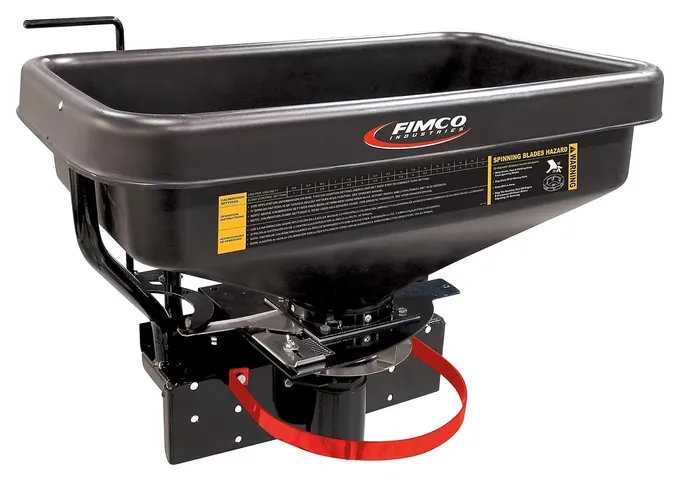
Small seed such as clover and brassicas is the hard part. Most budget spinners have a coarse gate that dumps tiny seed too fast. A DeerBuilder review suggests mixing small seed with fertilizer or pelletized lime so it flows at a steadier rate. A variable-speed unit such as the Fimco 12V dry material spreader lets you slow the spinner for a tight band, which helps along plot edges.
To set the rate, weigh a known amount of material, spread it over a measured area at your normal speed, and adjust the gate until the result matches the rate on the seed or fertilizer bag. Always follow the label on fertilizer and treated seed.
Keeping The Motor Alive: Salt, Lime And Moisture
Fertilizer, lime and rock salt draw moisture and corrode metal, and the 12-volt motor under the hopper takes the worst of it. Owners in a Green Tractor Talk thread describe motors that lasted for years and others that quit after a season of lime. Spare motors for common models are inexpensive, so many keep one on the shelf.
Empty the hopper after every job. Rinse only if the motor is sealed, never aim a pressure washer at it, and let the unit dry before you cover it. Keep a rain cover on in the field, since wet seed and fertilizer clump and plug the gate. If the motor stops, check the inline fuse on the 12-volt lead before you buy parts.
We checked every brand on this list against the CPSC recall database and found no spreader recalls. If you hunt over a food plot, check your state's rules: spreading feed, rather than planting seed, can count as baiting in some states.
How we researched this
We compared 18 ATV and UTV spreaders, checked makers' and dealers' specifications for the 8 finalists, analyzed owner feedback from habitat and tractor forums and one trade review, and checked every brand against CPSC recall records. Updated October 23, 2026 by Ezvid Wiki Admin.
Frequently asked questions
Should I get a rack-mount, hitch or tow-behind ATV spreader?
Rack mounts are cheapest and fit almost any ATV, but watch the rack's weight rating. Hitch units suit UTVs with a receiver and keep the bed free. Tow-behinds need no wiring and carry the most, but throw a narrower strip.
What size hopper do I need?
An 80- to 100-pound hopper covers about an acre of seed per fill, which suits most food plots. For several acres of fertilizer or for salting long drives, look at 150 pounds or a tow-behind.
Can an ATV spreader handle salt, sand or lime?
Most handle rock salt, ice melt and pelletized lime. Sand only works if it's dry and screened. Salt and lime corrode motors, so empty and dry the unit after each use.
Can I spread clover and other small seed?
Yes, but basic spinners tend to dump it. Close the gate down, mix the seed with fertilizer or pelletized lime, or choose a variable-speed spreader.
How do I maintain an ATV broadcast spreader?
Empty it after each job, rinse only if the motor is sealed, dry it before storage and keep it covered. Check the inline fuse first if the motor stops.