The 9 Best Baguette Pans
Updated by · How we research

Metal, ceramic and silicone baguette pans compared on loaf count, coating and oven fit, led by the Chicago Metallic Commercial II for three crisp loaves. When users buy our independently chosen editorial picks, we may earn commissions to help fund the Wiki.
A baguette pan won't turn a home oven into a bakery's steam deck, but it fixes the two problems home bakers run into most: loaves that slump flat and pale, soft bottoms. Curved, perforated channels hold the shape and let hot air reach the underside. It's for anyone baking French bread at home, from a first loaf to weekly batches.
At a Glance


Editor's Notes
November 16, 2026, by Ezvid Wiki Editors:
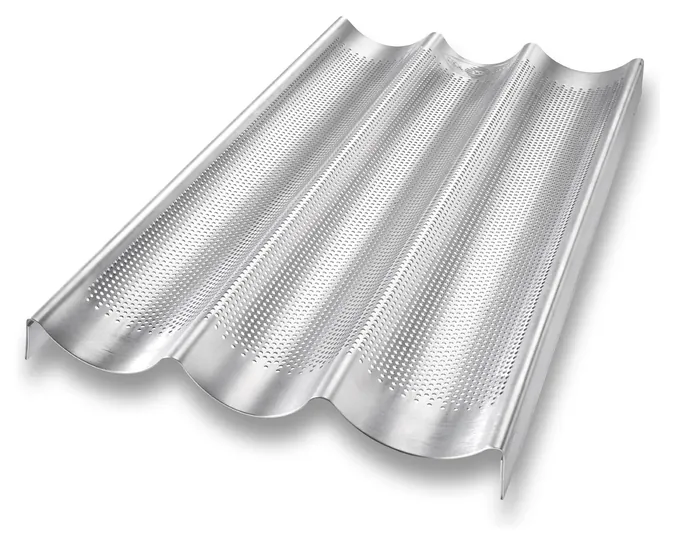
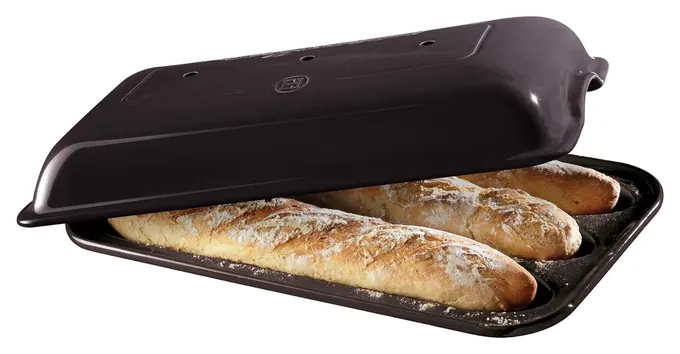
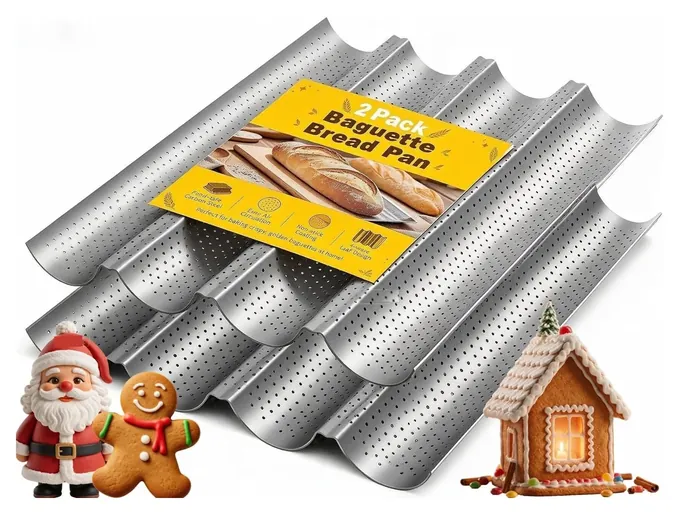
The Chicago Metallic Commercial II now leads this list. It's the pan baking roundups name first most often, it bakes three full loaves, and it carries a lifetime warranty. The USA Pan French Baguette Pan, the Emile Henry Baguette Baker and the Amagabeli Baguette Pan 2-Pack stay, the last now sold as two pans.
We dropped the Lekue Micro, which is currently unavailable, the Keepingcoox Mini and Fox Run 18-Inch, which we could no longer find for sale, and the Paderno World Cuisine Perforated, which costs several times as much as comparable steel pans. The Mrs. Anderson's Baking Double went too, since a cheaper two-loaf pan does the same job and its stock had run down.
Coatings drove most of the new picks. Readers now ask what's on the pan, so we added the Chefmade WK9026 with a coating free of PTFE and the bare-aluminum Nordic Ware Baguette Pan, along with the Topzea Silicone Baguette Set, a budget Kitessensu and a deeper Chicago Metallic pan for fat loaves. We lined up 17 pans' coatings and oven limits against King Arthur Baking's method for pan-baked baguettes, read bakers' forum threads on sticking and browning, and found no recalls for any brand listed.
Earlier notes
February 4, 2021, by Sheila O'Neill:
New to the list, the KeepingcooX Mini is made entirely of silicone. This is a plus if you're looking for a lightweight and flexible option that is truly dishwasher safe, though many prefer a metal material that conducts heat and has a rigid shape. This one, like the Lekue Micro, creates mini-loaves that are much shorter than traditional baguettes. These can be good for sandwiches or single servings.
Most selections are perforated with tiny holes that allow air to circulate on all sides of the bread, making the crust crispy on top and bottom. However, if you don't appreciate the dimpled texture this creates or you're working with a dough that might spill out of the holes (like some gluten-free recipes) the Fox Run 18-Inch might be a good choice for you.
We removed the Bread Experience Banneton as it was a proofing basket that didn't serve the function of a pan. Also removed the ZenUrban 870002 due to availability concerns.
August 8, 2019, by Karen Bennett:
A baguette pan is a form of bakeware that is the secret to making bakery-quality bread right in your own kitchen. They typically feature perforation to allow air to circulate and create a beautiful golden crust. Many feature multiple wells for creating two or more loaves at a time. They come in a variety of materials, as our selection here reflects, including durable steel and nonstick silicone.
Joining our list is the Mrs. Anderson’s Baking Double, which features two troughs and is great not only for French bread, but also for spice cakes, herb and cheesy bread, and more. It’s made of tough carbon steel for uniform heating, with a silicone coating that will help you release your creations with ease. Its reinforced, beaded rim prevents warping in hot temperatures. Like many others, it’s not meant for the dishwasher; rather, it’s easy to hand-wash in warm, soapy water.
The budget-friendly Amagabeli Silver can bake four loaves at a time. It too is made of food-grade carbon steel for durability. It’s coated with FDA-approved PTFE, for a reliably nonstick surface. It’s thicker than some others, so you won’t have to worry about it bending during baking or handling. And, unlike many others, it’s perfectly safe for the dishwasher, making cleanup a cinch.
Leaving our selection in this update is the Yilove Perforated Mold, due to issues with availability.
Perforated Metal, Ceramic Or Silicone
Silicone trays fold flat for storage and release bread without grease, but silicone doesn't conduct heat like metal, so crusts come out paler and softer.
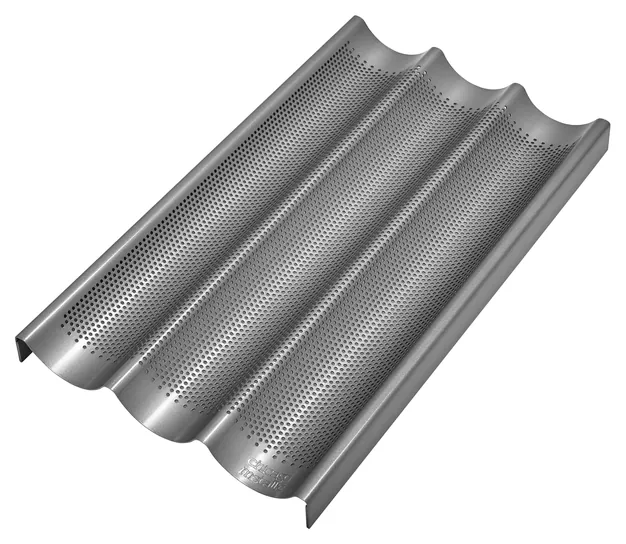
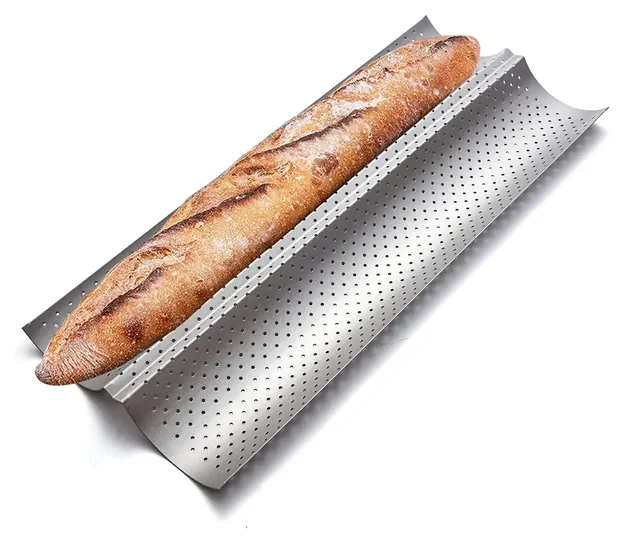
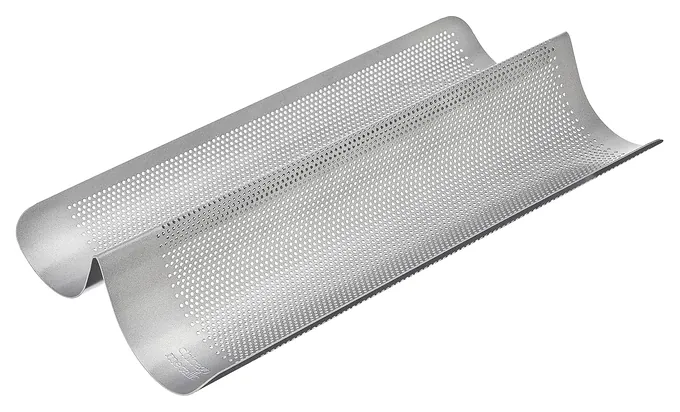
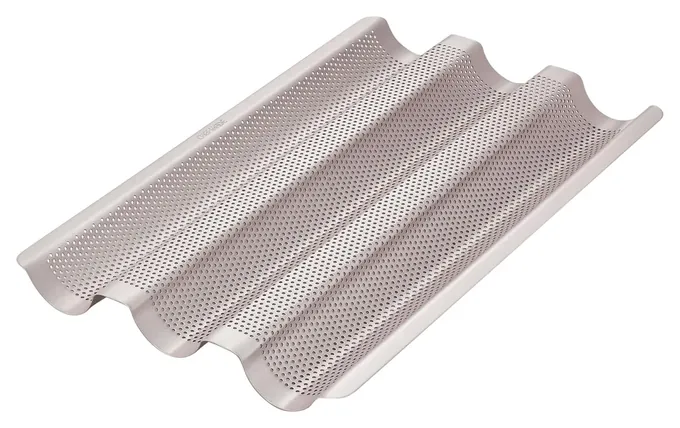
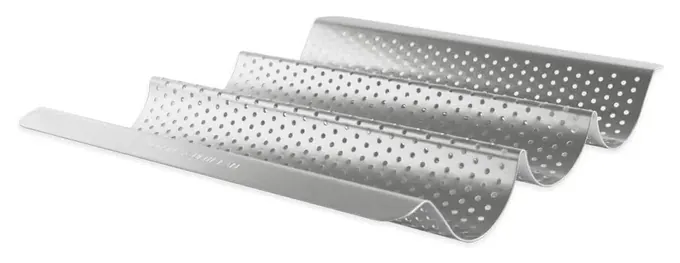
Most baguette pans are thin metal trays with two to four curved channels punched full of small holes. The channels keep a soft dough from spreading sideways while it rises, and the holes let hot air and moisture move under the loaf, so the bottom browns instead of steaming. King Arthur Baking's baguette pan recipe proofs and bakes the loaves right in the pan for that reason. The trade-off is that a very wet dough can push into the holes and stick, a common complaint on The Fresh Loaf, so a slightly firmer dough or a light coat of oil helps.
A covered ceramic baker works differently. The Emile Henry baguette baker traps the steam that comes off the dough under its lid for the first part of the bake, which keeps the crust soft long enough for the loaf to rise fully, then lets it crisp once the lid comes off. It's rated to 500 degrees, but it's heavy and costs far more than a metal tray.
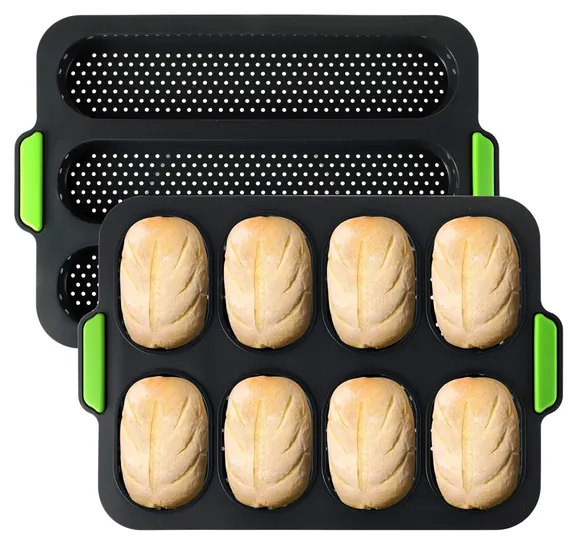
Silicone trays fold flat for storage and release bread without grease, but silicone doesn't conduct heat like metal, so crusts come out paler and softer. They also need a baking sheet underneath to carry them in and out of the oven.
Count The Loaves, Then Measure The Oven
Pan size comes down to how many loaves you want and how wide your oven is inside. Two-loaf pans run about 15 by 6 inches and fit nearly any oven, including many countertop models. Three-loaf pans are about 9 to 9.5 inches wide, and four-loaf pans grow to about 13 inches wide. Most full-length pans are 15 to 16 inches long, and Chefmade suggests an oven at least 16 inches wide inside for its 15-inch pan. If your oven is small, the Nordic Ware baguette pan bakes loaves about 12 inches long.
Next, check what's on the surface. Many pans use a PTFE nonstick coating, which is approved for food contact; the main rule is to stay below the oven limit printed with the pan, and the pans here are rated from about 446 to 500 degrees. Some brands now sell coatings made without PFAS or PTFE: USA Pan describes its silicone-based finish that way, and Chefmade's champagne-colored coating is sold as PTFE free. Nordic Ware's pan has no coating at all; it's bare aluminum, so it needs oil or parchment.
Thickness matters too. Aluminum and aluminized steel spread heat evenly, while the thinnest carbon steel trays, often well under a millimeter, can flex when lifted hot and may warp over years of high heat.
Getting A Crisp Crust At Home
A pan shapes the loaf, but steam makes the crust. King Arthur Baking has bakers put an empty cast-iron pan on the bottom rack while the oven preheats, then pour about a cup of boiling water into it as the loaves go in. The burst of steam keeps the surface soft for the first few minutes so the bread rises fully, then the dry heat that follows browns and crisps it. Proof the shaped loaves in the pan, covered, for about 30 to 40 minutes, and slash the tops just before baking.
Grease the pan lightly the first few times even if it's nonstick, or lay a strip of parchment in each channel for a very sticky dough. Chicago Metallic recommends a light coat of oil and suggests washing by hand even though the pan can go in the dishwasher, since detergent wears coatings faster. Use wooden or nylon tools, dry carbon steel right away so it doesn't rust, and let ceramic cool before washing, because a sudden change in temperature can crack it.
How we researched this
We compared 17 baguette pans, read the makers' and sellers' specs, coating disclosures and care instructions for the 9 picks, followed King Arthur Baking's method for pan-baked baguettes, analyzed owner feedback and bakers' forum threads, and checked every brand against U.S. Consumer Product Safety Commission recalls. We found no lab or magazine test of baguette pans, so roundups counted only as a weak signal.
Frequently asked questions
Do you need a baguette pan to make baguettes?
No. You can bake on a stone or a sheet and support the loaves while they rise with a floured linen cloth, called a couche. A pan makes it easier, because it holds the shape during proofing and baking and browns the bottom evenly.
Should you grease a nonstick baguette pan?
A light coat of oil or a strip of parchment helps, especially with wet doughs that can push into the holes. Chicago Metallic suggests oiling its pans lightly even though they're nonstick.
Is a perforated pan better than a solid one?
For a crisp bottom, usually yes. The holes let hot air and moisture move under the loaf. A solid pan can leave the underside softer, though it never lets dough stick in the holes.
Are silicone baguette pans any good?
They're easy to store and release bread well, but silicone doesn't brown bread as deeply as metal, so the crust comes out paler and softer. Always set a silicone tray on a baking sheet.
Can baguette pans go in the dishwasher?
Some are labeled dishwasher safe, but makers such as Chicago Metallic still advise washing by hand, because detergent wears nonstick coatings faster. Ceramic bakers like Emile Henry's handle the dishwasher; let them cool first.
What size baguette pan fits my oven?
Measure the inside width of your oven. Most full-length pans are 15 to 16 inches long, so you need a bit more room than that. For a small or countertop oven, pick a narrow two-loaf pan or a shorter pan.