The 10 Best Bike Pedal Wrenches
Updated by · How we research

Ten pedal wrenches compared on leverage, jaw angles and grip, from Park Tool and Pedro's to budget bars. The Park Tool PW-5 leads for home mechanics. When users buy our independently chosen editorial recommendations, we may earn commissions to help fund the Wiki.
Almost every bike pedal takes a 15 mm wrench, and the left one unscrews clockwise, the opposite of most bolts. A pedal wrench has thin jaws that slip onto the narrow flats behind the pedal and a long handle for leverage. These picks suit home mechanics swapping pedals, riders who fly with a bike, and anyone fighting a seized one.



Editor's Notes
October 26, 2026, by Ezvid Wiki Editors:
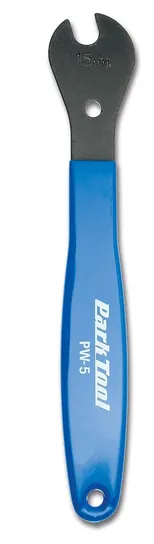
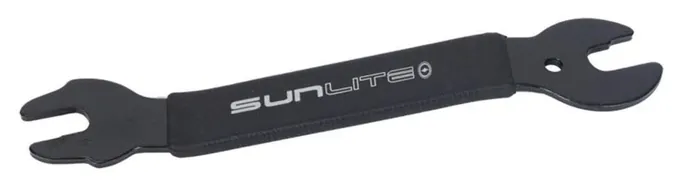
The Park Tool PW-5 now leads the list. Park designed it for home mechanics, it has a long owner track record, and its flat head reaches pedals on a crowded crank. The Sunlite Sport, which used to sit on top, stays as a cheap spare, but it's a thin bar with little documentation behind it.
The Bikehand YC-515 listing now sells a cassette tool kit, and the Lezyne Classic, the Icetoolz Combo and the original Pedro's Equalizer are no longer sold, so they're gone. The Pedro's Equalizer Pro II takes the old Equalizer's place. We also dropped the BC Bicycle Company 15, which had too little owner history to judge.
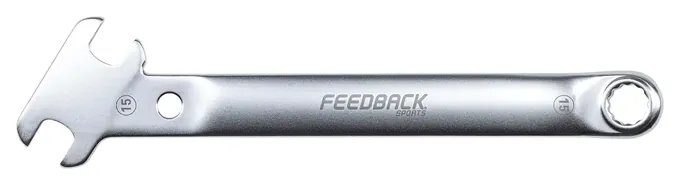
New are the Park Tool PW-3 for older pedals, the Park Tool TWB-15 for anyone who tightens with a torque wrench, the Feedback Sports 17142 for bolt-on wheels, the thin Unior 1630 and the Jaswill HL082, a cheap tool with hex holes.
No magazine or lab seems to have compared pedal wrenches head to head, so we worked from Park Tool's and Pedro's spec pages, Park's pedal installation guide, Sheldon Brown's notes on pedal threads and years of owner feedback.
Earlier notes
April 24, 2020, by Rafael Perez:
Removed the Sunlite Sprocket, the Sablue Multi, the Diamondback 15mm, and the Bikehand Acekit because of availability issues.
Added the Bikehand YC-515, the Pedro's Pro Travel, the Lezyne Classic, and the BC Bicycle Company 15.
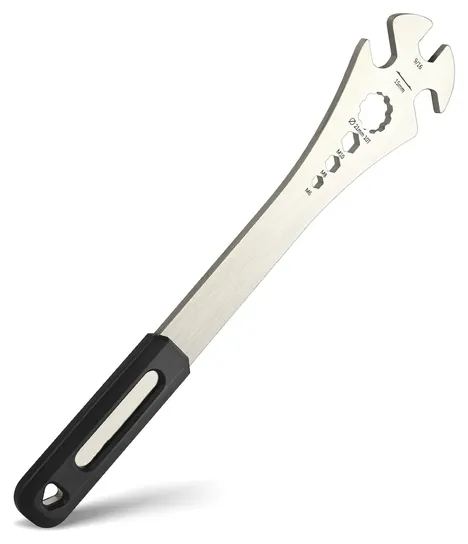
It's good to periodically tighten your bike's pedals since they gradually back out with the pressure you apply when you use them. If you neglect to do so, after a certain point, only some of the threads will be engaged and the downward pressure will tear out and ruin the threads in the crank arm. Then you'll have to either retap the hole (may not be possible on some models) or buy new arms. Many of the pedal wrenches available like the Park Tool PW-5 come with a 15mm head that is machined in such a way that it may also fit older 9/16ths wrench flats. The Sunlite Sport has the 15mm slot with additional 16 and 17mm slots for more unusual pedal flats. While one should normally be wary of tools that try to fit too many functions onto one platform, the Bikehand YC-515 does this without sacrificing any one of its features. It works very well as both a bike pedal wrench and a cogset remover and installer thanks to its chain whip.
What Size Fits, And When A Hex Key Is Better
Nearly every modern pedal has 15 mm wrench flats on the axle, between the pedal body and the crank arm.
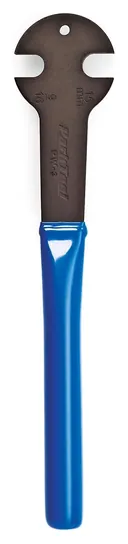
Nearly every modern pedal has 15 mm wrench flats on the axle, between the pedal body and the crank arm. Some older pedals use 9/16-inch flats instead, which is why tools like the Park Tool PW-3 carry both sizes. The threads are a separate matter: most pedals use 9/16-inch threads, while one-piece cranks on many older and cheaper bikes take smaller 1/2-inch pedals (Sheldon Brown). A wrench fits either kind, as long as the flats match.
Many pedals also have a hex socket in the end of the axle, usually 8 mm and sometimes 6 mm, reached from the back of the crank arm (Park Tool). Some clipless pedals have no wrench flats at all. A long hex key in that socket can't round off the flats, so it's a good choice when the socket is there.
A pedal wrench differs from a regular 15 mm wrench in two ways. Its jaws are thin enough to fit the narrow flats, and its handle is long for leverage. A standard combination wrench is often too thick to sit on the flats or too short to break a stuck pedal loose. Park Tool also warns against using a thin cone wrench on pedals, because it isn't built for that much force.
Left Is Backward: Removing And Installing Pedals
The right pedal, on the chain side, has a normal thread. The left pedal has a reverse thread, so it unscrews clockwise. An easy rule: both pedals tighten in the direction the cranks turn when you ride forward, and loosen the other way (Sheldon Brown). The pedals are usually stamped R and L near the threads.
Park Tool's pedal guide has a few tips that save knuckles. Shift the chain onto the big chainring first, so a slipping hand hits the chain instead of the teeth. Set the wrench at an angle of 90 degrees or less to the crank, and hold the opposite crank as a counter lever. For a seized pedal, penetrating oil and a longer handle help more than brute force.
When you put pedals back on, grease the threads or use anti-seize, start them by hand to avoid cross-threading, and then snug them with the wrench. Park lists about 40 newton-meters, which is roughly a firm 30-pound pull on a foot-long wrench. A cross-threaded pedal can ruin a crank arm's threads, and the fix is a thread insert that a shop has to install.
Leverage, Jaw Angles And Grip
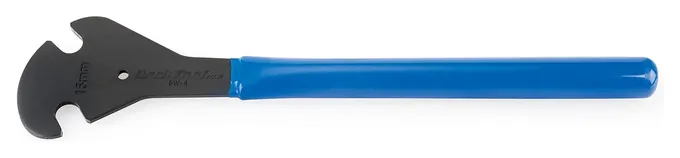
Handle length decides how hard a pedal wrench is to use. A short wrench such as the Park Tool PW-5 is easy to store and fine for pedals that come off every season. A long shop wrench such as the Park Tool PW-4 is worth it for pedals that have sat for years or for anyone who works on other people's bikes.
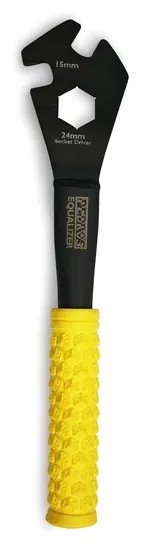
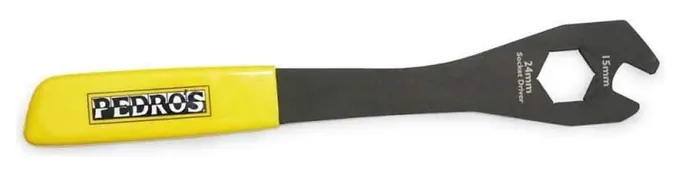
Two jaw angles in one head let you start with the handle where it gives the best push and keep it clear of the frame. The Pedro's Equalizer Pro II sets its jaws at 30 and 75 degrees for that reason. Padded or rubber grips matter more than they seem, because a bare steel edge is hard on the hand at full effort.
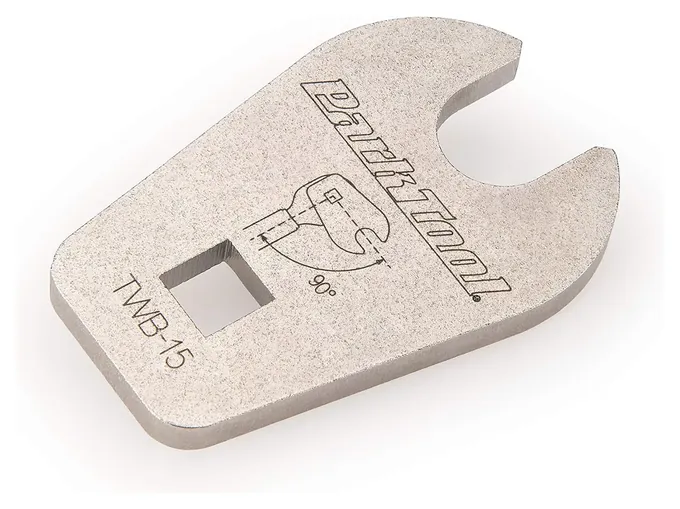
For tightening to a number, a torque wrench needs an adapter that fits the flats. The Park Tool TWB-15 is one, and it reads true when it sits at a right angle to the torque wrench. Riders who travel should look at flat, light tools like the Pedro's Pro Travel, and accept that a short lever means more effort.
How we researched this
We compared 21 pedal wrenches and torque adapters, read Park Tool's, Pedro's and Feedback Sports' spec pages for the finalists, along with Park Tool's pedal installation guide and Sheldon Brown's notes on pedal threads, looked at patterns in owner feedback, and checked every brand for recalls with the U.S. Consumer Product Safety Commission. We found no independent lab test of pedal wrenches.
Sources (10)
- Park Tool: Pedal installation and removal
- Sheldon Brown: Pedals
- Park Tool: PW-5 Home Mechanic Pedal Wrench
- Park Tool: PW-4 Professional Pedal Wrench
- Park Tool: PW-3 Pedal Wrench
- Park Tool: TWB-15 Pedal Wrench Crow Foot
- Pedro's: Pro Travel Pedal Wrench
- Pedro's: Equalizer Pedal Wrench II
- Feedback Sports: Pedal Wrench Combo
- U.S. Consumer Product Safety Commission: SaferProducts.gov
Frequently asked questions
What size wrench do bike pedals take?
Almost all modern pedals take a 15 mm wrench on the axle flats. Some older pedals use 9/16 inch. Many pedals also accept an 8 mm or 6 mm hex key from the back of the crank.
What is the difference between a pedal wrench and a regular wrench?
A pedal wrench has thinner jaws that fit the narrow flats on a pedal axle and a longer handle for leverage. A regular 15 mm wrench is often too thick or too short.
Can I remove pedals without a pedal wrench?
Yes, if the pedal has a hex socket in the axle end: use a long 8 mm or 6 mm hex key from the back of the crank. Pedals with flats only need a thin 15 mm wrench.
Which way do bike pedals unscrew?
The right pedal unscrews counterclockwise, like most bolts. The left pedal has a reverse thread and unscrews clockwise. Both loosen when turned opposite to the way the cranks turn when you ride.
How tight should bike pedals be?
Park Tool lists about 40 newton-meters. Without a torque wrench, that's a firm pull on a foot-long wrench. Grease the threads first so they come off again later.