The 8 Best Electric Can Openers
Updated by · How we research

Eight corded and cordless can openers compared on cut style, lid edges and warranty. The Hamilton Beach Smooth Touch leads with a smooth side cut. When users buy our independently chosen editorial picks, we may earn commissions to help fund the Wiki.
Where the blade cuts matters more than the motor. A side cutter slices under the rim and leaves a dull lid that can go back on as a cover, while a top cutter is often cheaper but leaves a razor edge. Either kind can stall on a dented or pull-tab can. These picks suit home cooks and anyone whose grip has weakened.


Editor's Notes
October 23, 2026, by Ezvid Wiki Admin:
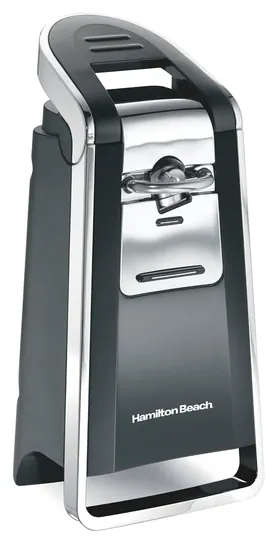
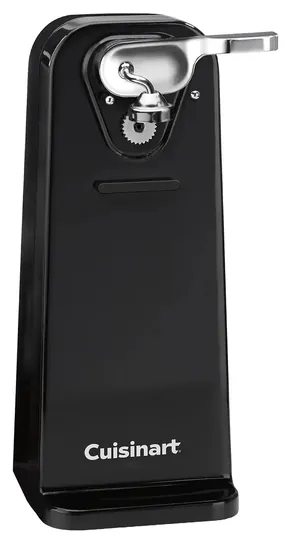
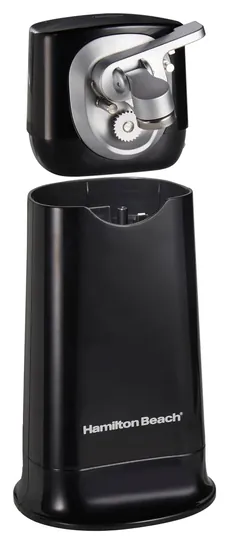
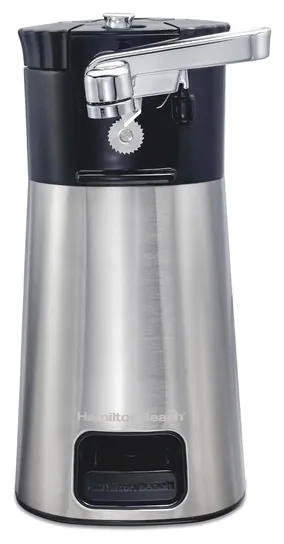
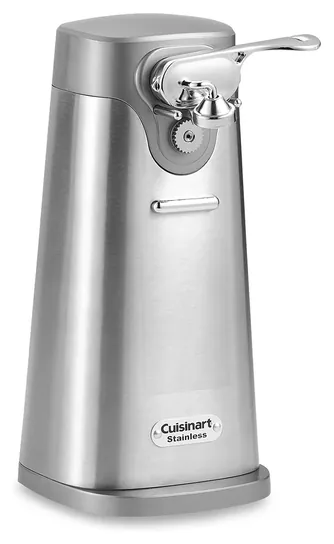
The Hamilton Beach Smooth Touch takes the top spot. It cuts around the side, so nothing it leaves behind is sharp, and in America's Test Kitchen's trial of eight openers it opened a large can in about eight seconds and was one of the few that handled pull-tops and dented cans. The Cuisinart Deluxe CCO-50 stays as the low-cost pick, since Reviewed.com liked its magnet and automatic stop and Cuisinart backs it for three years.
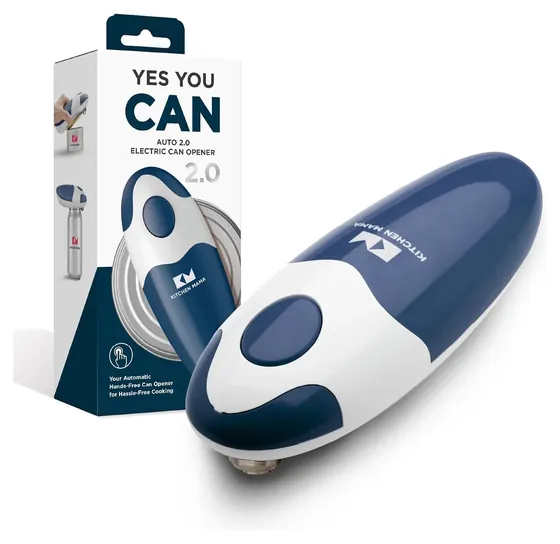
Several old picks went. The Zyliss EasiCan was slow and its motor quit in testing, Black + Decker's opener has been replaced by a model that tested poorly, and the Proctor Silex 75217F left jagged edges. The Kitchen Mama CO1100 gave way to the Kitchen Mama Auto 2.0, and the older OpenStation to the Hamilton Beach OpenStation sold now. We dropped the Oriflame for lack of any evidence.
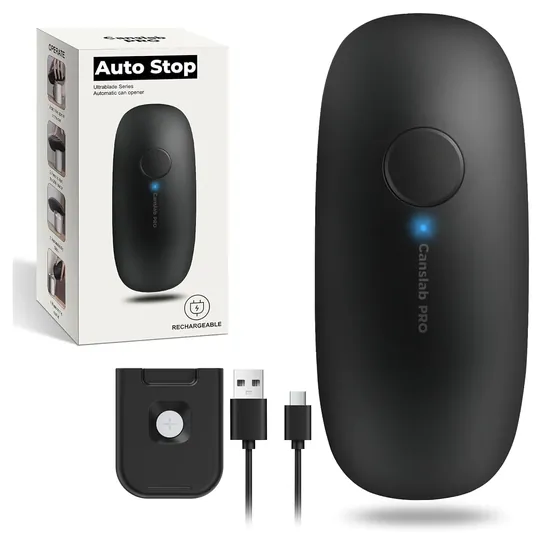
New picks cover what readers ask about: the rechargeable Canslab Ultrablade PRO, the Hamilton Beach FlexCut for big cans and the steel Cuisinart SCO-60. Our evidence was two independent kitchen tests that timed and stress-tested these openers, the makers' warranty terms, patterns in owner complaints and a CPSC recall search.
November 30, 2020:
Electric can openers seem to fall into two distinct types; there are small, battery-powered options that rotate on top of your cans, and larger, free-standing models (that you usually plug into the mains) that rotate the entire can, suspending it beneath an arm. We've included three of the former and seven of the latter to give you an idea of what's on offer.
We removed the Black and Decker Spacemaker (an example of a third type of opener that's mounted underneath your worktop) as its price point was far too high for something that opens cans and couldn't be justified all things considered. Instead, we added the Oriflame One-Touch Switch, another of the compact, mouse-like devices that you set on top of the cans. Along with the Kitchen Mama CO1100 and the Zyliss EasiCan E930038U, these options are a really good choice for senior citizens and those suffering from rheumatic conditions as the operation is completely hands-free and there doesn't seem to be any issues of having to correctly align your cans like the freestanding options sometimes incur.
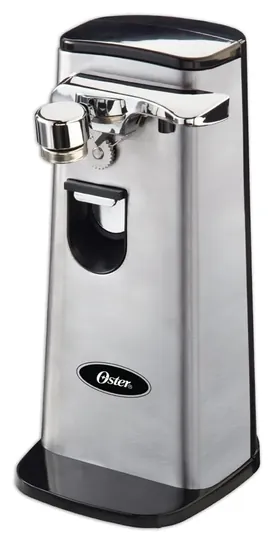
We replaced the Oster Tall 003147 with the much more popular Oster FPSTCN1300, an almost like-for-like swap, as they're both built to accommodate taller cans (like the Proctor Silex 75217F and the Hamilton Beach Smooth Touch 76606ZA), except the Oster FPSTCN1300 has a more durable (and better-looking) stainless steel arm, and an integrated bottle opener on the front.
November 15, 2019:
There can be several frustrating parts of trying to pry open a can, and it can often be a messy job, so we made sure our selection of openers boast features to make the whole process more seamless.
We wanted to show that even electric models could still be as compact as the manual versions, so we included the Kitchen Mama CO1100 and the Zyliss EasiCan E930038U, both of which are small, lightweight, and ergonomic. They're also easy to toss in a picnic basket or lunchbox. We removed the Bangrui Smooth Edge, as many complain it can get jammed in the middle of a job, and be quite difficult to pry off a lid.
We also wanted to include some options that could accommodate extra-tall cans, and even though we removed the West Bend 77203 since the manufacturer discontinued it, we still have the Proctor Silex 75217F and the Oster Tall 003147, which can handle lengthier tins.
Fear of cutting oneself is always a concern when taking the lid off of a can, so we removed the Sokos CN180 as many complain it creates sharp edges. We particularly like that the Hamilton Beach Smooth Touch 76606ZA has a side-cutting system to minimize the risk of sharp edges, so it continues to rank quite well.
A few models that can handle various kitchen tasks caught our attention, too, like the Black & Decker Spacemaker, with its quality knife sharpener to keep those kitchen knives in working order, and the Hamilton Beach OpenStation 76389R, which has integrated tools to take lids off of jars, pop caps off of bottles, and cut through tough plastic packages.
Special Honors
Edlund 266 Restaurants, school kitchens and caterers that open dozens of big cans a day need more than a home appliance. The Edlund 266 is a commercial electric opener with a heavy metal body, a replaceable knife and gear, and food-safety certification for professional kitchens. Dealers rate it for about 75 cans a day. It costs many times more than a home model and is sold through restaurant-supply dealers, not regular kitchen stores. edlundco.com
Side Cut Or Top Cut
If anyone in the house has cut a finger on a lid, or you store leftovers in the can, go with a side cutter.
The biggest choice is where the blade goes. A top-cut opener, the classic design, pierces the lid just inside the rim and a magnet lifts it away. It's fast and cheap, but the lid and the inside of the can are razor sharp, and the cutting wheel dips into the food each time. A side-cut opener, often sold as smooth edge or safety cut, slices through the seam just under the rim instead. The lid comes off with a dull, rolled edge, fits back on the can as a cover, and the wheel stays dry.
In America's Test Kitchen's test of eight openers, the side-cutting Hamilton Beach Smooth Touch opened a 28-ounce can in about 8 seconds and handled pull-top and dented cans. Two top-cut models left jagged edges and couldn't open pull-tops at all. Side cutters have their own quirk: Reviewed.com found tiny metal slivers on the rim after one smooth-edge model, so wipe the rim before you pour.
If you mainly open standard soup and bean cans and don't mind handling a sharp lid with the magnet, a top cutter with an automatic stop, like the Cuisinart Deluxe CCO-50, is the bargain. If anyone in the house has cut a finger on a lid, or you store leftovers in the can, go with a side cutter.
Corded, Battery Or Rechargeable
A corded countertop opener has the most power and the steadiest cut. Its downside is that you lift the can up to the machine, and some models make you hold the lever down until the lid comes free. Look for an automatic stop if your hands tire.
Handheld openers sit on top of the can and crawl around the rim by themselves. That's ideal for weak or painful hands, because there's nothing to hold or squeeze, and the can never leaves the counter. They're slower, though. In the America's Test Kitchen test, a battery model took 29 seconds on the same can a corded side cutter opened in 8, and another took 46 seconds before its motor failed. Reviewed.com reached the same verdict: battery openers can't match plug-in power. Pull-tab and rimless lids also trip up some handhelds.
Rechargeable handhelds spare you from buying AA batteries, but the battery is built in, so once it wears out the whole unit usually goes. Hybrids like the Hamilton Beach FlexCut split the difference: they sit on a charging base for small cans and lift off to open the big restaurant-style ones.
Cleaning, Safety And Damaged Cans
Most electric openers are hand-wash only. Pop off the lever and cutting wheel after messy cans like tomato sauce or pet food, scrub the gear with a brush, dry it and put it back. Gunk on the gear is the most common reason a can slips or stops turning. Never put the motor base in water, and unplug it before cleaning.
Don't use an opener to rescue a damaged can. The USDA Food Safety and Inspection Service advises throwing out cans that bulge, leak or have deep dents, especially along the seam or rim, because the seal may have failed. A dented rim can also throw the cutting wheel off track.
We checked every brand on this list against CPSC recall records in October 2026 and found no can-opener recalls. Top-cut lids are the main injury risk: lift them with the magnet or a fork, never with your fingers, and drop them into the empty can before it goes in the recycling.
How we researched this
We compared about 20 electric can openers, read America's Test Kitchen's and Reviewed.com's independent tests and Consumer Reports' findings, checked each finalist's specs and warranty terms, analyzed patterns in owner feedback, and searched CPSC recall records for every brand. Updated October 23, 2026 by Ezvid Wiki Admin.
Frequently asked questions
What is the best can opener for seniors or people with arthritis?
Pick one that needs no grip strength. A handheld model that rides around the rim on its own, such as the Kitchen Mama Auto 2.0 or Canslab Ultrablade PRO, needs only a button press. A corded model with an automatic stop, like the Cuisinart Deluxe CCO-50, also works if lifting the can isn't a problem.
Is an electric can opener better than a manual one?
Not always. A good manual smooth-edge opener can be gentler on the hands than a weak electric one, and it never needs power. Electric openers win for people who can't turn a crank or open many cans a day.
Do side-cut openers take the whole lid off?
Yes. They cut through the seam under the rim, so the whole lid lifts off with a dull edge. You can set it back on the can as a temporary cover.
Can electric can openers open pull-top cans?
Some can. The Hamilton Beach Smooth Touch handled pull-tops in independent testing, but several top-cut models couldn't, and some handhelds stall on pull-tab or rimless lids.
Why do electric can openers stop working?
Most have plastic gears and a small cutting wheel. Food buildup makes cans slip, and worn gears or a dull wheel stop the cut. Cleaning the gear after messy cans helps, and a longer warranty is worth having.
What is an industrial electric can opener?
A commercial opener built for restaurant kitchens, such as the Edlund 266. It has a heavier motor and replaceable cutting parts and is sold through restaurant-supply dealers at a much higher price.