The 10 Best Electric Hand Dryers
Updated by · How we research

Heated or unheated, shallow or deep: ten wall-mounted hand dryers for public and home restrooms compared, with the Excel XLERATOR XL-BW as the overall pick. When users buy our independently chosen editorial recommendations, we may earn commissions to help fund the Wiki.
Under federal accessibility rules, a wall-mounted object in a walkway may stick out only four inches, and many hand dryers stick out further, so a hallway install often needs a recess kit. Heat is the other big call: a heated dryer can use most of a household circuit, while an unheated one needs a fraction. These picks suit public restrooms, small shops and home bathrooms.


Editor's Notes
October 26, 2026, by Ezvid Wiki Admin:
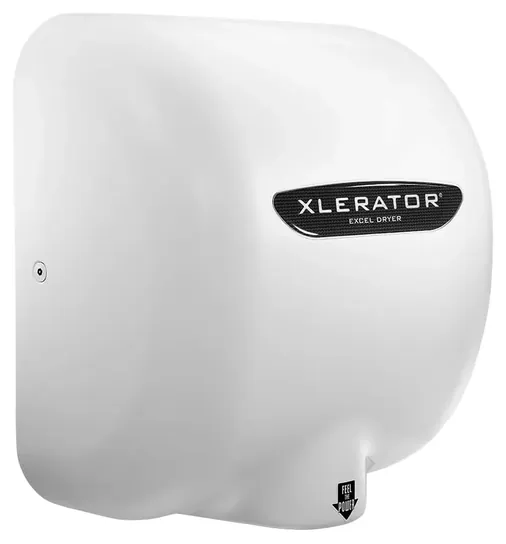
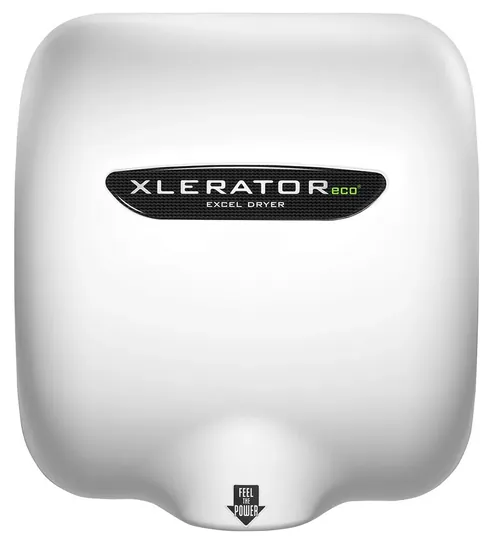
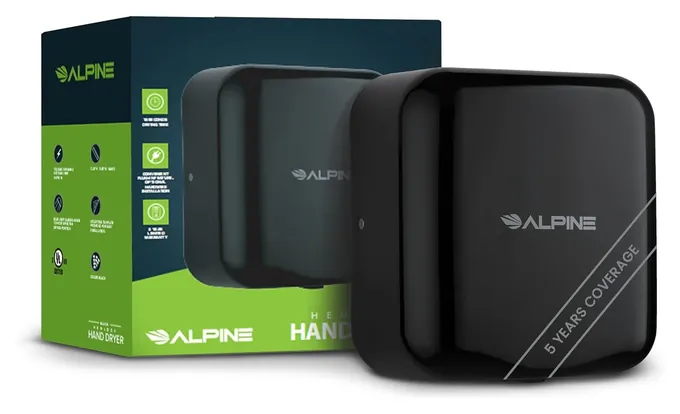
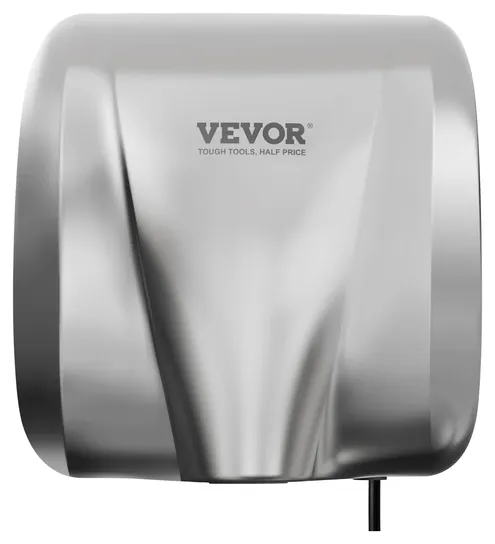
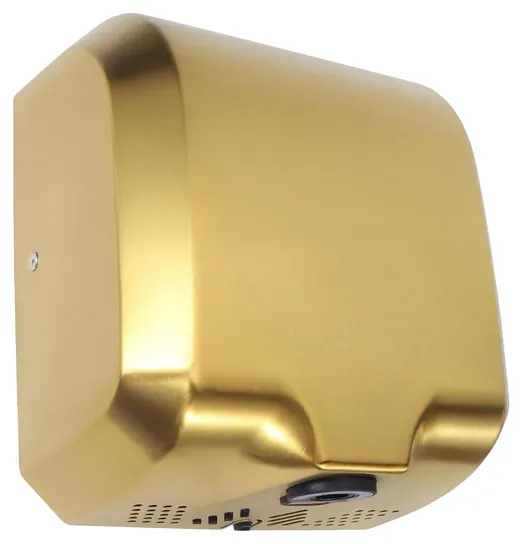
The Excel XLERATOR XL-BW now tops this list. Excel Dryer documents its specs, builds it in the U.S. and backs it with a seven-year warranty, which is more than most rivals put in writing. The XLERATOReco XL-BW-ECO stays as the heat-free choice, now in the white cover, which costs less than the graphite one. The Alpine Hemlock 400 stays too, and new picks cover narrow hallways, home bathrooms, a gold finish and a two-pack.
Several older picks are gone. The Penson, Interhasa and World Dryer A-Series have vanished from sale, the Mitsubishi Jet Towel is now a dealer-only item, and the Palmer Blue Storm and World Dryer SmartDri Plus had too little current information to vouch for. The Dyson Air Blade we listed is a 240-volt model that won't run on a standard U.S. circuit. The Dyson Airblade 9kJ moved to Special Honors, because its retail listing pictures a different Dyson model and we couldn't confirm what ships.
No one publishes lab tests of hand dryers, so the ranking leans on maker spec sheets, the U.S. Access Board's rule on how far wall fixtures may stick out, the published noise and hygiene research, and a recall search that turned up nothing on any pick.
January 28, 2021:
When looking for "the best" electric hand dryer, the answer largely depends upon the facilities in which it is to be installed. Is personal hygiene the biggest factor, such as in hospitals and restaurants? Is quietness of utmost importance, such as in libraries or places of learning? Is efficiency the main decider, as with high-volume areas like conference halls and busy bars?
The ideal hand dryer will tick all these boxes to some degree, although some lean towards certain qualities. Take, for example, the familiar World Dryer A-Series. This is a good all-around "workhorse" model, which is frequently found in public restrooms and is highly durable, but quite basic. It lacks certain features, such as automatic operation and filtration, making it less sanitary than some of its more modern counterparts.
These include the Palmer Blue Storm and Excel XLerator Eco, which are both tried-and-tested units that are each fully-automatic, high-output models. While the former is the more robust of the two, and therefore well-suited to busy public use, the latter has better economical properties for the budget- and environmentally-conscious consumer.
A recent addition to our ranking is the Dyson Airblade 9KJ, which brings the humble hand dryer into the 21st century, with its distinctive design that completely reimagines how a dryer should look. Based on their existing models, such as the previously-ranked Dyson Air Blade, this new inclusion to the popular line has improved filtering technology that can absorb microscopic particles, such as bacteria and viruses, while also having one of the most advanced motors in production.
December 09, 2018:
Added both the Palmer Blue Storm and Alpine Hemlock due to their powerful internal motors. The Dyson Air Blade is also a valuable addition thanks to both its internal HEPA filtration system and narrow profile for installation in tight spaces. Both the Mitsubishi Jet Towel and Interhasa Automatic offer sleek ergonomic and open designs for modern bathrooms.
Special Honors
Dyson Airblade 9kJ Dyson's slim wall-mounted Airblade 9kJ comes with a HEPA filter, offers an eco and a max setting, and sits about 4 inches off the wall, so it can hang in a walkway without a recess. Dyson rates it at roughly 650 to 900 watts and gives it a five-year warranty. It costs several times what most dryers here do, so it makes the most sense in high-end commercial restrooms. Buy it from Dyson or an authorized dealer. dyson.com
Depth, Accessibility And Where It Mounts
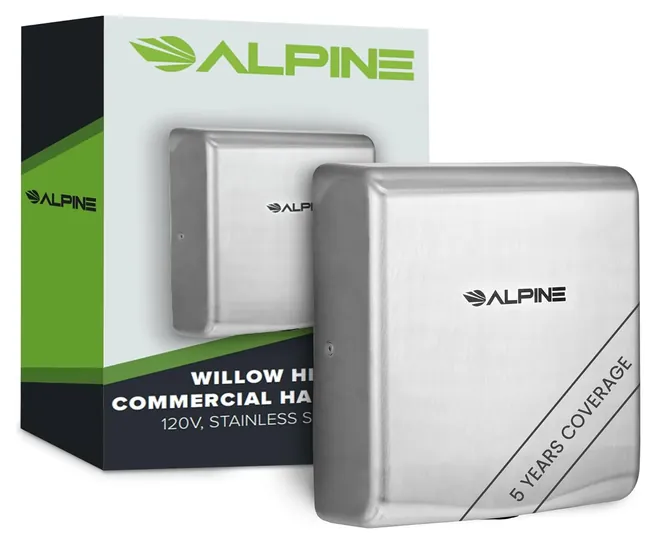
The Alpine Willow 405, just under 4 inches deep, can mount flat on the wall.
Measure the wall before picking a model. Under the ADA standards, anything mounted with its lower edge between 27 and 80 inches above the floor may stick out no more than 4 inches into a walkway, because a person using a cane can't detect it in time (U.S. Access Board). A standard XLERATOR projects about 6.7 inches, so in a passage it needs a recess kit or a spot outside the path of travel (ProDryers). The Alpine Willow 405, just under 4 inches deep, can mount flat on the wall.
Height matters too. Controls people have to reach belong between 15 and 48 inches above the floor (U.S. Access Board). Sensor dryers have no button, but the sensor still has to sit where a seated person's hands can get under it. Compliance depends on the install, not the box: a dryer sold as ADA compliant can still be mounted in a way that isn't.
Heat, Power And Wiring
Heat is the biggest single choice. A heated high-speed dryer such as the XLERATOR draws around 1,450 watts, or about 12.5 amps on a 120-volt line, and imports with 1,800-watt heaters pull close to the 15 amps a standard household circuit is built for. Unheated models like the XLERATOReco run at roughly 500 watts and still dry quickly, because the fast air does most of the work (Berls). Several budget models split the difference with a heater that switches on only in a cool room.
Commercial dryers are normally hardwired by an electrician, often on their own circuit. Many imports ship with a plug-in cord, which is handy at home, but check that the outlet is GFCI-protected and away from sink splashes. Look for a UL or ETL mark on the unit itself, which shows an independent lab checked it against U.S. electrical standards; several budget brands list only the European CE mark. Excel Dryer's site lists specs and accessories such as recess kits for each model (Excel Dryer).
Noise, Hygiene And Filters
Fast air is loud air. High-speed dryers commonly run above 80 decibels at about 10 feet, and a 2020 study found some Dyson Airblade models far louder close to the unit, a concern because the outlets sit near a child's head height (Wikipedia: Dyson Airblade). Speed and sound dials, found on the XLERATOR and the EnBath CHD-1020B, help in quiet offices.
Hygiene is still argued over, and much of the research was paid for by dryer makers or the paper-towel industry. A 2012 Mayo Clinic Proceedings review concluded paper towels are the better choice where hygiene matters most, such as hospitals, and a 2014 study found jet dryers spread more bacteria into the air than towels, which Dyson disputed (Wikipedia: Hand dryer). A HEPA filter cleans the air going into the dryer, not your hands, so a good wash still matters most. Filters need a rinse or swap every few months, and the sensor window needs an occasional wipe.
How we researched this
We compared 23 electric hand dryers, read Excel Dryer, Dyson and Alpine spec sheets and seller specs for the imports, the U.S. Access Board's guides on protruding objects and reach ranges, dealer comparisons of high-speed models, and the published noise and hygiene research on hand dryers. We checked every brand for recalls with the U.S. Consumer Product Safety Commission; the only hand dryer recall we found was a 2007 World Dryer repair program on older models. We found no independent lab test that covers these models.
Sources (9)
- Excel Dryer: XLERATOR hand dryers
- U.S. Access Board: Protruding objects
- U.S. Access Board: Operable parts
- ProDryers: Dyson Airblade vs. XLERATOR
- Berls: XLERATOR vs. Dyson
- Wikipedia: Hand dryer
- Wikipedia: Dyson Airblade
- CPSC: World Dryer recall to repair hand and hair dryers
- Dyson: Airblade hand dryers
Frequently asked questions
How long does an electric hand dryer take?
Makers of high-speed dryers claim about 8 to 15 seconds. There is no standard test, and wet hands or poor placement under the nozzle add time. Older warm-air push-button dryers take 30 seconds or more.
Do hand dryers cost less than paper towels?
Over a few years, usually yes: a dryer costs little per use in electricity, and there are no towels to buy or haul away. Lifecycle studies that count manufacturing find the environmental gap is smaller than makers suggest.
Are hand dryers ADA compliant?
It depends on the install. In a walkway, a dryer mounted between 27 and 80 inches high may stick out only 4 inches, so deeper models need a recess kit. The sensor must also sit within reach of a seated user.
Can I plug in a hand dryer, or does it need an electrician?
Many budget models come with a cord for a standard outlet, which is fine at home if the outlet is GFCI-protected and the circuit isn't shared with other big loads. Commercial dryers are usually hardwired, and that job belongs to a licensed electrician.
Are hand dryers hygienic?
The evidence is mixed. A 2012 Mayo Clinic Proceedings review favored paper towels where hygiene matters most, and some studies found jet dryers spread more droplets. For homes, offices and shops, a dryer after a good hand wash is a common, reasonable choice.