The 8 Best GPS Speedometers
Updated by · How we research

Plug-in displays and in-dash gauges that read speed from satellites, compared for cars, trucks and boats. The wiiyii P6 leads by adding engine data. When users buy our independently chosen editorial choices, we may earn commissions to help fund the Wiki.
Your car's speedometer probably reads high: a widely used UN rule lets a dash show up to about 10 percent over true speed, but never under. A satellite speed display ignores tire size and wear, so it's usually the closer number. These plug into a USB port or mount in a panel, for cars, trucks and boats.


Editor's Notes
October 26, 2026, by Ezvid Wiki Admin:
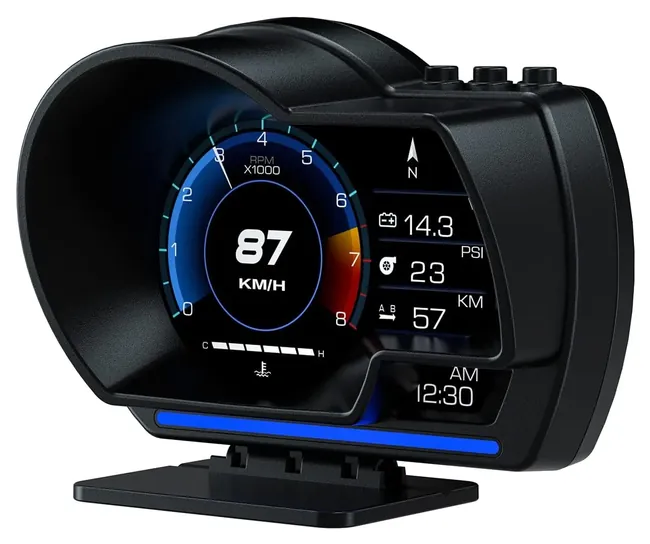
The wiiyii P6 now leads because it does two jobs at once: it reads speed from satellites, and on most cars it also pulls engine data from the diagnostic port. Almost everything else on the old list had gone. The Timprove T600, Timprove C80, Acecar OBD II, Acecar Upgrade T800, Autool X100 and Mr Cartool X95 have all left the market, while the Meilan M3 was a bike computer all along.
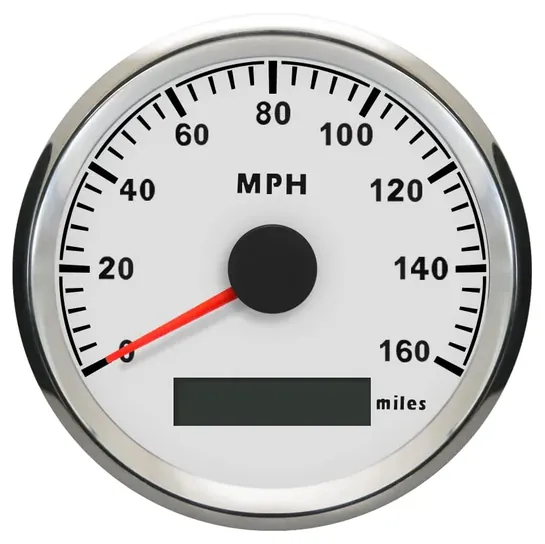
The RaceBox Data Logger moved to our special honors. It's a timer for track days rather than something you glance at on the commute, and its maker now sells smaller, cheaper models. We kept the Eling 0-160 MPH Gauge, the only dial here that reads highway speeds, and dropped its 80 mph sibling in favor of the Artilaura 85mm Marine Gauge, which has a stainless bezel and a stated waterproof rating.
Most of these displays come from small makers who publish little beyond setup notes. So we read those notes for the traps (fast chargers, coated windshields, trip meters that reset), and checked the accuracy claims against the international speedometer rule and a long driver forum thread comparing satellite and dash readings.
April 05, 2021:
We eliminated the Atach 3-3/8" and LeaningTech Original, due to availability issues, but the rest of our rankings managed to hold their spots. Considering what a specific device its for, this wound up being a surprisingly broad category because of the wide variety of vehicles that might need a speedometer, but we felt that our list presented a decent mix – from the Meilan M3, which is a basic bike computer, to the recessed and waterproof Eling 912-00060 and Eling 910-10005, which are viable options for marine vessels – and so, we didn’t make a lot major changes. We did, however, incorporate a couple of new options with some interesting bells and whistles, just to mix things up a bit.
Our first new addition, the RaceBox Data Logger, goes well beyond the standard call of duty for a speedometer, providing functions like lap timing, and 0-60 mph and 60-130 mph acceleration measurements. It’s unlikely that most users will need much of this functionality (and this should in no way be misconstrued as an endorsement of street racing), but for professional racecar drivers, as well as your garden-variety speed demon, it’s likely to be an appealing option.
Our second new addition, the Mr Cartool X95, provides a number of readings that will be especially useful to off-road enthusiasts, like your current direction and GPS coordinates, and tilt and slope measurements that it generates via its integrated multi-axis gyroscope. Again, these might not be must-have features for the status quo, but this unit will likely appeal to many truck drivers who might not quite need it, as its color LCD and cogwheel-inspired housing make for an interesting looking gadget (not to mention, a serviceable speedometer).
Note that these rankings are focused on devices that rely on GPS satellites to calculate the speed you’re traveling at, but none leverage that connection to help guide you to your next destination. If that functionality is what you’re looking for, then I’d suggest you start by checking out one of our lists of GPS units.
January 20, 2020:
When shopping for GPS speedometers, it's important to think ahead and consider your intended application. These devices draw data from satellites, eliminating the need for complicated integration with your particular vehicle. Some models will cost more because they're waterproof, such as the Eling 3-3/8", which may not be worth the added cost if you never plan to expose it to the elements. But if you plan to attach this to a motorcycle, boat or off-road vehicle, you'll definitely want to invest in the added protection.
Charging capability is another key aspect with these devices. Many of the options designed for motorcycles or ATVs, like the Eling 3-3/8", Eling Waterproof 3-3/8" and ATACH 3-3/8" will require hard wiring to the vehicle's existing electrical system, while most of the variations intended for cars will draw power from a USB connector through the built-in cigarette lighter socket. Most of these options include all necessary power cables, but not all. Before purchasing, be sure to inspect your vehicle and figure out which charging style will be most suitable for your needs.
Also, mounting style should be a critical consideration for your purchase choice. Depending on what type of vehicle you would like to use this instrument with, you may be better off selecting one style over another. This list includes a range of models that are ideal for motorcycles, bicycles, cars and marine applications. If you're looking to use this with motorcycles specifically, you may also want to check out our list of GPS Units for Motorcycles for options that include speed readout, along with the added benefit of GPS directional capabilities.
Special Honors
RaceBox Mini For track days and drag strips, the RaceBox Mini logs speed, lap times and 0-60 runs from a satellite receiver that updates 25 times a second, much faster than a dash display. It has no screen of its own and shows everything in a phone app. The smaller RaceBox Micro adds a record button so it can log without a phone. Both are sold by the maker. racebox.pro
Plug-In Display, Panel Gauge Or Diagnostic-Port Screen
The trade-off is a cable across the dash and a screen you have to place where the sun won't wash it out.
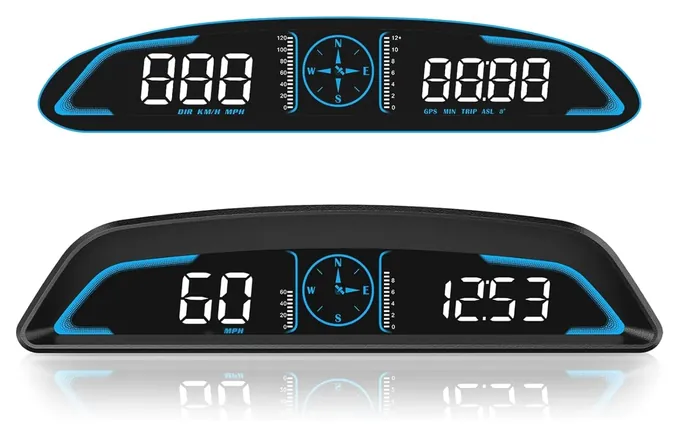
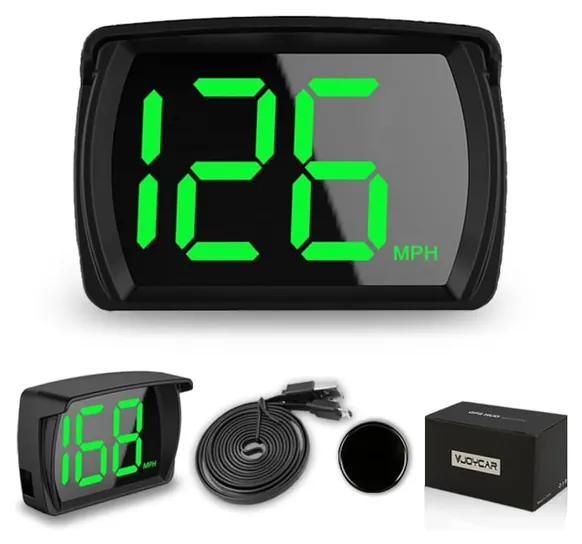
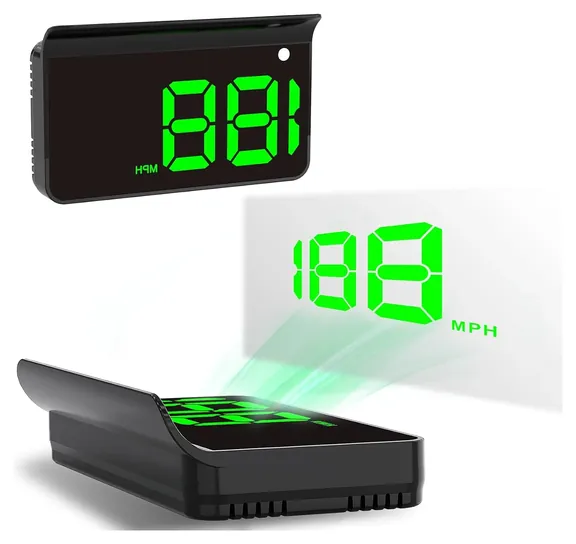
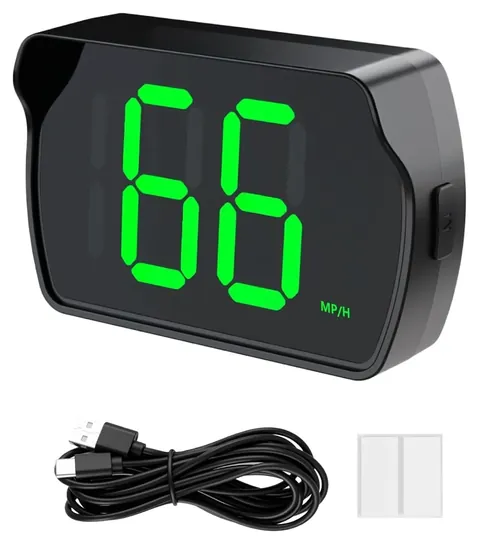
Most people want a plug-in display. It runs from a USB port or a car charger, sits on the dash on a sticky pad, and turns on with the ignition. Setup takes minutes and nothing in the car changes. The trade-off is a cable across the dash and a screen you have to place where the sun won't wash it out. Some, like the KUOWEIHUD K1, can reflect their digits onto a clear film on the windshield, the same idea as the head-up displays built into many newer cars, though the image is fainter.
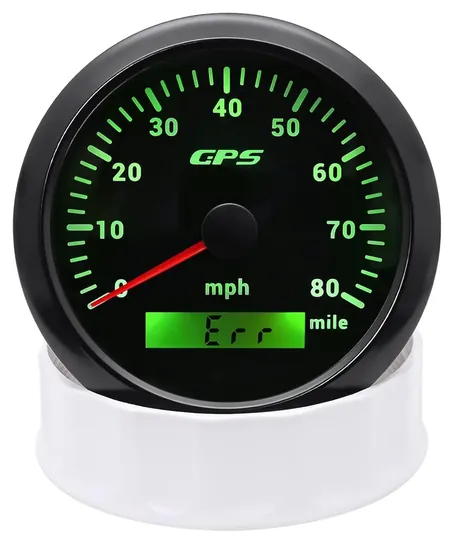
A panel gauge, like the Artilaura 85mm Marine Gauge or the Eling 0-160 MPH Gauge, fits a round hole 85 millimeters (3 3/8 inches) across, with about 70 millimeters of room behind the panel. Eling's instructions say to mount the antenna flat, black side up, where it can see the sky, ideally outside or just inside the windshield, and not to cut its cable. These gauges run on 12- or 24-volt power, so wire them through a fuse. They make sense on boats, side-by-sides, trucks with a failed speed sensor and builds with a custom dash.
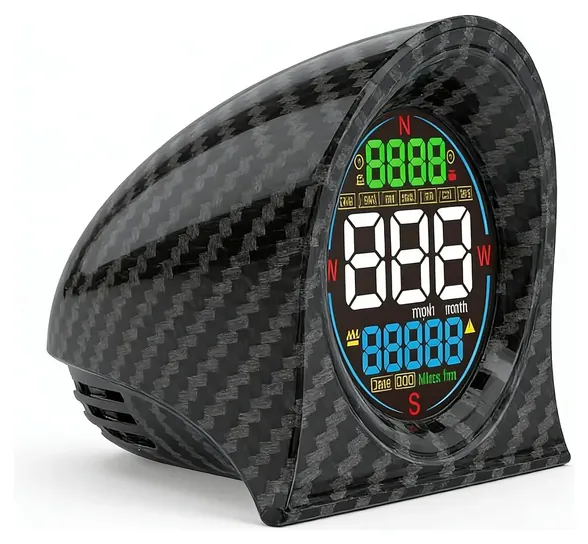
The third kind reads the car itself. The wiiyii P6 plugs into the OBD-II diagnostic port, required on U.S. passenger cars and light trucks since the 1996 model year, and adds engine speed, temperature and fault codes to the speed reading. Without the port, it shows satellite speed alone.
Why It Won't Match Your Dashboard
Expect the two numbers to disagree, and expect the dashboard to be the high one. Many countries follow the UN speedometer rule, Regulation 39, which lets a car's dash read above true speed by up to about 10 percent plus a small fixed margin, but never below (Wikipedia: Speedometer). Tires move it too. Tires about 3 percent larger in diameter than stock make the dash read about 3 percent slow, and worn tread nudges it up, according to AutoDRX. At highway speed, a gap of 2 or 3 mph is normal. A gap of 5 mph or more points to a tire or calibration problem.
Satellite speed ignores the tires. At a steady speed under open sky it's usually within about half a mile per hour. Drivers comparing units on a long PistonHeads thread found it closer than the dash, though timing beams at a track beat both. It lags during hard acceleration, drops out in tunnels and garages, can under-read on steep hills, and some heat-blocking windshield coatings stop the signal. Hudway explains why speed read from the diagnostic port follows the car's own sensors, tire error and all, while satellite speed doesn't.
Treat any of these as a cross-check, not as evidence of how fast you were going.
Where To Put It And How To Power It
Mount a display low on the dash, below your view of the road. Many states limit what can be stuck to a windshield, so a dash pad is the safer spot, and it's worth checking your state's rules before you apply a reflective film. Set the brightness, units and alerts while parked. Scrolling through screens on the move is the kind of distraction that state highway safety offices warn about.
USB displays want a steady 5 volts. SinoTrack tells owners not to run the ST-HUD-G3 from a fast charger, and KUOWEIHUD says third-party cables can stop its displays from starting. Use the cable in the box and a plain charger. Panel gauges take a fused 12- or 24-volt feed instead.
The first fix takes time. VJOYCAR and Eling both say to allow up to about half a minute under open sky, with quicker starts after that. If a unit never finds satellites, move it closer to the glass and away from heated or tinted sections, then power it up again. None of these units warns of speed cameras, and none needs a phone.
How we researched this
We compared 16 GPS speedometers, gauges and related gadgets and screened 10 in depth. We read the makers' published specs and setup instructions, the UN speedometer rule as summarized on Wikipedia, guides from AutoDRX and Hudway on why satellite and dashboard speeds differ, and a PistonHeads forum thread comparing them, and we searched U.S. Consumer Product Safety Commission recall records by brand and by category, with no recalls found. We found no independent lab tests of these displays.
Sources (10)
- Wikipedia: Speedometer
- Wikipedia: On-board diagnostics
- Wikipedia: Head-up display
- AutoDRX: why speedometers and GPS show different speeds
- Hudway: GPS, OBD and speedometer readings
- PistonHeads: GPS vs speedometer thread
- RaceBox Mini
- RaceBox Micro
- GHSA: distracted driving
- CPSC recall search (SaferProducts API)
Frequently asked questions
Is a GPS speedometer more accurate than my car's speedometer?
Usually, at a steady speed under open sky. Car speedometers are allowed to read high but never low, and tire size and wear shift them further. Satellite speed ignores the tires, though it lags during hard acceleration and drops out in tunnels.
Do I need an OBD2 port to use one?
No. A GPS speedometer gets speed from satellites, so it works in any vehicle with power. Only screens that also read engine data, like the wiiyii P6, use the diagnostic port, and that one falls back to satellite speed without it.
Why does my GPS speedometer go blank or freeze?
It has lost the satellites. Tunnels, parking garages, tall buildings and some coated or heated windshields block the signal. It also needs up to about half a minute to find satellites the first time it starts.
Can I use a GPS speedometer on a boat or motorcycle?
Yes, if it's built for it. A sealed panel gauge such as the Artilaura 85mm Marine Gauge handles spray and runs on 12- or 24-volt power. USB dash displays aren't sealed, so keep them out of the weather.
Is it legal to mount a speed display on the windshield?
It depends on the state. Many limit objects on the windshield, so mounting low on the dash is the safer choice. Check your state's rules before using a reflective film.