The 8 Best Gymnastics Bars
Updated by · How we research

Eight home kip bars compared on base stability, height range and honest weight limits. The FC FunCheer 4FT leads for kids from preschool to early teens. When users buy our independently chosen editorial recommendations, we may earn commissions to help fund the Wiki.
The weight limit printed on most home kip bars is a static hanging load, not the force a swinging child puts on the frame, so read it as a ceiling, never a target. These bars suit kids practicing pullovers, casts and hip circles between classes, and every one of them needs a thick landing mat and an adult nearby.


Editor's Notes
October 27, 2026, by Ezvid Wiki Admin:
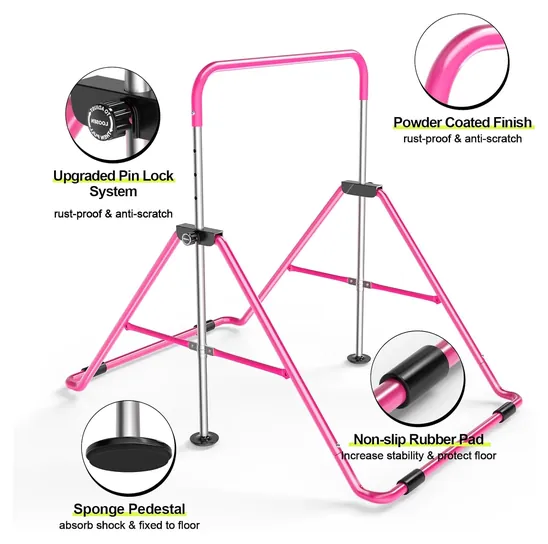
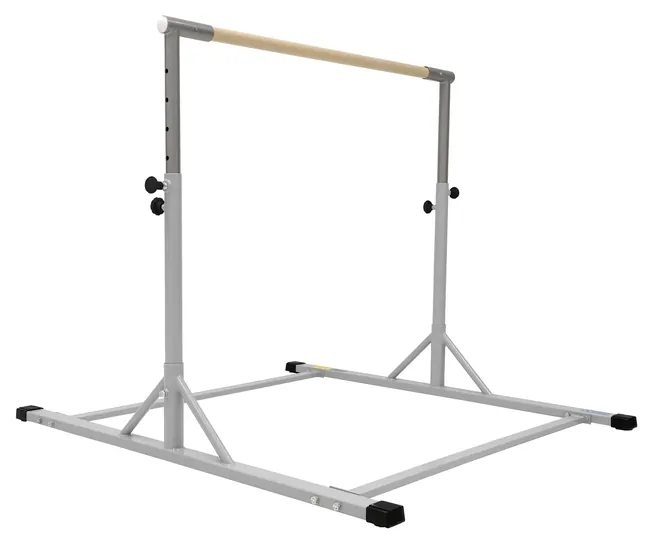
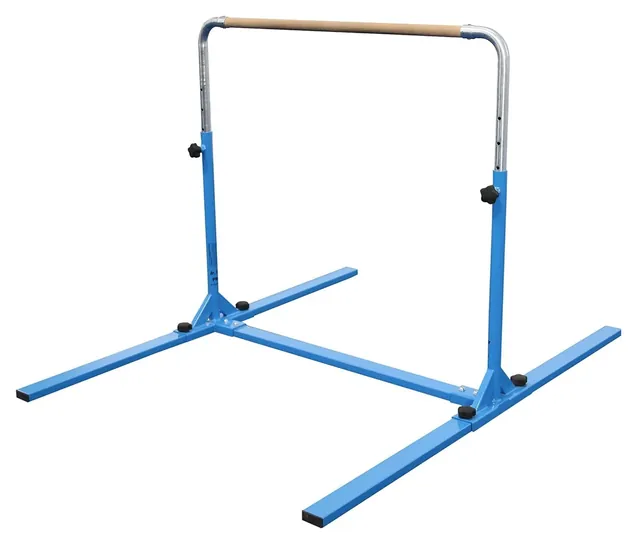
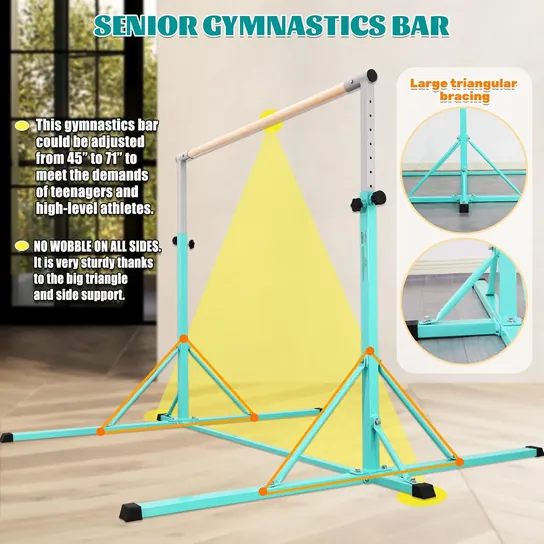
The FC FunCheer 4FT takes the lead because its triangle base keeps steel tubes out of the spot where a child lands, and its settings follow a gymnast from preschool into the early teens without a second purchase. The Safly Fun Foldable is the cheap starter for little kids, and the Tumbl Trak Jr. Bar Pro and Z Athletic Expandable stay on as the sturdier, pricier choices.
The most useful thing we found was Tumbl Trak's plain explanation that its modest limit is a working load for swinging and kipping, while most other figures describe a child hanging still. Z Athletic quietly lists both numbers. After that, we read every big weight claim as a hanging rating.
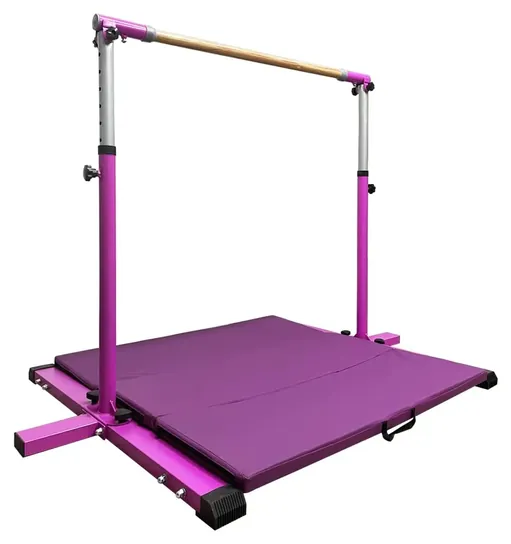
The Pregymnastic Junior, Costzon Horizontal, KidoGym Expandable, FBSport Fitness and Shiwei Kip are gone or replaced by look-alikes. The Tumbl Trak 5-in-1 is a club rig at club prices. We cut the Tumbl Trak Junior Kip because it shares the Pro's rail and height range, and the Tepemccu Training because it's a near twin of the Safly with more reports of screws working loose. New are the GLANT Kip Bar for families who want a mat in the box, the FC FunCheer Pro for teens, the Kechery Foldable with rings and the Marfula 5 Ft Folding.
November 05, 2020:
Whilst prioritizing safety, in this round of updates we also tried to strike a balance between professional models, likely to be used in training facilities, and some less expensive varieties that would be suitable for home practice, as well as including selections that come with and without tumbling mats.
In the interest of variety, we removed the Gymmatsdirect Practice as it has a very similar design to the Z-Athletic Expandable, which we retained. Both sport a steel frame, a fiberglass bar and come with a mat, however, the latter offers far more color combinations and lists both its static load and working load capacity, which is beneficial information when looking for a safe piece of apparatus for your little one.
If you don't have the space to leave this equipment up constantly, a selection that is easy to store is well worth a look, as is an inflatable gym mat. We added the Pregymnastic Junior as its six-foot-deep base is consistent with other popular choices, like the Tumbl Trak Junior Pro, however, it can be folded into a compact form, and the inclusion of wheels makes it hassle-free to put away. We also added a budget-friendly collapsible option in the KidoGym Expandable, which replaced the Reliancer Tower as a sturdier selection than its predecessor.
The Milliard Professional was dropped due to availability concerns and this final removal made way for the Tumbl Trak 5-in-1, which caught our eye due to its versatility and thus its ability to serve both beginner and advanced gymnasts. You'll notice this company now grabs three of our ranking positions, the other two being the Tumbl Trak Junior Kip and the Tumbl Trak Junior Pro. Though they require a decent financial investment, their robust construction makes them ideal for professional training outfits as they are proven to stand the test of time.
August 15, 2019:
We removed a couple items due to availability issues, a lack of stability, and other quality concerns. In filling out the rest of the list, we included bars for different age groups, two models that fold up for storage and transport, and a few that come with a gym mat so you don’t have to purchase that item separately.
The Reliancer Tower is one of the aforementioned folding models. It’s quite affordable when compared to many of the other options, and it addresses slippage concerns with its skid-resistant rubber floor pads. In terms of non-folding bars, the Gymmatsdirect Practice is a nice value too, though we did come across some complaints about its paint chipping off.
We noted that the Shiwei Kip comes with a swing attachment that transforms the bar into a mini swing set, which is a feature we didn’t see in any other models. In reviewing the Milliard Professional, we learned that users love its vibrant range of colors, simple assembly process and impressive stability, so we moved it up a bit in the rankings.
Special Honors
USA Gymnastics Kips, casts to handstand and release moves are best learned with a coach before they're practiced at home. USA Gymnastics is the sport's national governing body in the U.S., and its member clubs run recreational classes as well as competitive teams. Its site is the starting point for finding a club, and a coach there can say when a child is ready to train on a home bar. usagym.org
Weight Limits: Working Load Versus Hanging Load
Z Athletic shows the gap on one bar: it lists a 300-pound pull-down rating and a 120-pound usage limit.
Most home bars print a big number, often 300 to 500 pounds. That usually describes a static load: a child hanging still, or a straight pull down on the rail. A gymnast who swings, casts and kips pushes far more force through the frame than their body weight. Tumbl Trak rates its home bars at 125 pounds and says outright that the figure is a working load for swinging, circling and kipping, and it warns that many other makers quote a hanging figure instead.
Z Athletic shows the gap on one bar: it lists a 300-pound pull-down rating and a 120-pound usage limit. When a maker gives only one number, assume it's the static one. A child who's close to the working limit, or who is starting real kips, is ready for a heavier frame or for time on a club bar.
The Mat Matters More Than The Bar
The single most useful purchase for a home bar is a thick landing mat. Kangaroo Hoppers, a maker of home gym mats, gives about four inches or more as a common guideline for basic bar work and says a mat does more to cut injury risk than any other piece of gear. GymnasticsHQ goes further for bars with a center support: a mat at least 4 by 6 feet and 4 to 6 inches thick, so it covers the base and the landing zone. Thin folding panel mats are fine for shaping drills, but layer a thicker mat where kids fall.
Space comes next. Kids need several feet of clear floor on every side, and the area above the bar should be free of ceiling fans, lights and door frames. A standard 8-foot ceiling works for most bars that top out around 5 feet, as long as nothing hangs down.
Setting It Up And Keeping It Steady
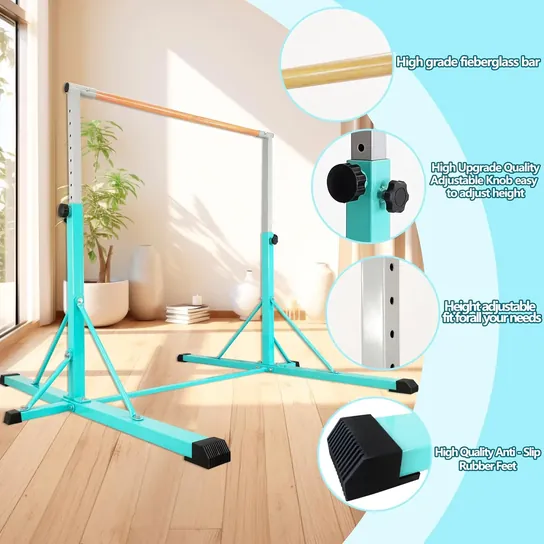
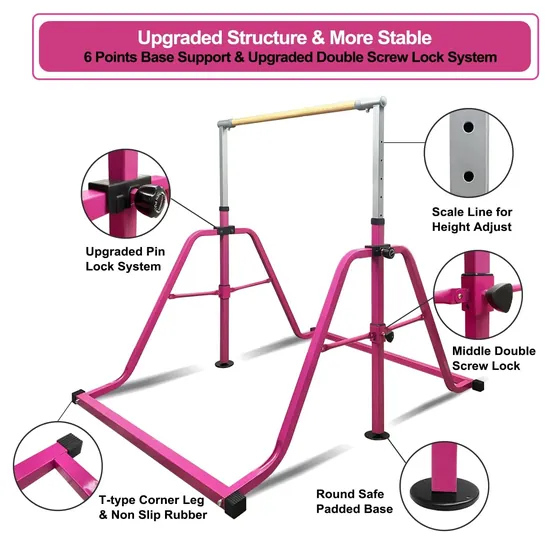
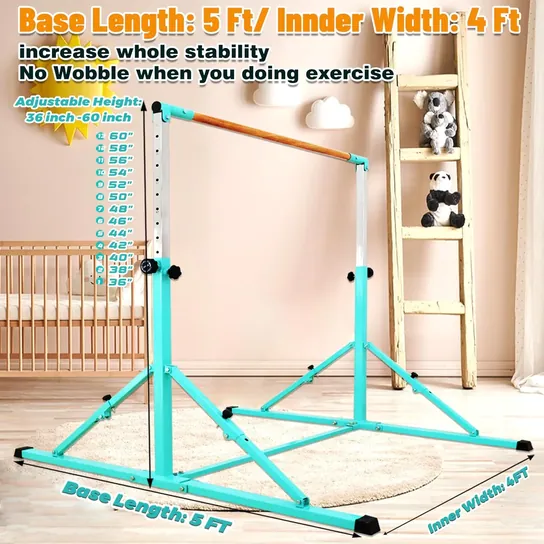
Wide triangle or T-shaped bases with rubber feet wobble less than narrow A-frames, and bars with no tubes in the landing area are kinder to a child who drops. On thick carpet, a sheet of heavy plywood under the frame stops the feet from sinking and rocking, and sandbags over the legs keep the base down during bigger swings, as long as they stay out of the landing zone (Kangaroo Hoppers).
Tighten every bolt and knob weekly, and shake the bar before each session; stop if the frame shifts. Start young children at the lowest setting and raise it only once they control their swing. Kips and release moves belong with a coach first, and USA Gymnastics is the place to find a member club. One child on the bar at a time, with an adult in the room.
How we researched this
We compared 15 home gymnastics bars, read makers' specifications and Tumbl Trak's explanation of working versus static loads, checked two independent home-equipment guides and a mat maker's setup guide, looked at long-term owner feedback for patterns such as wobble and loosening hardware, and searched the U.S. Consumer Product Safety Commission's recall database for every brand. We found no recall and no independent lab test of home gymnastics bars. Weight limits other than Tumbl Trak's are the sellers' own claims.
Frequently asked questions
Do I need a mat under a home gymnastics bar?
Yes. A thick landing mat, about four inches or more, does more for safety than the bar itself. Bars with a center support call for a mat at least 4 by 6 feet that covers the base and the landing zone.
What does the weight limit on a kip bar mean?
Usually a static load: a child hanging still or a straight pull down. Swinging and kipping put much more force on the frame. Tumbl Trak's 125-pound rating is a working load; most other figures are not.
Is a folding or a fixed bar better?
Folding bars store flat and suit young kids who hang and swing. Fixed bars with wide triangle bases wobble less and keep tubes out of the landing area, which matters once a child starts casts and bigger swings.
What age can a child start on a home bar?
Preschoolers can hang and swing on the lowest setting with an adult right there. Toddlers do better with floor equipment. Raise the bar only when a child controls their swing, and learn kips with a coach first.
How high should the bar be set?
Start low enough that a child can reach the rail from the floor and drop safely. Move up one setting at a time as their control improves, and make sure the ceiling and any fixtures stay well clear of their feet.