The 8 Best Keyboards For The Visually Impaired
Updated by · How we research

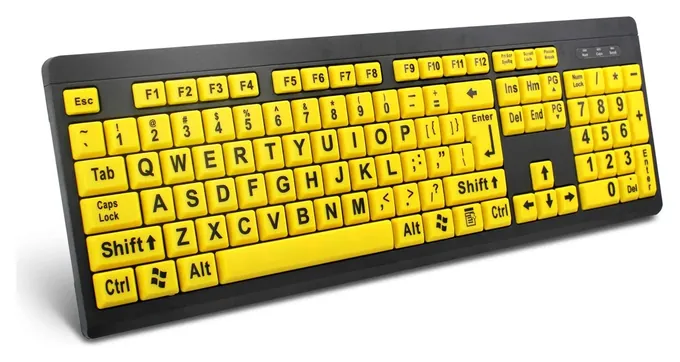
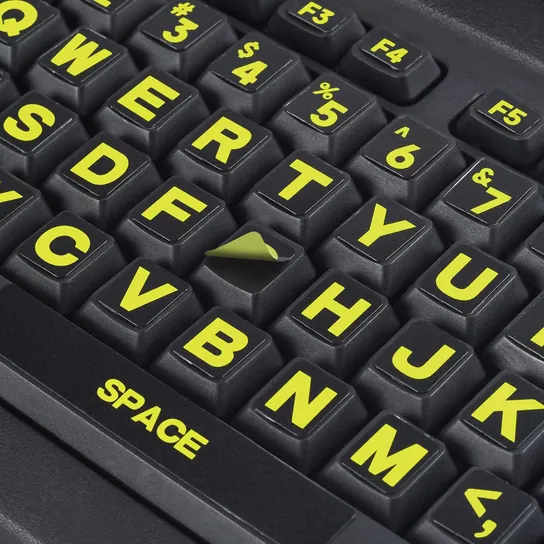
Black print on yellow keys suits most low-vision typists, so the BOOGIIO Large Print leads eight picks: large-print keyboards, stickers and braille overlays. When users buy our independently chosen editorial choices, we may earn commissions to help fund the Wiki.
Most keyboards sold for low vision don't have bigger keys at all. They have standard keys with letters printed about four times larger, in strong colors such as black on yellow. That helps people living with macular degeneration, cataracts or glaucoma. Someone who reads braille gains nothing from large print and needs raised labels and a screen reader instead.


Editor's Notes
October 23, 2026, by Ezvid Wiki Editors:
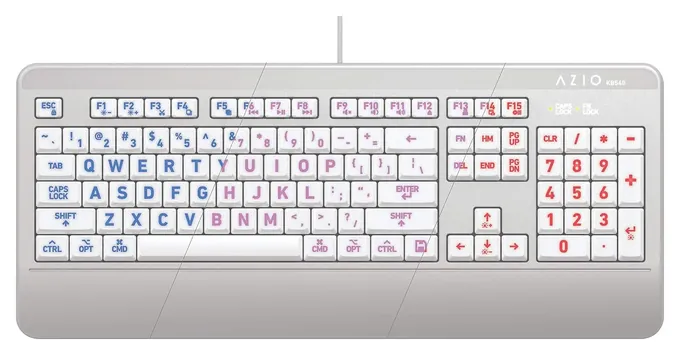
The BOOGIIO Large Print now leads, because black letters on yellow keys are the scheme most people with low vision find easiest, and it costs little. The old leader, the Azio Vision, has no buyable listing, so its washable sibling, the Azio KB540, takes its place for Mac users.
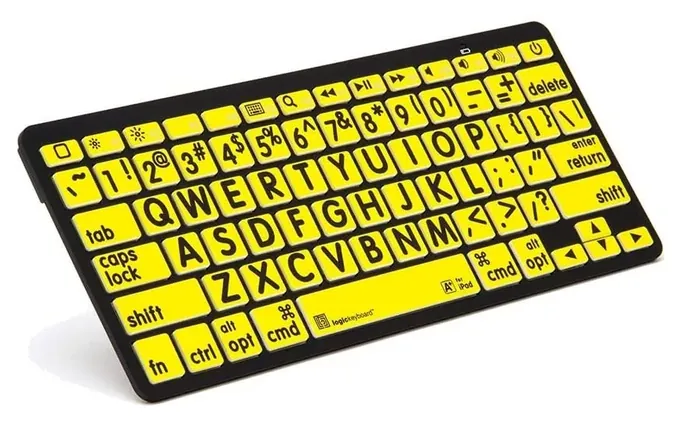
Most of the old list was gone. The Logic Keyboard Slim Line, Logic Keyboard Skin, Keys-U-See Wireless and Ablenet Big Keys LX are unavailable, the Data Cal EZSee has no current listing, and the Chester Creek KinderBoard is a children's board. The LogicKeyboard XL Print Mini and the DataCal Braille Overlays stay. Two popular yellow and white boards missed the cut because owners kept reporting worn letters and keys that quit.
For blind readers, we added a frank section on why large print won't help and what will. The evidence was Clevy's and Logickeyboard's spec pages, the National Eye Institute's guidance on low vision, the American Foundation for the Blind's overview of screen readers, and patterns in owner feedback about faded print and dropped connections.
Earlier notes
October 30, 2020, by Tina Morna Freitas:
There isn't a lot of innovation in the Large Print keyboard category, so for this update we did remove some options that were so similar that they seemed redundant, and also the Chester Creek BigBlu was removed because it has too many reported connectivity problems with newer versions of Windows.
We added the Keys-U-See Wireless as a complete 104-key option for anyone who wants to reduce the number of cords on their desk. For some alternative ways to convert an existing keyboard for the visually impaired, we included the Logic Keyboard Skin, although our recommendation is specific to the popular Apple Magic, the company does make skins specific to PC keyboards as well.
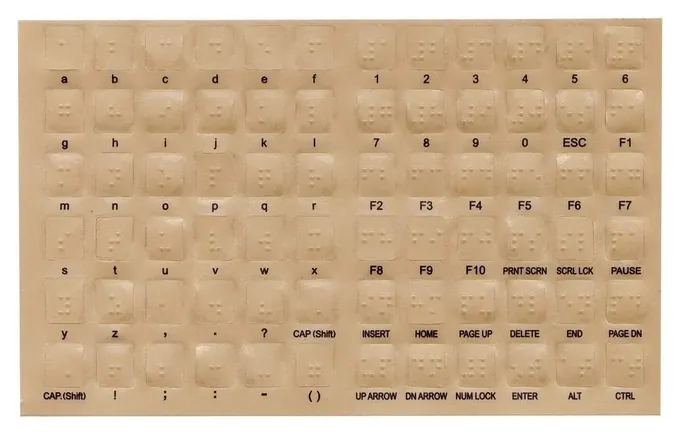
The Data Cal Overlays are a creative solution for sighted and non-sighted family members that share a computer. The transparent stickers allow those who don't read Braille to fully see the keys underneath. While the price seems high for a page of stickers, they're made of very thin but durable Lexan polycarbonate, with a high quality 3M adhesive.
March 13, 2019, by Christopher Thomas:
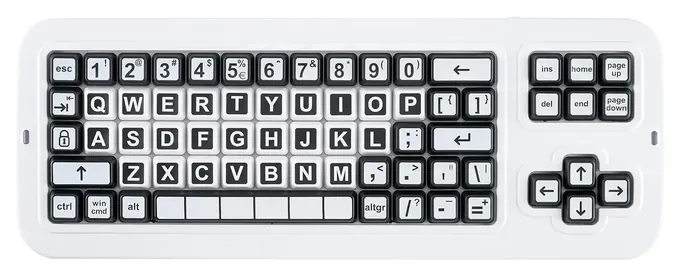
It's hard to use a keyboard if you can't see it! There are plenty of people, both young and old, with impaired vision, and there are a handful of viable keyboards available to accommodate them. The AbleNet BigKeys and the Chester Creek Vision and KinderBoards are notable for a few reasons. They sport extra-large keys, which are great for small children, or anyone with impaired motor skills. Also, they're extremely durable, and there are waterproof covers readily available for each of them. Alternately, the Azio Vision is great for those who are just on the edge of being able to easily read their typing surface. With 5 different colors on a black background, it does a good job at remaining legible, without hurting anyone's eyeballs. While the Keys-U-See yellow variety, LogicKeyboard Mini, and EZSee Low Vision are quite high-contrast, they're not suited to very long-term use, because they simply hurt to look at after a certain period of time. On the other side of that coin, the EZSee's black version should reduce overall eye strain, after a period of time. For something more traditional-looking, and a little less intrusive, but just about as effective, the AbleNet Ivory is a good choice, as the main difference between it and an everyday keyboard is the size of the letters on the keys. Meanwhile, the LogicKeyboard 4879 is a very sturdy device, and has a great feel to it, although it is awfully expensive.
Special Honors
NV Access NVDA NVDA is a free, open-source screen reader for Windows from the Australian nonprofit NV Access. It reads the screen aloud in dozens of languages, works with many refreshable braille displays, and can run from a USB stick on a computer that isn't yours. For a blind typist it matters more than any keyboard. nvaccess.org
Logickeyboard The Danish maker of the LogicKeyboard XL Print Mini also sells full-size wired and Bluetooth large-print keyboards for Windows and Mac, in black on yellow, white on black and black on white, plus silicone covers. Its own store carries more layouts and languages than most retailers. logickeyboard.com
Contrast And Print Size Matter More Than Key Size
Most of these boards keep normal-size keys and print the letters up to about four times larger.
Low vision means eyesight that glasses can't fully correct, and the National Eye Institute lists macular degeneration, cataracts, diabetic eye disease and glaucoma as the usual causes. Its advice for screens and devices starts with more contrast and larger text (National Eye Institute). A large-print keyboard applies the same idea to the keys.
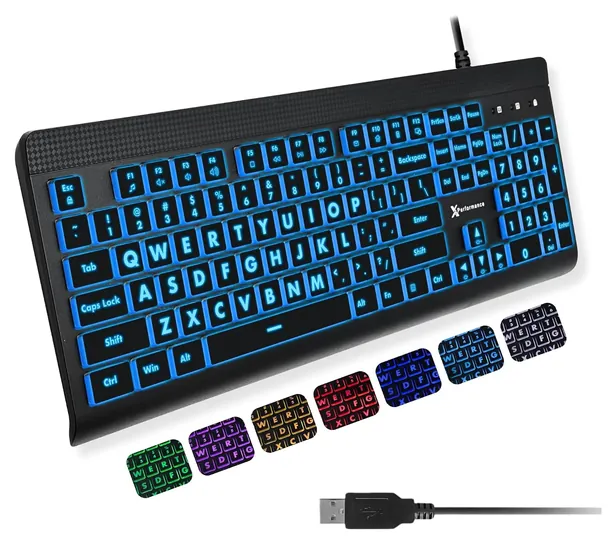
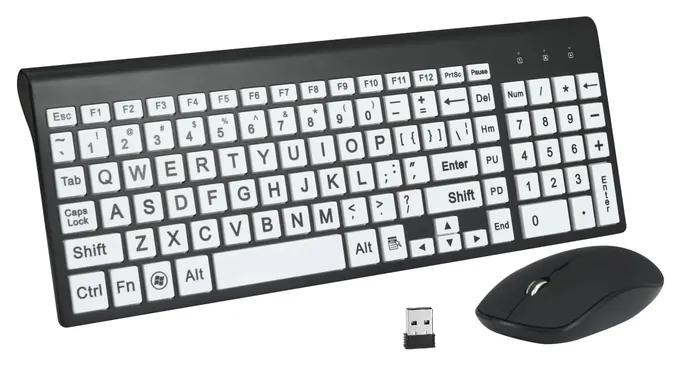
Most of these boards keep normal-size keys and print the letters up to about four times larger. Clevy goes further, with square keys about 20 millimeters across and letters in a heavy typeface (Clevy). Color matters as much as size. Black on yellow, white on black and black on white are the three standard schemes, and Logickeyboard sells its boards in all three (Logickeyboard). People with glare sensitivity often prefer light letters on dark keys, while others read black on yellow best. If you can, let the person who will type look at both before you buy.
Print wears. Owner reports of letters rubbing off after months of use are the most common complaint in this category, so a board with a long, clean owner record is worth more than a bargain.
Backlit, Wired Or Wireless
A backlight helps in a dim room, but only if the light can be turned down. Bright white glow on black keys can cause glare, so look for adjustable brightness. Light-colored keys with lit letters look faint with the light off, and unlit yellow keys need a good desk lamp.
A wired board needs no batteries and no pairing, which is the simplest setup for an older relative. Wireless boards use either a small USB receiver, which acts like a cable, or Bluetooth, which pairs with tablets and phones. Clevy's board does all three: a USB-C cable, Bluetooth, and an optional 2.4 GHz receiver, with two AA batteries for wireless use (Clevy).
The keyboard is only half the job. Windows has a built-in Magnifier that enlarges part or all of the screen (Microsoft), and Macs and iPads have zoom and contrast settings too. A big-print keyboard plus a bigger cursor and text makes a far larger difference than either alone.
If The Typist Reads By Touch
A large-print keyboard does nothing for someone who is blind. Blind typists mostly touch-type on a standard keyboard, finding home row by the raised bumps on F and J, and rely on a screen reader that speaks the screen or sends it to a braille display. The American Foundation for the Blind describes how screen readers are driven by key combinations, and notes that some are free while others cost as much as a computer (American Foundation for the Blind).
NVDA is a free screen reader for Windows (NV Access), and Macs and iPhones include VoiceOver (Apple). Braille overlays such as DataCal's help a new braille user label keys, or let a blind and a sighted person share one keyboard, but they don't replace the screen reader. A refreshable braille display is a separate, far more costly device.
How we researched this
We compared about 20 large-print keyboards, sticker sets and braille overlays, read Clevy's and Logickeyboard's spec pages and the sellers' specs for the rest, used guidance from the National Eye Institute and the American Foundation for the Blind, analyzed owner feedback patterns, and searched the Consumer Product Safety Commission's recall database for every brand, with no recalls found. We found no independent lab tests of large-print keyboards.
Frequently asked questions
Do large-print keyboards have bigger keys?
Usually not. Most use standard keys with letters printed about four times larger. A few, such as the Clevy Contrast Keyboard 3, use bigger keys, which also helps people with unsteady hands.
What color keyboard is easiest to read with low vision?
Black letters on yellow keys and white letters on black keys are the two most common choices. People bothered by glare often prefer light letters on dark keys. Let the typist look at both if possible.
Is there a keyboard for blind people?
Blind typists usually use a standard keyboard by touch, using the bumps on F and J, plus a screen reader such as NVDA or VoiceOver. Braille overlay stickers can label the keys while someone learns.
Can I just put large-print stickers on my keyboard?
Yes. Stickers are the cheapest way to try large print, and they work on laptops. Their print can't be bigger than the key, and the edges on busy keys can lift in time.
Do large-print keyboards work with a Mac?
Most wired ones type fine on a Mac, but Windows-only keys and hotkeys won't all work. For Mac labels, look for a Mac version such as the Azio KB540, or Logickeyboard's Mac range.