The 7 Best Leak Down Testers
Updated by · How we research

Dual-gauge leak-down testers for cars, trucks and small engines, compared on regulators, adapters and deep-well reach. The OTC 5609 leads the field. When users buy our independently chosen editorial selections, we may earn commissions to help fund the Wiki.
A leak-down tester doesn't measure compression. It feeds shop air into one cylinder with both valves shut and shows what share escapes, and where the air hisses out tells you whether rings, valves or a head gasket are to blame. It's the next step after a low compression reading, and every kit needs an air compressor.


Editor's Notes
October 27, 2026, by Ezvid Wiki Admin:
Two of the seven tools on the old list weren't leak-down testers at all. The OTC 5606 and Innova 3612 are compression testers, a different test that tells you how much pressure a cylinder makes but not where it's losing it, so both are gone. The Faersi Cylinder Leak Detector and ABN Cylinder Leak Detector have dropped out of stock for good, and the old Cheesea New Heavy Tu-21 listing went with them.
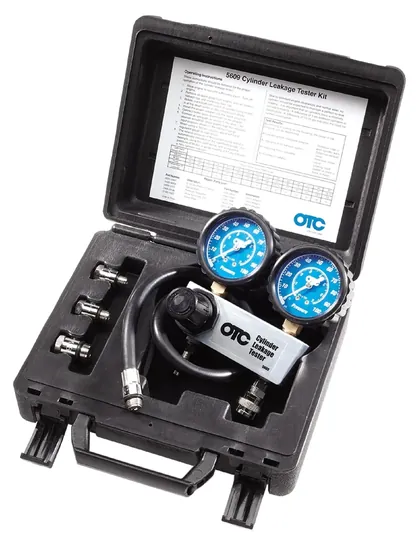
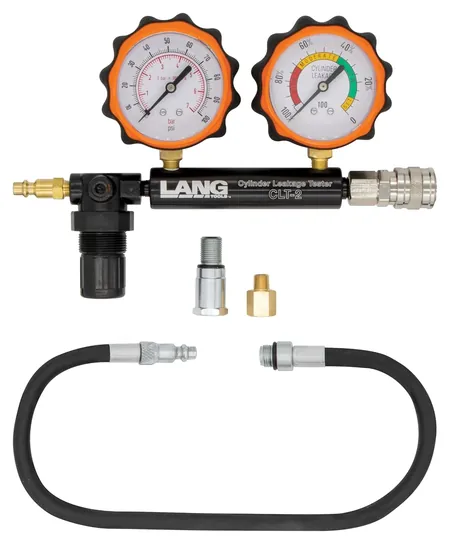
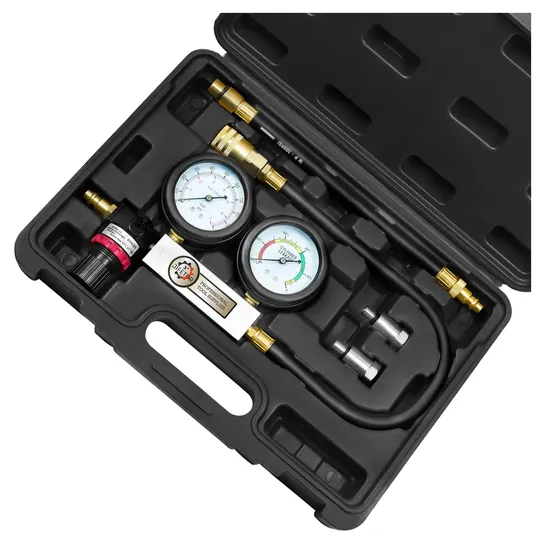
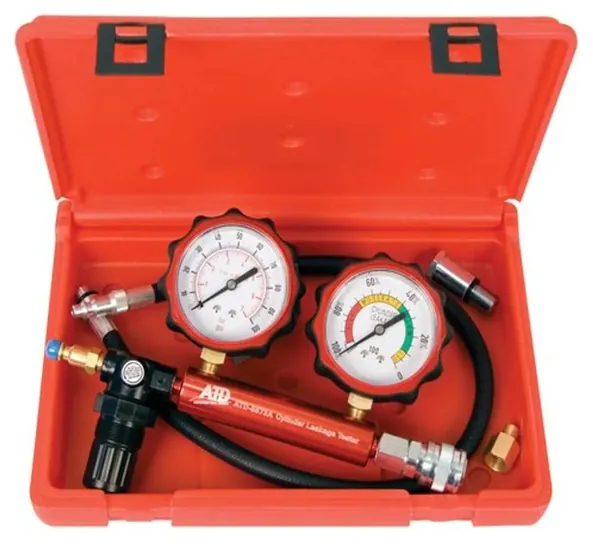
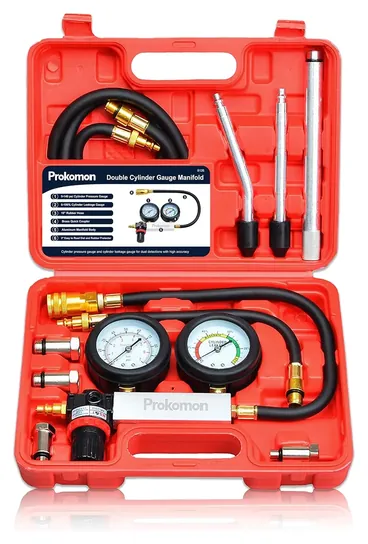
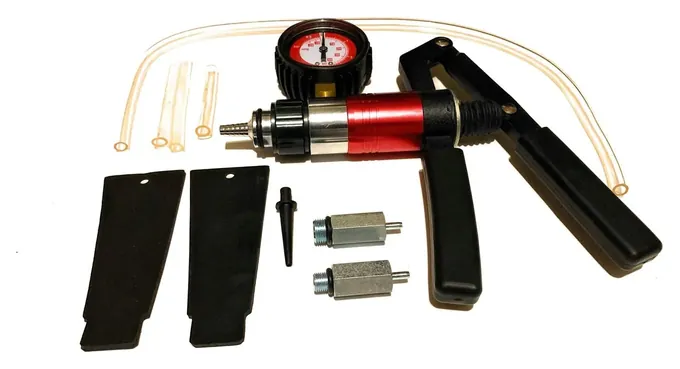
The OTC 5609 stays on top, and the Lang Tools CLT-2 stays as the American-made choice. New are the JIFETOR JT020S1-3 for occasional use, the ATD Tools 5573A, the Prokomon PT8126 for plugs in deep wells, the Marvelity CLDT01 for big older-engine threads and the Lil Red Barn Pressure-Vacuum Tester for chainsaws and trimmers.
Nobody has published a side-by-side accuracy test of these tools, so we leaned on the makers' setup instructions, the reading guide mechanics use, and which brands have kept the same tester on sale for years.
February 19, 2020:
If you're trying to decide whether or not to condemn an engine, the last thing you want to settle on is the quality of your leak down tester. Any tool that does not come with gauges to measure both pressure and leakage has been omitted. In some scenarios, an engine may create an acceptable amount of compression but worn-out piston rings or valves could be allowing pressure to escape. Keep in mind that when a fitting size is listed, you should have your vehicle specifications handy and check compatibility before purchasing.
This Wiki includes options for daily, rigorous professional use like the OTC 5609, as well as others for the odd job at home in your garage like the Faersi Cylinder Leak Detector. The Lang Tools CLT-2 is a worthy contender if certain professional brands are out of your budget.
Each tester comes in a durable case except for the Innova 3612, chosen for its versatility of application and caliber. One common problem with many of the leak-down testers is the quality of the fittings. Some are poorly machined and won't thread well. Others may not be clamped on to the hose and allow air to escape during a test, thereby causing a false reading. These types of scenarios are accounted for in our ranking process to ensure every option is truly the "best of."
Unintentional damage can be caused if performing a compression test incorrectly and should not be attempted without technical training.
Special Honors
Snap-on EEPV509 Cylinder Leakage Tester Snap-on's two-gauge cylinder leakage tester is sold through its own trucks and equipment site and costs several times a shop-grade kit. For a professional who already buys from a Snap-on dealer, it's the premium route. sep.snapon.com
Leak-Down Or Compression: Which Test You Need
Air hissing from the tailpipe points to an exhaust valve, and from the throttle body or intake to an intake valve.
A compression test cranks the engine and records the peak pressure each cylinder builds. It's quick and tells you that a cylinder is weak, but not why. A leak-down test works with the engine stopped. You bring one piston to top dead center on its compression stroke, so both valves are closed, then feed regulated shop air through the spark plug hole and read how much escapes (Wikipedia: Leak-down tester).
The real payoff is finding the leak. Listen and look while the cylinder holds pressure. Air hissing from the tailpipe points to an exhaust valve, and from the throttle body or intake to an intake valve. Air at the oil filler or dipstick tube means rings or a worn cylinder wall, and bubbles in the radiator suggest a head gasket. That's why makers such as Lang pitch their testers as a follow-up to a compression check, not a replacement for it.
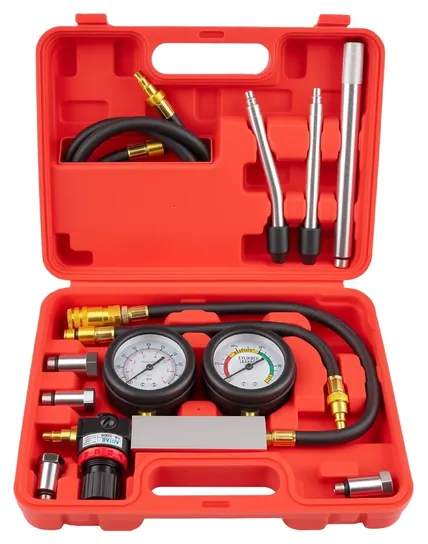
Most shop kits use two gauges: one shows the input pressure, the other the leak as a percentage. OTC's 5609 runs on 100 psi shop air and pairs 2.5-inch gauges with a regulated manifold (OTC 5609 product page). You'll need a compressor that can supply that pressure; no kit includes one.
Reading The Percentage, And Why Your Baseline Matters
A common rule of thumb: under about 10 percent leakage is healthy, 10 to 20 percent is worn but usable, and over 20 percent usually means the engine needs internal work. Small-engine mechanics give the same bands (r/smallengines discussion). Racing engines are held to tighter numbers, and Wikipedia notes that up to about 20 percent is often acceptable on a road engine.
The numbers are relative, not absolute. Two different testers can read the same cylinder differently, because the reading depends on the size of the restriction inside the tool and on how carefully the regulator is set. Compare cylinders on the same engine with the same tester, and write down a baseline when the engine is healthy. A cylinder that reads far higher than its neighbors matters more than any single figure.
Before each session, set the regulator so the input gauge reads 100 psi and zero the leak gauge as the instructions describe. Budget kits often quote an accuracy figure, such as the one on Nilight's dual-gauge kit page (Nilight), but no independent lab has checked those claims, so treat cheap kits as good for comparing cylinders rather than for exact numbers. If you test diesels, look for a tester rated for them; most budget kits say gasoline only. For a digital readout, newer 4-in-1 testers combine compression, leak-down and vacuum checks, but they have little track record yet.
Running A Leak-Down Test Safely
The engine can turn on its own once it holds pressure. If the piston isn't exactly at top dead center, the air pushes it down and spins the crankshaft, along with the fan, belts and pulleys. Hold the crank with a breaker bar on the pulley bolt, or put a manual transmission in gear with the parking brake set, before raising the pressure (Wikipedia).
Let the engine cool, disable the ignition and fuel pump, and wear eye protection. Thread adapters in by hand and don't overtighten them in aluminum heads. Bleed the pressure off before you unscrew an adapter or move to the next cylinder. Use a regulated air line and never exceed the gauge's rating.
Two-stroke saws, trimmers and blowers need a different check. Their crankcase must be sealed too, so a pressure-vacuum tester with block-off plates for the intake and exhaust is the right tool. A drop in pressure or vacuum points to a crank seal, gasket or cracked boot. We checked the CPSC recall database for every brand on this page and found no recalls (CPSC SaferProducts).
How we researched this
We compared 20 leak-down and compression testers, read the makers' descriptions and setup instructions for the 7 finalists, worked through the standard method and reading guide for leak-down tests, screened each listing for a lasting sales record, and checked every brand against the CPSC recall database.
Frequently asked questions
What's the difference between a leak-down test and a compression test?
A compression test measures the pressure a cylinder builds while the engine cranks. A leak-down test fills a stopped cylinder with shop air and measures how much escapes, which helps you find where the loss is.
What leak-down percentage is bad?
As a rule of thumb, under about 10 percent is healthy, 10 to 20 percent is worn, and over 20 percent usually needs repair. Compare cylinders on the same engine with the same tester.
How do I tell where the air is leaking?
Hiss at the tailpipe points to an exhaust valve, at the intake to an intake valve, and at the oil filler to the rings. Bubbles in the radiator suggest a head gasket.
Do I need an air compressor?
Yes. These kits run on regulated shop air, usually set to 100 psi, and none include a compressor.
Can I test a diesel or a chainsaw with these?
Most budget kits are for gasoline engines only. Two-stroke saws and trimmers need a pressure-vacuum crankcase tester instead.