The 9 Best Outdoor Access Points
Updated by · How we research

Eight weatherproof Wi-Fi access points and a long-range bridge compared on sealing, power and speed. The TP-Link EAP225-Outdoor covers most yards for the money. When users buy our independently chosen editorial recommendations, we may earn commissions to help fund the Wiki.
An outdoor access point is not a range extender: it needs a network cable back to your router, and that same cable usually carries its power. Run that line first, because a wired link keeps far more speed than any wireless hop. This list is for homeowners covering a yard, pool or barn, and for small businesses lighting up a patio or lot.




Editor's Notes
October 23, 2026, by Ezvid Wiki Editors:
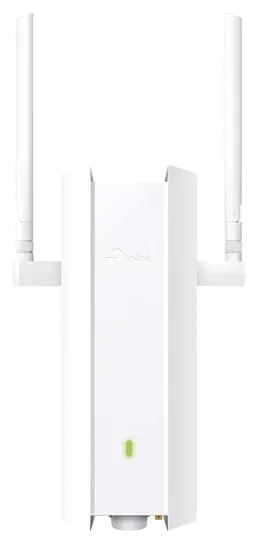
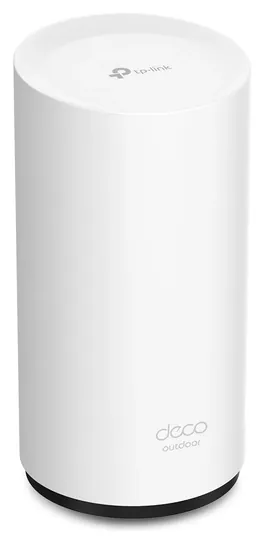
The TP-Link EAP225-Outdoor takes the top spot. It does the job most people come here for, covering a patio, pool or yard from one cable, and it still sells for about what it cost in 2018, with the injector and mount in the box. For newer radios we added the TP-Link EAP625-Outdoor HD and the Wi-Fi 7 TP-Link EAP725-Outdoor, plus the TP-Link Deco X50-Outdoor for homes that already run Deco mesh.
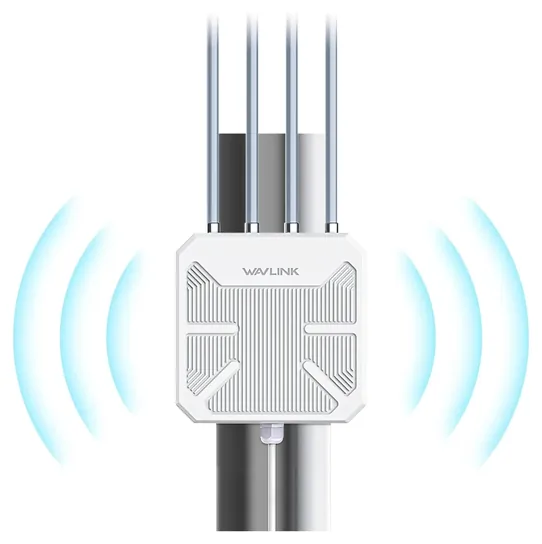
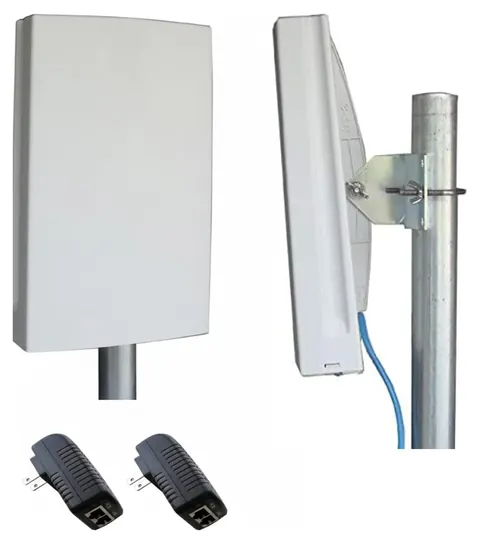
The old Wavlink AC1200 is gone, and the Wavlink WL-WN573HX1 takes its place. We couldn't find the TP-Link CPE210 or the Ubiquiti NanoStation Loco M5 in stock, and the Hawking, QWnet and older EnGenius and Tycon models have dropped out of sale. The Ubiquiti UniFi AC Mesh Pro is still around, but it's an older design at a steep price, so Ubiquiti now sits in the special honors with Ruckus. The Tycon EZ-Bridge Lite stays for anyone linking two buildings.
The deciding evidence was the makers' spec sheets on power and sealing: which units take standard network power, which come without an injector, and whose injector has to stay indoors.
Earlier notes
December 7, 2020:
Due to the increasing popularity of outdoor access points and Wi-Fi routers, we were able to add three new manufacturers to our existing list. The Hawking Technology AC1750 is pricy compared to other options, but it is an impressive unit in terms of construction and range, and it offers AC wireless speeds of up to 1750 Mbps. It can be ethernet-powered and is probably meant for business rather than home applications, unless you live in a mansion.
The Engenius Technologies ENS500 offers excellent value for the features it has. It was added for its ability to reach speeds of up to 867 Mbps, as well as being able to operate in high radio-frequency environments such as marinas. It also has a high weatherproof rating and a powerful Qualcomm processor. While not as powerful as the Engenius, the Wavlink AC1200 was an easy addition to our list, as it has four omnidirectional antennas, with two operating on the 2.4 GHz band and two working on the 5 GHz band. It offers the flexibility of being able to create a separate private wireless network or extend the Wi-Fi coverage of an existing network.
November 29, 2019, by Christopher Thomas:
There are a couple different types of outdoor wireless access points. The more common is the weatherproof Wi-Fi extender, which can serve to deliver a strong Internet connection to the farthest reaches of your yard or garage. The Ubiquiti UniFi AC Mesh Pro is one of the best and probably the most popular for this purpose, though the TP-Link Omada EAP225 performs nearly as well and costs considerably less. The Ubiquiti NanoStation Loco M5 offers similar functionality and doesn't have any bulky antennas, and for that reason it's commonly installed on the outside of RVs and motor homes to increase access to public Wi-Fi networks when traveling.
There are also some excellent options for sending and/or receiving a signal over an incredibly long distance. The single-point TP-Link CPE210 is among the most affordable and easiest to configure, though its 2-mile range is not the best. For extremely long-range transmission, the Tycon EZ-Bridge LT+ and Tycon EZ-Bridge Ultra2-LR are hard to top, with maximum distances of a few and several miles, although they don't offer a ton of bandwidth. The QWnet CPE5450, meanwhile, is useful for more complex setups that require a mesh of long-range transmitters and receivers, as you can purchase additional slave units for placement all over your property.
On the other hand, if you're just looking for slightly increased Wi-Fi range and don't need to ship it across a long distance in any single direction, consider upgrading your home with a Wi-Fi mesh system or investing in a powerline extender or other Wi-Fi booster.
Special Honors
Ubiquiti UniFi Ubiquiti sells its UniFi outdoor access points and its long-range bridges mainly through its own store. They're run from the free UniFi Network app on a UniFi gateway or your own computer, and many small-business installers build whole sites around them. They're a good fit if you already use UniFi gear indoors. ui.com
Ruckus Networks Ruckus builds outdoor access points for stadiums, campuses and city networks, and network pros often recommend them for tough sites. They cost far more than home gear and are sold through resellers, so they make sense when an installer is planning the network. ruckusnetworks.com
Run A Cable, Then Match The Power
Use outdoor-rated Cat5e or Cat6 cable with a UV-resistant jacket for the run outside.
An outdoor access point joins your network over an Ethernet cable, and in nearly every case that cable also powers it, a scheme called power over Ethernet (PoE). That's the big difference from a range extender, which repeats a wireless signal and loses much of its speed doing it. The TP-Link Deco X50-Outdoor can link back to the house wirelessly or plug into a wall outlet, but a cable is still the faster path.
PoE comes in two flavors, and mixing them up can damage gear. Standard PoE (802.3af, and the stronger 802.3at or PoE+) negotiates power with the switch before sending it. Passive PoE, usually 24 or 48 volts, sends power all the time and needs its own injector. The TP-Link EAP225-Outdoor accepts both and comes with a passive injector, while the EAP625-Outdoor HD needs PoE+ and comes with no injector at all. TP-Link marks its bundled injectors for dry indoor use only, so plan to mount the injector inside, where the cable leaves the house. Use outdoor-rated Cat5e or Cat6 cable with a UV-resistant jacket for the run outside.
Weather Ratings, Cold And Lightning
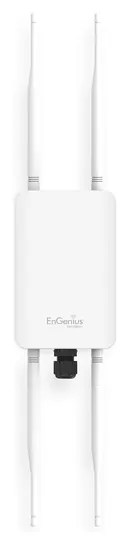
The IP rating tells you how well the case keeps out dust and water. IP65 resists jets of water, which covers rain on an exposed wall. IP66 handles stronger jets, IP67 survives a brief dunk, and IP68 is rated for longer submersion, which matters in places that flood or under heavy runoff. The EnGenius ENH1350EXT is IP67, and TP-Link rates the EAP625-Outdoor HD at IP68 with 6 kV lightning protection. IP55, found on some business models, is meant for a spot under an eave.
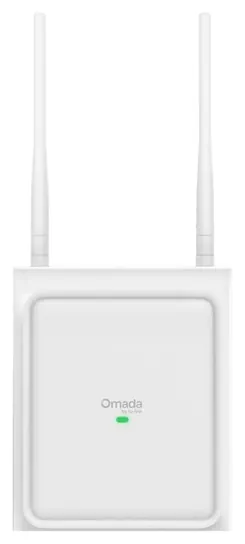
Check the cold limit if you live where winters bite. The Omada units list operation down to -30 C (-22 F), while the EnGenius and Wavlink units stop at -20 C (-4 F). Lightning is the larger risk on long outdoor cable runs: use shielded, grounded cable, add a surge protector where the cable enters the building, and leave a drip loop so water runs off before it reaches the port. Mount the unit clear of power lines, and hire a licensed electrician for any new outdoor outlet.
Range, Bands And The Rules For Outdoor Radios
Range figures such as 200 or 300 meters are open-field numbers. A wall, a fence or a row of trees cuts them sharply. The 2.4 GHz band travels farther and through more obstacles but runs slower; 5 GHz is faster over a shorter reach. Most outdoor cameras and smart plugs use 2.4 GHz. Remember that a phone or laptop has a weak radio of its own, so a powerful access point can reach a device that can't answer back. Mount the unit near where people sit, not at the far edge of the house pointing out.
In the U.S., outdoor 5 GHz radios follow FCC rule 15.407. Several 5 GHz channels need radar detection (DFS), so an access point may pause on startup or switch channels when it hears radar. The rule also caps antenna gain and power, so don't swap in a bigger antenna or an add-on amplifier. Omni antennas cover all around, while directional ones reach farther in one direction; the TP-Link EAP725-Outdoor switches between the two. For a link between buildings hundreds of meters or miles apart, a point-to-point bridge kit with aimed panels does the job better than any access point.
How we researched this
We compared 18 outdoor access points and bridges, read the maker spec sheets for six of the nine finalists and the FCC's rules for outdoor 5 GHz radios, analyzed owner feedback patterns, and checked every brand against the U.S. Consumer Product Safety Commission's recall database. Only one independent review covers any of the finalists. Updated October 23, 2026 by Ezvid Wiki Editors.
Sources (9)
- Omada: EAP225-Outdoor specifications
- Omada: EAP625-Outdoor HD specifications
- Omada: EAP725-Outdoor specifications
- Omada: EAP110-Outdoor specifications
- TP-Link: Deco X50-Outdoor
- EnGenius: ENH1350EXT
- TechRadar: TP-Link Omada AC1200 outdoor access point review
- Cornell LII: 47 CFR 15.407
- U.S. Consumer Product Safety Commission: SaferProducts
Frequently asked questions
Can I put a regular access point outside?
Not for long. Indoor units aren't sealed against rain, dust or freezing cold. Pick one rated IP65 or better, and keep its power injector indoors unless the maker says otherwise.
What's the difference between an outdoor access point and an extender?
An access point connects to your router with a cable and keeps full speed. An extender repeats a wireless signal and loses much of it. Some outdoor units can do both, but the cabled setup is faster.
Do I need PoE?
Almost always. Most outdoor access points take power over the network cable. Check whether yours needs standard PoE, PoE+ or passive PoE, and whether an injector is in the box.
How far does an outdoor access point reach?
Makers quote 200 to 300 meters in open air, but walls, trees and phones with weak radios cut that sharply. For links between buildings, use a point-to-point bridge.
Does an outdoor access point work with Starlink?
Yes, if you can connect it by cable to the Starlink router or an Ethernet adapter and set it to access point mode. Some units, like Wavlink's, also offer a router mode.
Are there Wi-Fi 6E or 6 GHz outdoor access points?
Few, and they're costly. U.S. rules allow 6 GHz outdoors only under an automated coordination system. None of the picks here uses 6 GHz; the Wi-Fi 7 TP-Link EAP725-Outdoor is dual band.