The 8 Best Smartphone Stabilizers
Updated by · How we research

Eight motorized phone gimbals compared on tracking, phone weight limits and real battery life. The DJI Osmo Mobile 8 leads for its full-circle pan. When users buy our independently chosen editorial selections, we may earn commissions to help fund the Wiki.
Most phone gimbals stop at about 300 grams, or 10.5 ounces, and a large phone in a rugged case can come close, so weigh yours before buying. Advertised battery life also assumes tracking and the light are off; with both on, expect roughly half. These motorized handles suit anyone filming walks, pans or a moving subject, not a seated talking head.


Editor's Notes
November 16, 2026, by Ezvid Wiki Editors:
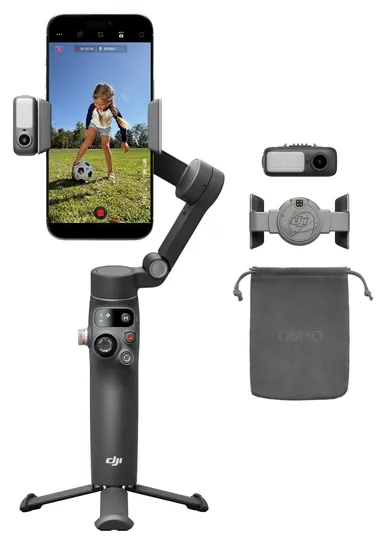
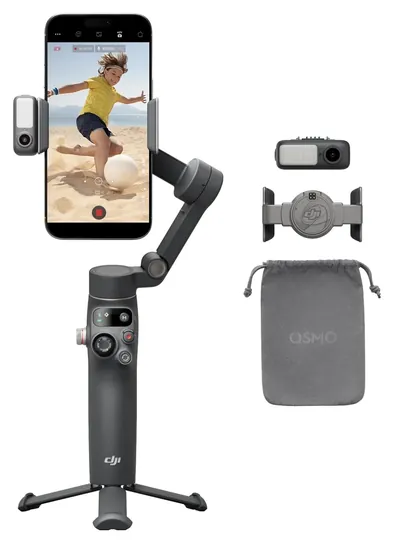
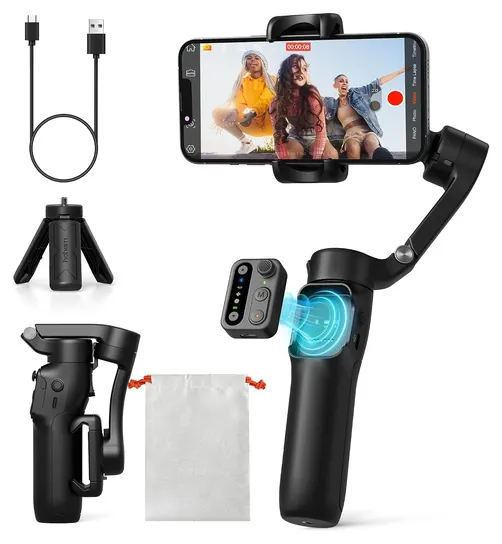
The DJI Osmo Mobile 8 leads this list because it pans a full circle, ships with its tracking module and earns the strongest independent reviews, though DJI never launched it officially in the U.S. This page is back after a break, and it now covers motorized three-axis phone gimbals only. Passive grips and selfie sticks get a section in the guide instead.
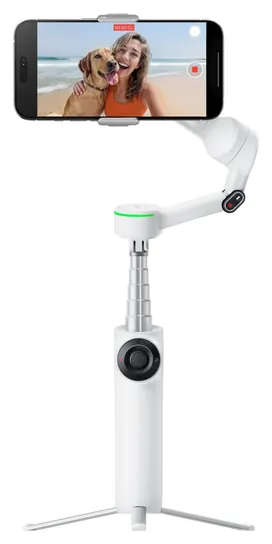
To choose, we set each model's phone weight limit and battery life with tracking on against reviews from Fstoppers, TechRadar and Android Authority, then checked every brand for recalls. The Insta360 Flow 2 Pro is the pick for iPhone owners, and the Hohem iSteady X3 SE costs the least. We left out cheap one-motor sticks and budget brands whose apps and tracking draw steady complaints, along with older or near-identical versions of the picks.
Weigh Your Phone Before You Shop
The number that matters most is the phone weight limit, and it is lower than many people expect.
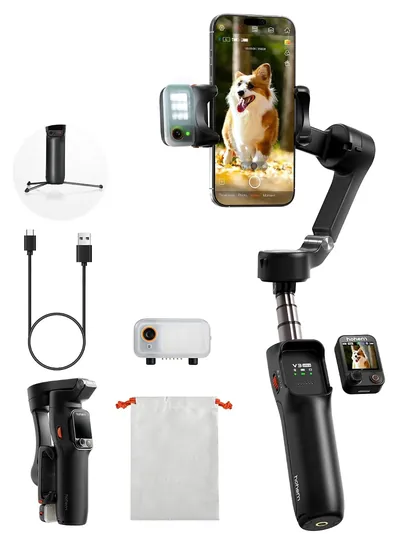
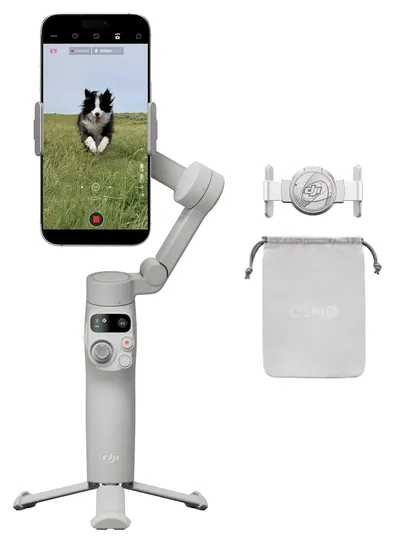
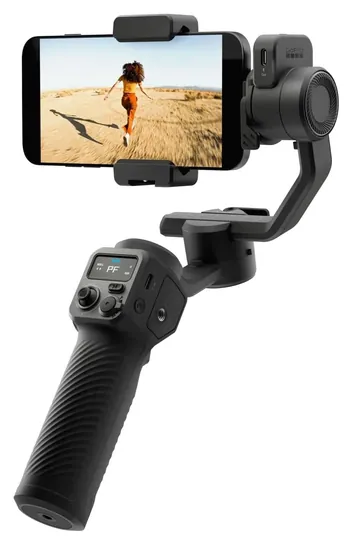
The number that matters most is the phone weight limit, and it is lower than many people expect. Most of these gimbals top out around 300 grams, about 10.5 ounces, including the Insta360 Flow 2 Pro and the DJI Osmo Mobile 7 series. A large phone in a rugged case can come close to that, and a clip-on lens or microphone can push it over. Fstoppers suggests buying a gimbal rated at least a quarter above the weight of your full setup. When the motors are overloaded, the gimbal beeps or shakes, which is your cue to drop the case or the accessory. The Hohem iSteady V3 Ultra and GoPro Fluid Pro AI are rated for about 400 grams.
Next, look at the pan range. Gimbals that spin a full 360 degrees without stopping can follow someone who circles you, or shoot a smooth panorama. Older designs stop partway around, which is fine for walking shots and vlogs. Last, check what's built in. An extension rod and a small tripod in the handle cover selfies and tabletop shots without extra gear, and most models can charge your phone through a USB-C port, though that drains the gimbal.
Three Ways A Gimbal Can Track You
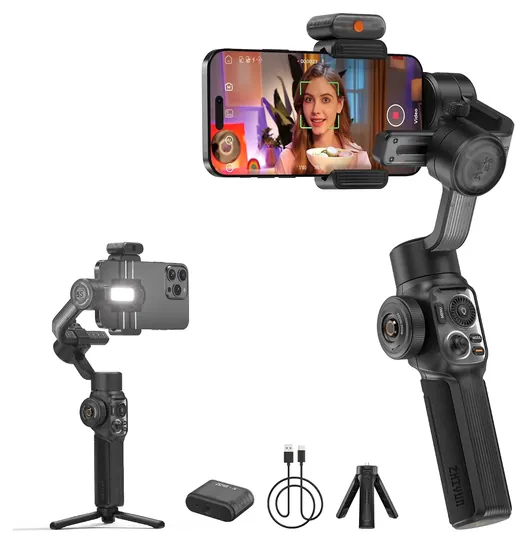
"AI tracking" means one of three things. The first is a small camera module that clips onto the gimbal and does the tracking itself, as on the DJI Osmo Mobile 8 and 7P, the Hohem iSteady V3 Ultra and the Zhiyun Smooth 5S AI. It works with any camera app and any phone. The second is Apple DockKit, which lets an iPhone steer the gimbal from the built-in Camera app and other apps that support it. It needs a recent iPhone, follows people only, and doesn't work with Android. The third, and cheapest, is the maker's own app, which can only track while you film inside it.
Tracking and lights cost battery. DJI rates the Osmo Mobile 8 for about 10 hours of plain stabilizing, about 5 with tracking and about 4 with the light on, per Fstoppers, and a review of the V3 Ultra saw about 4 hours with both running. Plan on roughly half the advertised figure if you track all day.
Android owners should check app access first. DJI's Mimo app is no longer listed on Google Play, so it has to be downloaded from DJI's website. Also note that DJI didn't launch the Osmo Mobile 8 in the U.S., as Imaging Resource reported, so U.S. buyers may get uncertain warranty support.
Gimbals, Grips And Phone Stabilization, Plus Air Travel
Your phone already steadies video in two ways: optical stabilization moves the lens or sensor slightly, and electronic stabilization crops and shifts the frame in software (Android Authority). Both are good at small shakes. A motorized gimbal handles big movements, like walking, running or panning, and it doesn't crop the picture (Hohem). If you mostly film yourself talking from one spot, a tripod is enough. If you film kids, pets, sports or travel on the move, a gimbal makes the bigger difference.
Passive stabilizer grips and selfie sticks with weighted handles have no motors, so they can't level the phone or cancel shake. They are fine for steadier holding, not for smooth walking shots. Cheap single-axis models are mostly extendable sticks with one motor, and they were left off this list.
For care, balance the phone in the clamp before you power on, and don't fold the gimbal with the phone still attached. For flying, every model here has a built-in lithium-ion battery well under 100 watt-hours. The FAA says devices with lithium batteries are best kept in carry-on bags, and spare batteries and power banks must be in the cabin.
How we researched this
We compared 15 phone gimbals from seven brands, read the makers' spec sheets and published reviews for the 8 finalists, analyzed owner feedback, and checked every brand against the U.S. Consumer Product Safety Commission's recall database, which listed no recalls. We found no Consumer Reports, Wirecutter or RTINGS lab test of phone gimbals, so battery and tracking claims were weighed against independent reviews from Fstoppers, Android Authority, TechRadar and Trusted Reviews.
Sources (13)
- Fstoppers: Best Gimbals and Stabilizers 2026
- Fstoppers: DJI Osmo Mobile 8 review
- Fstoppers: Hohem iSteady V3 Ultra review
- Android Authority: best smartphone gimbals
- Android Authority: image stabilization explained
- TechRadar: Hohem iSteady V3 Ultra review
- Trusted Reviews: Insta360 Flow 2 Pro review
- Basic Tutorials: Zhiyun Smooth 5S AI review
- Imaging Resource: DJI Osmo Mobile 8 launch
- Hohem: gimbal vs OIS vs EIS
- Apple: DockKit
- FAA PackSafe: lithium batteries
- U.S. Consumer Product Safety Commission: recalls
Frequently asked questions
What's the difference between a gimbal and a stabilizer?
People use the words for the same thing. A gimbal is a stabilizer with three motors that keep the phone level and cancel shake. A passive stabilizer, like a weighted grip or selfie stick, has no motors and only helps you hold steadier.
Do I need a gimbal if my phone has stabilization?
Not for still or talking-head shots. Phone stabilization handles small shakes but crops the frame. A gimbal pays off when you walk, run, pan or follow a moving subject.
Does gimbal tracking work on Android?
Yes, through the maker's app or a clip-on tracking module. Apple's DockKit tracking works only on recent iPhones. DJI's Mimo app is not on Google Play, so Android users download it from DJI's site.
How long does a phone gimbal battery last?
Makers rate most at about 9 to 11 hours of plain stabilizing. With tracking and the light on, expect about 4 to 5 hours. The Zhiyun Smooth 5S AI is rated far longer.
Will my phone fit?
Weigh your phone with its case. Most clamps hold up to about 300 grams; the Hohem iSteady V3 Ultra and GoPro Fluid Pro AI handle about 400 grams. Remove heavy cases or lens clips if the motors complain.
Can I take a phone gimbal on a plane?
Yes. Its built-in battery is small, and the FAA advises keeping devices with lithium batteries in carry-on bags. Spare batteries and power banks must go in the cabin.