The 8 Best Soprano Recorders
Updated by · How we research

Fingering, air channel and plastic versus maple compared across eight soprano recorders. The Yamaha YRS-24B is the best first recorder for most kids and adults. When users buy our independently chosen editorial selections, we may earn commissions to help fund the Wiki.
Check the fingering before you buy. Soprano recorders come in baroque or German fingering, and the two aren't swappable: German makes one early note easier but leaves several sharps and flats out of tune. Many school classes still name one system, so ask the teacher first. This list is for parents buying a school recorder and for adults starting out.






Editor's Notes
October 23, 2026, by Ezvid Wiki Editors:
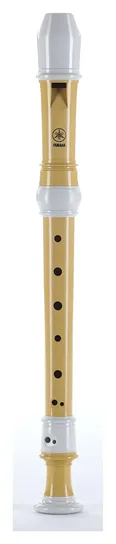
A plain plastic Yamaha now leads this list. The Yamaha YRS-24B uses baroque fingering, plays easily and costs little, which is why so many schools hand it out. For adults who mean to keep going, the Yamaha YRS-302B is the step up. We split the rest by fingering, because German fingering is still on many class lists even though it trips up players later.
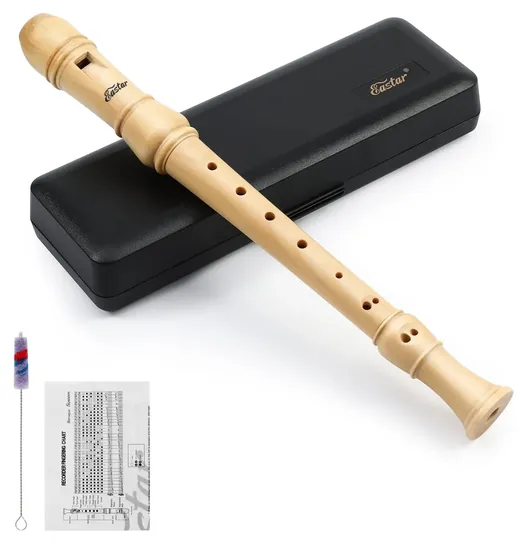
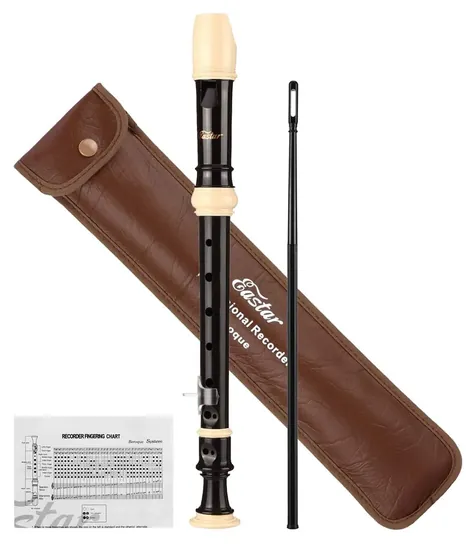
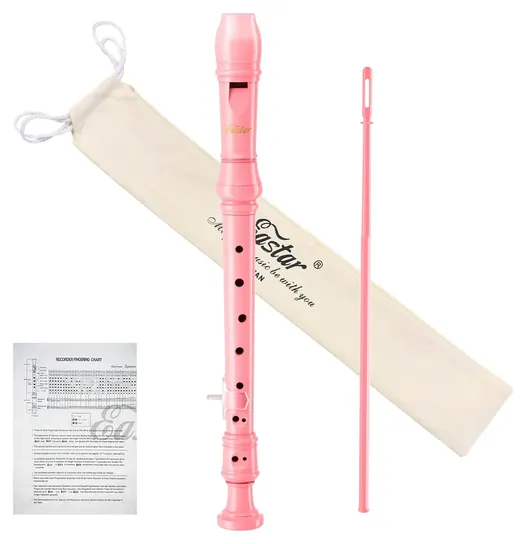
The Hohner 9532, Hohner 9550, Asmuse Baroque, EastyGold Descant Flauta and Eastar ERS-31BM have left the market, so they're out, and we dropped the Eastrock set for weaker owner feedback. The Eastar ERS-31GM takes the wooden slot, and the Yamaha YRS-402B and Yamaha YRS-312B are new.
Nobody publishes lab measurements of recorder tuning, so we weighed a music retailer's guide for adult beginners, an early-music forum debate over cheap wooden recorders, a specialist shop's catalog and the makers' own descriptions.
Earlier notes
June 26, 2020, by Luke Mitchell:
The recorder is a common learning instrument in school music curriculums and this is where a lot of us take our first tentative steps into learning about harmony when playing as an ensemble. Part of the internal duct flute group within the woodwind family, it is available in a number of ranges, from the sub-great bass at the low end, to the piccolo at the higher register, with the soprano, its most popular variant, falling in between.
When choosing a recorder, you have a choice of two different fingerings, namely the Baroque (or English) style, and the German style. The Baroque recorder was developed during the renaissance era and is distinguishable for having a smaller fourth hole than fifth. It is favored by many schools for its better tuning, although finger positions can become rather uncomfortable when playing with this configuration. The examples of the Baroque style within this ranking are the EastyGold Descant Flauta, Eastar ERS-21BN, Eastar ERS-31BM, Asmuse Baroque, Hohner 9550, and the Hohner 9532.
Alternatively, you may opt for the German fingering style, which features a simplified configuration, and is more comfortable for beginners to play. Developed in the 1920s, this style is distinctive from the Baroque recorder for having a larger fourth hole than fifth, and it is essential that students clarify which type of instrument they should purchase, especially if they will be playing as part of a group. The German fingered models in this ranking are the Eastrock Set, Eastar ERS-21GP, and the Yamaha YRS-23Y.
Another consideration when choosing a recorder is the type of windway (the hole in the mouthpiece), as you have a choice of straight or curved. Straight windways make it easier to produce consistent pitches and are considered to be better suited to beginner to intermediate players, whereas the curved windway offers more wind-resistance and can produce more subtleties in tone for the experienced player. Straight windway models in this ranking include the Yamaha YRS-23Y, and Eastar ERS-21GP, whereas curved windway models include the Yamaha YRS-302BIII, and the Hohner 9532.
Special Honors
Mollenhauer Denner Pearwood Mollenhauer, a German family firm that has made woodwinds since 1822, builds recorders from plastic school models up to concert instruments. Its Denner soprano is turned from pearwood, uses baroque fingering with double holes, and costs many times a plastic Yamaha. It's a sensible next step for a player who has outgrown a first recorder and wants real wood. mollenhauer.com
Baroque Or German Fingering
Many elementary programs still teach German fingering, and a student with the wrong system will learn different finger positions for some notes than the rest of the class.
This is the choice that matters most. Baroque fingering, sometimes called English fingering, is the standard for adults and for most published music. German fingering was designed to make the note F easier for beginners, but it leaves several sharps and flats out of tune, and today it's made almost only for school use (Wikipedia). In Yamaha's line, a "B" at the end of the model name means baroque, as in the YRS-24B.
Before you buy for a child, check the class list. Many elementary programs still teach German fingering, and a student with the wrong system will learn different finger positions for some notes than the rest of the class. Adults starting on their own should pick baroque, which is also what Teton Music recommends to adult beginners (Teton Music).
Plastic, Wood-Look Or Real Wood
A good plastic recorder is the right first instrument for nearly everyone. Plastic needs no breaking in, shrugs off heat and humidity, and can be washed. Yamaha's school models are made of ABS plastic, and its wood-look versions, such as the YRS-312B, are the same plastic with a printed grain (Teton Music).
Real wood is where tone can improve, but not at the bottom of the market. In a long thread on cheap wooden sopranos, early-music players argue that budget wood rarely beats a decent plastic recorder, and that a worthwhile wooden one starts with models such as Mollenhauer's student line or the Kung Studio (Chiff and Fipple). Specialist shops price Mollenhauer's pearwood Dream and Denner sopranos and Moeck's Flauto Rondo well above any plastic Yamaha (Early Music Shop). Wood also needs drying after each session and careful storage.
Windway, Care And Squeaks
The windway is the channel your breath goes through. A straight windway, as on the Yamaha YRS-24B and YRS-23, gives a soft, forgiving tone. An arched windway, as on Yamaha's 300 and 400 lines, gives a fuller sound and more control, but it rewards a steady breath (Teton Music). Most squeaks come from blowing too hard or from a hole that isn't fully covered, not from the instrument.
A recorder goes in your mouth, so keep it clean. Take it apart after playing, shake out the moisture and let the pieces dry. Wash the head joint in warm, soapy water before anyone else plays it, and never use boiling water or a dishwasher, which can warp plastic. The Yamaha YRS-24B comes without a cleaning rod, so a rod is worth adding (Teton Music).
How we researched this
We compared 13 soprano recorders from Yamaha, Eastar, Aulos and Eastrock, read the makers' descriptions, a music retailer's guides for adult beginners, a specialist early-music shop's catalog and a forum debate on cheap wooden recorders, looked at long-term owner feedback, and checked every brand for recalls with the U.S. Consumer Product Safety Commission. No lab has published tuning measurements for these models.
Frequently asked questions
What is the best soprano recorder for beginners?
For most beginners, a Yamaha school recorder with baroque fingering, such as the YRS-24B. Adults who want a fuller tone can step up to the YRS-302B. If a class requires German fingering, the Yamaha YRS-23 is the usual choice.
What are the best soprano recorder brands?
Yamaha and Aulos make the plastic recorders most schools use. For wooden recorders, Mollenhauer, Moeck and Kung are the names early-music players trust. Eastar sells budget kits with good owner feedback.
Is a wooden soprano recorder better than plastic?
Not at low prices. A good plastic recorder is consistent, washable and unaffected by weather, and forum players find that budget wood rarely sounds better. Wood starts to pay off with makers such as Mollenhauer and Moeck, and it needs drying after each use.
Is a soprano recorder the same as a descant recorder?
Yes. Soprano is the American name and descant the British one. It's the recorder in C whose lowest note is the C above middle C, with a range of about two octaves.
Why does my recorder squeak?
Usually because of blowing too hard or a hole that isn't fully covered. Blow gently, as if fogging a window, and press the finger pads flat over each hole.