The 8 Best Transmission Coolers
Updated by · How we research

Stacked-plate, tube-and-fin and fan-cooled transmission coolers compared on tow rating, fittings and kit contents. The Mishimoto MMTC-SP-13N leads for towing. When users buy our independently chosen editorial picks, we may earn commissions to help fund the Wiki.
Heat is what kills most automatic transmissions: fluid that runs much past 240 degrees starts to varnish, and seals harden not far above that. Most vehicles already have a small cooler inside the radiator, and an add-on one helps when you tow, haul, race or drive in desert heat. These are the ones worth bolting on.


Editor's Notes
October 23, 2026, by Ezvid Wiki Admin:
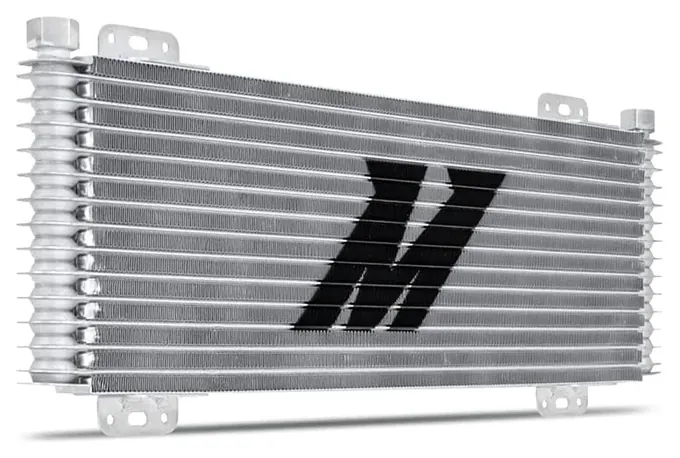
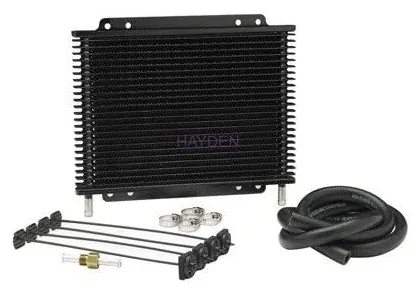
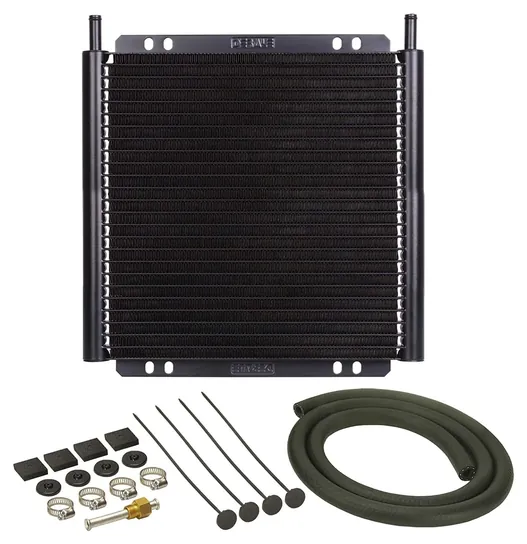
The Mishimoto MMTC-SP-13N takes the top spot because it pairs a 40,000-pound rating and a stacked-plate core with a full hose kit, and Mishimoto publishes the specs to back it up. For this category the evidence was the makers' rating and port data, checked against the fluid-temperature limits that transmission builders publish, since nobody has run these coolers side by side on a dyno. The B&M SuperCooler and Tru-Cool Max came off because neither can be bought new now, and the Mishimoto MMTC-U went because it's nearly sold out. The Hayden 678 Rapid-Cool stays as a cheap starting point. New are the Derale Hyper-Cool and Derale 13750 for slow, hot work, the Evil Energy 6-Pass for small cars, and the Derale 13316 for racers on threaded lines.
April 04, 2020:
Transmissions sound intimidating and expensive, but they are sealed and relatively low maintenance as long as they don't overheat. Excessive heat can break down the transmission fluid inside, which is what keeps the transmission clean. If this fluid can't lubricate or dissipate heat properly, the clutch material can come apart and make the fluid dirty and less effective, leading to slipping or gear loss. Adding a cooler is an inexpensive way to protect the transmission's internal components and extend the lifespan of the unit.
Overall cooling ability was the primary factor used to evaluate each model, with the Tru-Cool Max and the Derale Series 8000 dropping temperatures 20 to 30 degrees on average. But other elements are important, too, which is why the Hayden Automotive Rapid-Cool was included — it offers compatibility with many vehicles, including motorhomes and travel trailers. There's also skill level to consider. The Derale Electra-Cool requires more advanced knowledge to install than does the B&M SuperCooler, but the former is by far the most compatible over all fluid and vehicle performance types.
One final note: tube-and-fin coolers leave a lot to be desired in the way they perform, since air doesn't flow through the tubes the way it does through larger plate coolers. However, the Mishimoto MMTC-U is from a well-known name in the automotive aftermarket industry and is able to outperform many plate designs, so we've added it, as well.
Do not attempt to repair or modify automotive components without professional technical instruction or experience.
Size It To The Load, Not The Car
A thermostatic bypass, sold separately by several cooler makers, lets fluid skip the cooler until it warms up.
Automatic transmission fluid is happiest between about 175 and 225 degrees. Summit Racing's OnAllCylinders guide lays out what happens past that: varnish starts forming near 240 degrees, seals harden near 260, clutches start slipping near 295, and above 300 a transmission can fail within a few thousand miles. Towing, hauling, hill climbs and stop-and-go heat are what push fluid into that range.
Coolers are rated by gross vehicle weight (GVW), the combined weight of the loaded truck and trailer, and sometimes by towing weight. Add the two up and pick a cooler rated above the total. The Mishimoto MMTC-SP-13N is rated for 40,000 pounds, which covers heavy-duty pickups with big campers. The Hayden 678 carries a 24,000-pound GVWR with a 5,000-pound towing limit, which suits light trailers.
Bigger isn't always better for a car that never tows. In a cold climate, a large cooler can keep fluid from reaching operating temperature, and some modern transmissions expect a set temperature. A thermostatic bypass, sold separately by several cooler makers, lets fluid skip the cooler until it warms up.
Stacked Plate, Tube And Fin, Or Fan
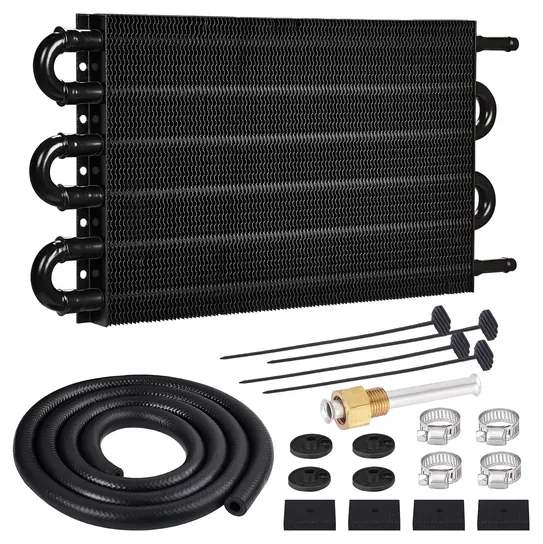
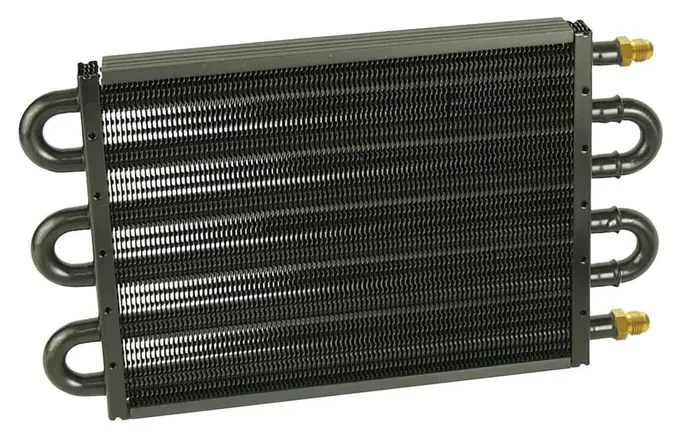
Tube-and-fin coolers run fluid through a long bent tube pressed into thin fins. They are simple and cheap, and they work well for daily driving and light loads. The Evil Energy 6-Pass and Derale 13316 are this type.
Stacked-plate and plate-and-fin coolers pass fluid through flat chambers with fins between them. According to OnAllCylinders, a stacked-plate design can reject up to three times the heat of a tube-and-fin cooler of the same face area with less than half the pressure drop. That is why heavy-duty towing coolers like the Mishimoto and Derale's Hyper-Cool use plates.
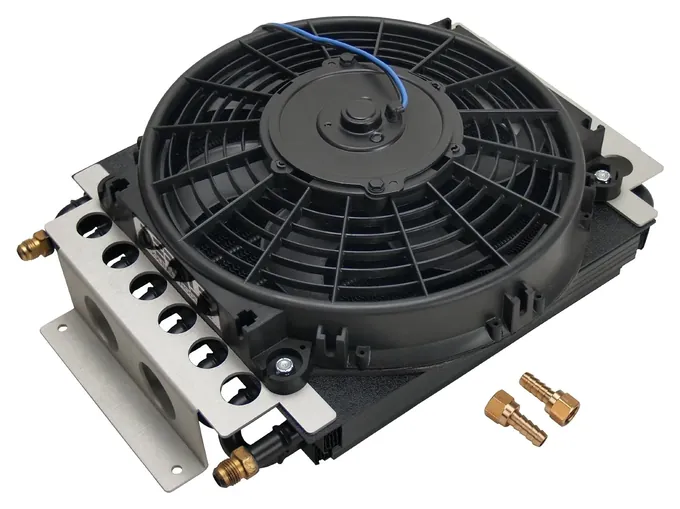
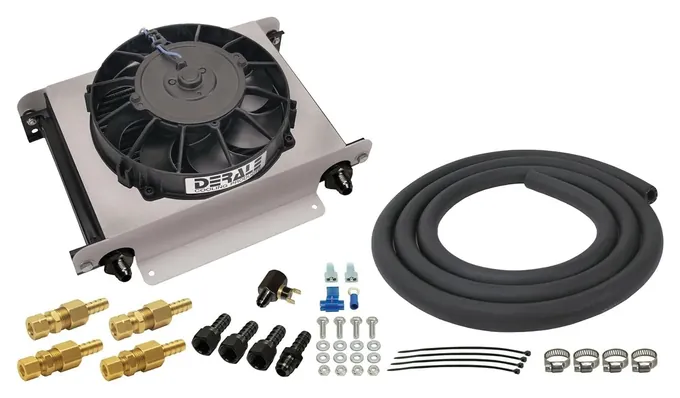
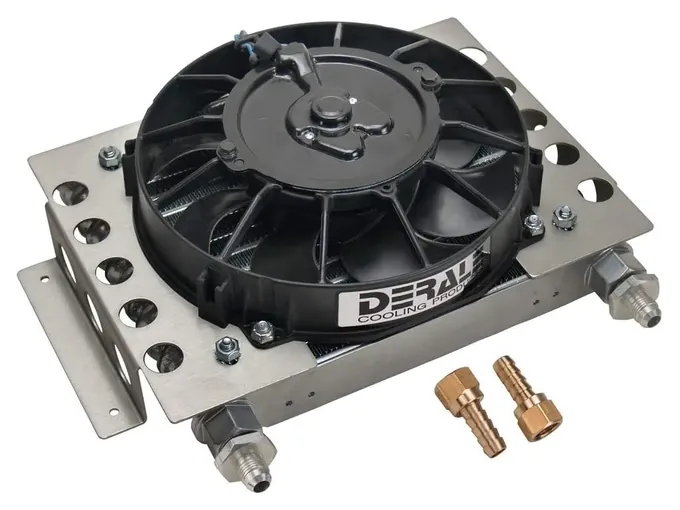
A fan earns its place when the vehicle moves slowly under load: crawling up a grade with a trailer, off-roading, or idling in a drag strip's staging lane. With little ram air, a plain cooler does little. Fan-cooled units such as the Derale Hyper-Cool kits can also mount away from the grille, in a bumper, bed or frame rail, but they need a power wire and a switch or thermostat.
Where And How To Plumb It
Most guides, including OnAllCylinders, plumb the add-on cooler in series after the radiator's built-in cooler, on the line returning to the transmission, so fluid gets its final cooling just before it goes back in. Mount the cooler where it gets clean airflow, usually ahead of the radiator or A/C condenser, with the ports at the top or side so air can't get trapped. Never mount it with both ports facing down.
Use hose rated for transmission coolers (SAE J1532), like the hose Mishimoto supplies, and double-check every clamp. Keep lines away from the exhaust and moving parts: hot fluid on a hot exhaust can start a fire, and a slow leak can starve the transmission. Match the fittings to your lines, since universal kits use push-on barbs while race coolers use -6 AN threaded fittings. After the job, run the engine, check for drips and top off the fluid, because the cooler and new hose hold some.
A cooler protects a healthy transmission. It can't fix one that already slips or shifts badly; that needs a diagnosis first.
How we researched this
We compared 15 transmission coolers, read Mishimoto's published specifications and the ratings Derale and Hayden publish through their sellers and parts stores, set them against the fluid-temperature limits transmission builders publish, analyzed patterns in owner feedback, and checked each brand against U.S. recall records. Updated October 23, 2026 by Ezvid Wiki Admin.
Frequently asked questions
What does a transmission cooler do?
It's a small radiator for transmission fluid. Fluid from the transmission flows through it, airflow pulls heat out, and the cooler fluid returns to the transmission. Most vehicles have a small one built into the radiator; an add-on cooler adds capacity.
Are transmission coolers worth it?
Yes if you tow, haul heavy loads, race, off-road or drive in hot, hilly country, because heat is what breaks down fluid and seals. For gentle commuting in mild weather, the factory cooler is usually enough.
How do I choose the right transmission cooler for my vehicle?
Add the loaded weight of your vehicle and any trailer and pick a cooler rated above that total. Then check that it fits the space ahead of the radiator and that its fittings match your lines: push-on barbs for most stock lines, -6 AN for race setups.
Is a stacked-plate cooler better than tube and fin?
Per square inch, yes. A stacked-plate core sheds more heat and restricts flow less. Tube-and-fin coolers cost less and are fine for light duty.
Do I need a transmission cooler with a fan?
Only if you work hard at low speed, such as crawling with a trailer, off-roading or sitting in a staging lane. At highway speed, a plain cooler in front of the radiator gets plenty of air.
What's the best transmission cooler for drag racing?
Racers usually want a cooler with -6 AN threaded ports, like the Derale 13316, so the lines can't blow off a barb. If the car idles long in staging, a fan-cooled unit helps.