The 7 Best Walking Pads
Updated by · How we research

Seven under-desk walking pads compared on incline, weight limit, belt length and noise claims. The WalkingPad Z1 wins for folding in half to store. When users buy our independently chosen editorial recommendations, we may earn commissions to help fund the Wiki.
A walking pad is a flat belt with no console or rails that tucks under a standing desk, and most stop near 4 mph. That's plenty, since a comfortable typing pace is closer to 1.5 mph. They suit office workers and small apartments. Runners need a treadmill, and tall or heavy walkers should check the belt and weight limit first.


Editor's Notes
October 19, 2026, by Ezvid Wiki Admin:
The WalkingPad Z1 leads this new page because it folds in half and still opens to a long, comfortable stride. The UREVO E5S is the pick for a tight budget, and the DeerRun Z10 is the cheapest way here to add a hill.
The bigger story was what we left out. Sperax pads drew a federal safety warning in April 2026, so none appear. Store searches are crowded with cheap handlebar pads from brands that exist only as a storefront, and we skipped them. Two well-liked pads, the WalkingPad A1 Pro and the DeerRun Q1 Mini, aren't sold new right now.
Lab data on these machines is scarce. We leaned on makers' manuals, a teardown database that checks motor and warranty claims, a handful of long-term reviews, Consumer Reports' findings on under-desk treadmills, and patterns in owner complaints. Runners should look at full treadmills instead.
Special Honors
iMovR Under-Desk Treadmills iMovR builds treadmills for office use, with wider decks and motors meant for walking many hours a day. They cost far more than the pads on this list and are sold mainly through iMovR itself, which suits a company outfitting a shared workspace or anyone who walks most of the workday. imovr.com
Walkolution Walkolution makes motorless desk treadmills: the belt moves only when you push it with your stride, so there's no motor noise and nothing to plug in. They are large, costly and sold by the maker, and they suit people who want a quiet desk setup and don't mind working a little harder to keep moving. walkolution.com
What A Walking Pad Is, And What It Isn't
It has no console arms or tall handrails, it sits a few inches off the floor, and it slides under a standing desk, a couch or a bed when you're done.
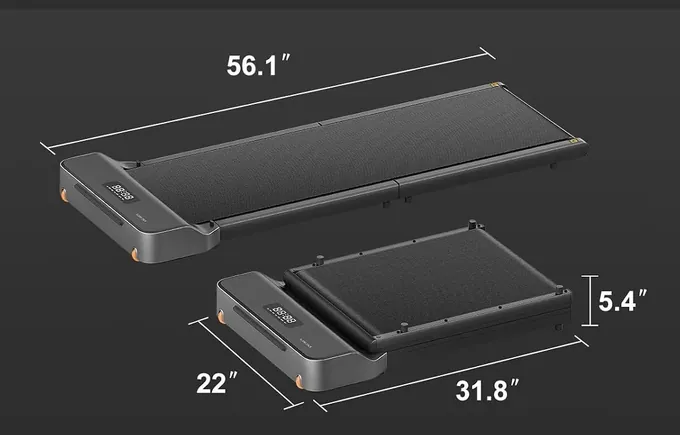
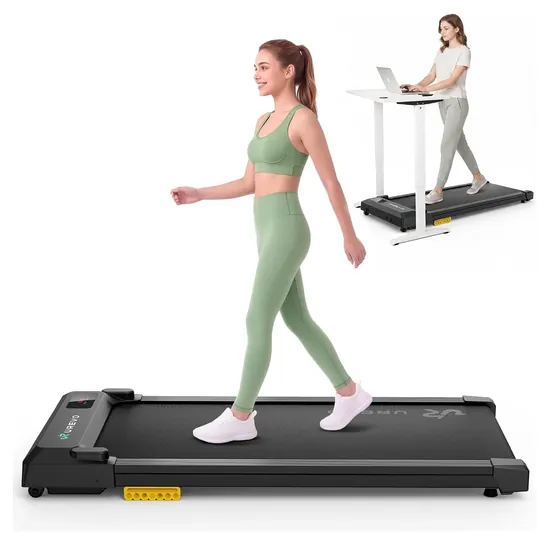
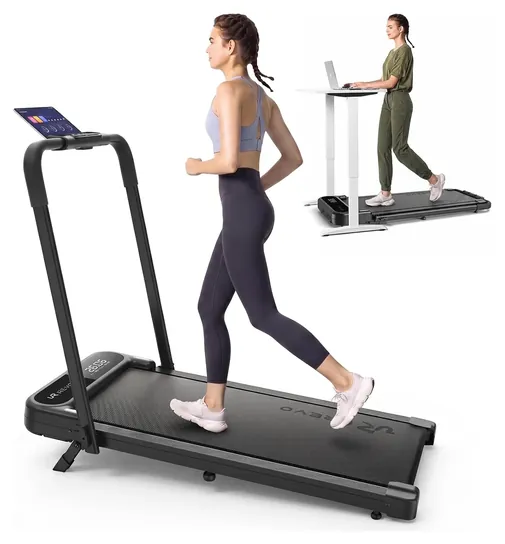
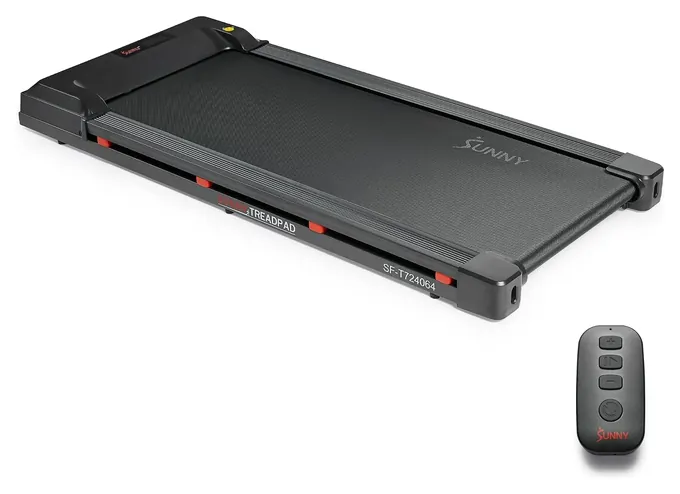
A walking pad is a motorized belt on a low, flat deck. It has no console arms or tall handrails, it sits a few inches off the floor, and it slides under a standing desk, a couch or a bed when you're done. Most top out around 4 mph, which is a brisk walk. The ocdevel walking pad database tracks about 85 models, and nearly all of them fit that pattern.
That top speed matters less than it looks. In a Brigham Young University study, people walking at 1.5 mph while working typed somewhat slower than people sitting but did about as well on attention tests (the full paper). Email, calls and reading suit a walking pad better than heavy typing.
A walking pad is not a running machine. Some pads with a fold-up handlebar reach about 6 mph, but on a belt this short that's a light jog at best. If you want to run, look at our treadmill picks, and if storage is the worry, a full-size folding treadmill gives you a longer deck that still tips up out of the way. Motorless desk treadmills, which you push with your own stride, are another option, though they cost far more.
Belt Length, Weight Limits And Incline
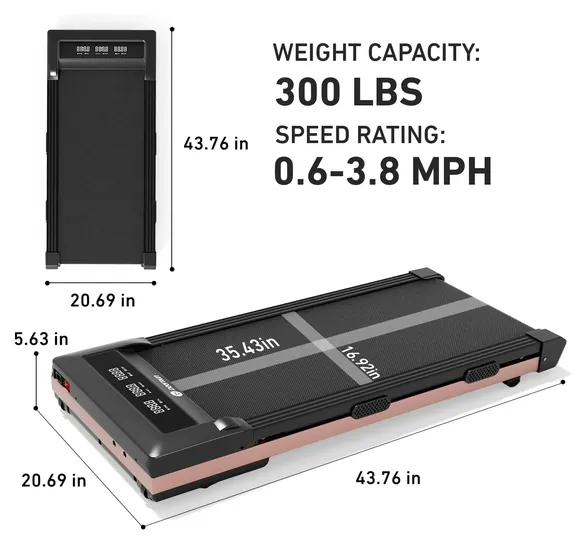
Belt length decides who can use a pad comfortably. Most budget pads have a belt of about 35 to 40 inches, which is fine for a short stride at desk speed. Reviewers at Tom's Guide found that a short deck suits shorter walkers best, and people around 6 feet tall should look for 40 inches or more. Width matters less, but a belt near 16 inches gives your feet room to drift while you look at a screen.
Treat the weight limit as a ceiling, not a target. Listed limits run from about 240 to 400 pounds, and they don't always agree: the UREVO CyberPad Office shows one figure for U.S. shoppers and another in its European manual. Leave some margin, and pick a higher-rated pad if you're near the line.
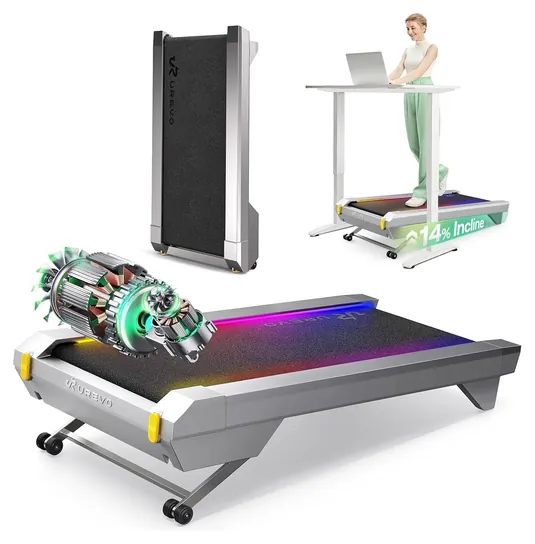
Incline turns a stroll into a workout, but it's awkward at a keyboard. FitnessVolt notes that a tilted deck changes your posture at a desk, so many people walk flat while they work and save the climb for breaks. Pads with automatic incline raise the deck from the remote. Others use a fixed wedge that can't be lowered, which is worth checking before you buy.
Safety, Noise And How Long They Last
Consumer Reports tested a group of under-desk treadmills and found many lacking on build and safety: decks small enough to step off, a belt that tore in its durability test, and a federal injury report about a pad that stopped suddenly. In April 2026 the U.S. Consumer Product Safety Commission told owners to stop using Sperax walking pads after reports of sudden speed changes, falls and overheating. The importer refused a recall. None of the brands on this list had a recall or warning when we checked.
Most walking pads have no clip-on safety key like a full treadmill, so the remote or app is how you stop the belt. Read the manual to learn how yours stops, keep the remote within reach, and leave clear floor behind the deck. Raise a standing desk so your elbows bend at about a right angle while you walk, and start at the slowest speed.
Noise figures are maker claims. The ocdevel listing for the DeerRun Z10 points out that the same pad is quoted at two very different decibel levels. A mat under the deck cuts vibration through the floor, which matters for neighbors below. Expect a budget pad to last about a year of heavy daily use, ocdevel estimates, and follow the manual's belt lubrication schedule to stretch that out.
How we researched this
We screened about 40 walking pads, pulled current details on 20 and compared 9 finalists in depth. We read makers' specs and manuals, a teardown and complaint database that checks motor and warranty claims, reviews from Tom's Guide, Treadmill Review Guru and FitnessVolt, Consumer Reports' findings on under-desk treadmills and a Brigham Young University study on working while walking. We looked at patterns in owner feedback and checked every brand for recalls and warnings with the U.S. Consumer Product Safety Commission. The 3D models are built from published dimensions.
Sources (13)
- ocdevel: walking pad database
- ocdevel: WalkingPad Z1
- ocdevel: DeerRun Z10
- ocdevel: UREVO Strol 2E Pro
- ocdevel: UREVO CyberPad Office
- Tom's Guide: best under-desk treadmills
- Tom's Guide: WalkingPad Z1 review
- Treadmill Review Guru: under-desk treadmills
- FitnessVolt: best walking pads
- Consumer Reports: are under-desk treadmills safe?
- CPSC: warning on Sperax walking pads
- BYU: treadmill desk study
- PLOS ONE paper (PMC)
Frequently asked questions
What's the difference between a walking pad and a treadmill?
A walking pad is a low, flat belt with no console arms or tall rails, and most stop near 4 mph. It slides under a desk or bed. A treadmill has a longer deck, a stronger motor and rails, and it's built for running. See our treadmill picks if you plan to run.
What is the weight limit for a walking pad?
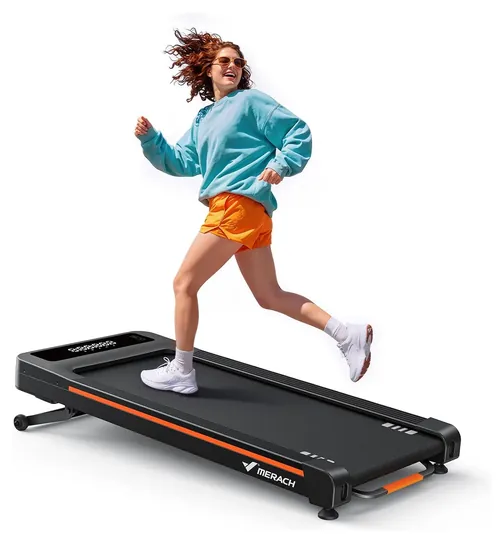
Most are rated for about 240 to 300 pounds, and a few, like the MERACH NovaWalk W50, go to 400. Listed limits sometimes differ between the seller page and the manual, so leave some margin.
Can you run on a walking pad?
Not really. Pads with a fold-up handlebar, like the UREVO Strol 2E Pro, reach about 6 mph, but the short belt only allows a light jog. Runners are better served by a full treadmill or a folding treadmill.
Can you work while walking on one?
Yes, at a slow pace. In a Brigham Young University study, people walking at 1.5 mph typed somewhat slower than people sitting but did about as well on attention tests. Calls and email are the easiest work to do on one.
Are walking pads loud?
Most are quiet enough for a home office but not silent. Makers' decibel figures aren't independently measured, and the hum and footfall travel through floors, so a mat underneath helps, especially upstairs.
Are walking pads safe?
They can be, with care. Most lack a clip-on safety key, so learn how yours stops and keep the remote handy. The U.S. Consumer Product Safety Commission warned owners to stop using Sperax pads in 2026 after falls and overheating reports.