The 8 Best Planter Caddies
Updated by · How we research

Eight wheeled planter caddies compared by weight rating, wheel locks, drainage and material, from plastic and wood to steel. The Bosmere Down Under leads. When users buy our independently chosen editorial selections, we may earn commissions to help fund the Wiki.
A large pot of wet soil with a small tree in it can weigh several hundred pounds, so a caddy's weight rating matters far more than how many wheels it has. These low rolling bases sit under a pot and let one person push it into the sun or out of a storm instead of lifting it.


Editor's Notes
November 16, 2026, by Ezvid Wiki Editors:
The Bosmere Down Under is still the caddy to beat, and the Devault 3012B stays as the one made in the USA. Almost everything else from the old list is gone. The Litada Acacia is unavailable, the Rocky Mountain Goods caddy is nearly sold out, the Bloem Fiskars is rated for only 50 pounds, and the Murilan Trolley is a handled cart rather than a caddy. We also dropped the Plastec CD712, MyGift Wood, Big Blue Gardens Stand and Amagabeli Coaster, because we couldn't find current versions worth recommending.
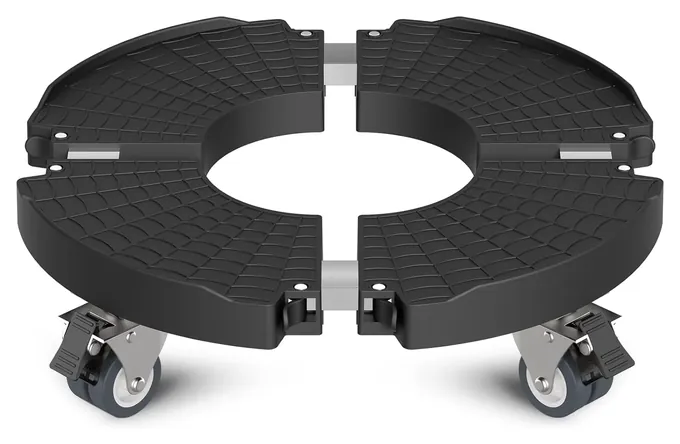
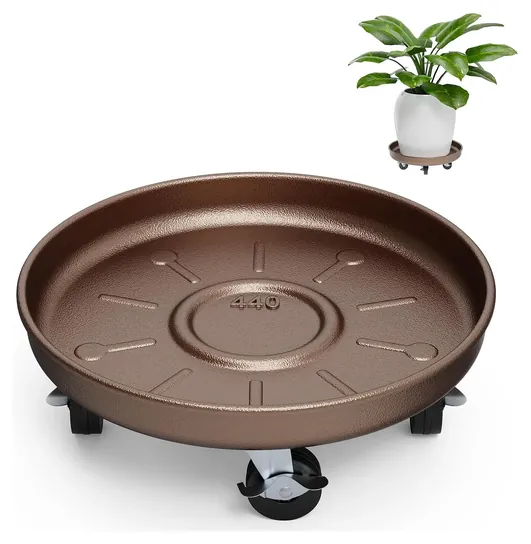
The new picks fill gaps the old list had: the Goovilla Adjustable for odd pot sizes, the Parsagi Metal Saucer to catch drips indoors, the Techyang TY315 for half barrels, and the Omnia Plant Glider, which moves sideways. No lab has tested plant caddies, so we weighed each maker's rating against the fine print, such as Bosmere's 500 pounds applying only when the pot is centered, and against what owners report about brakes, screws and bent wheels. Two popular wood and adjustable caddies missed the cut because loose screws and breakage came up too often.
Earlier notes
October 29, 2019, by Sam Kraft:
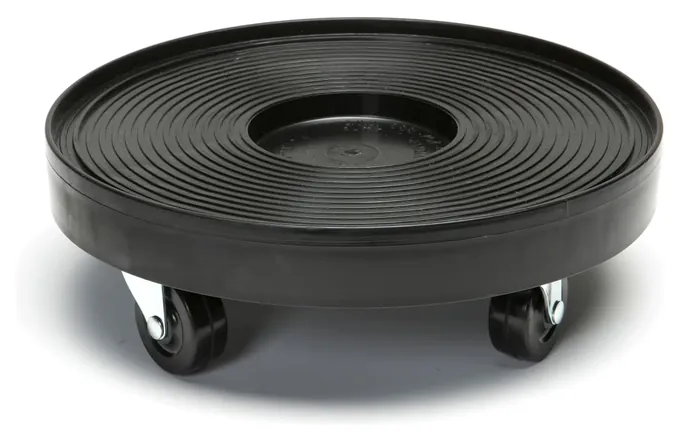
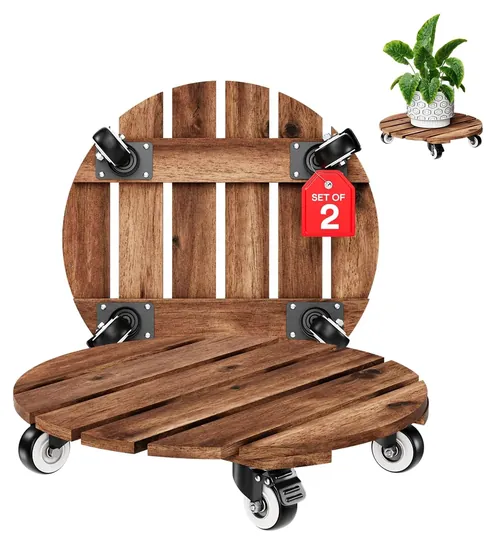
While putting together this list, we tried to incorporate different styles and materials to address a variety of preferences and applications. We included both round and square options as well as one with outstretched arms; some with lips on the edges and others with smooth surfaces; a combination of models with and without drainage slats; and a mixture of plastic, wooden and metal choices.
The Amagabeli Coaster is the only item on the list made with welded metal wiring, and we’ve noted that its powder-coated finish lends it durability and helps prevent it from rusting. Users like its stylish appearance and the ease with which it rolls around.
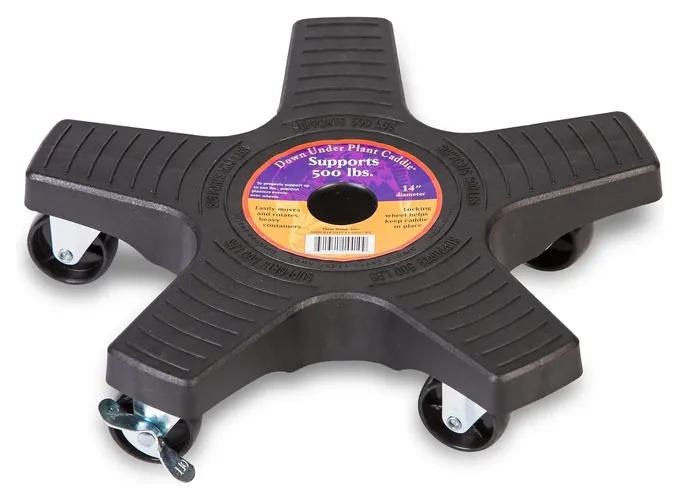
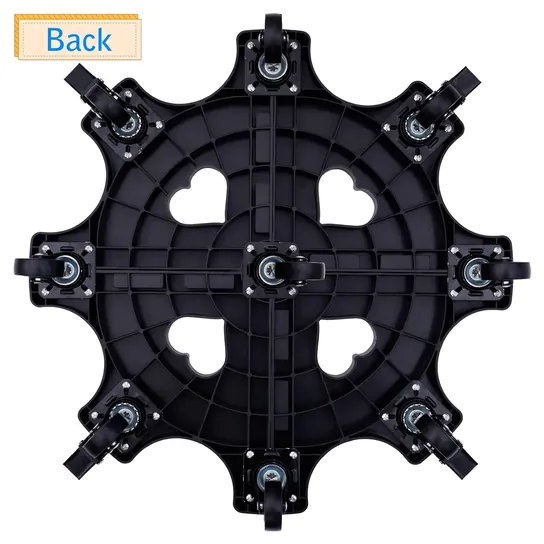
The design of the Bosmere Down Under is interesting; it almost resembles a star, with six separate support arms jutting out in different directions. It can hold up to 500 pounds, and the 20-inch width of its platform allows it to accommodate cumbersome planters.
Rate It For The Wet Weight, Not The Pot
Adjustable frames such as the Goovilla Adjustable cover about 15 to 22 inches, which helps if you have a mix of pots.
Start with the heaviest your planter will ever be: right after a deep watering, with the plant fully grown. A wide pot of wet soil and a small tree can run into the hundreds of pounds, and large ceramic or concrete pots add a lot on their own. PlantNative suggests picking a caddy rated at about one and a half times that loaded weight, which leaves room for a sloppy estimate and for the jolt of rolling over a threshold.
Read the rating's fine print. Garden retailer Griffin lists the Bosmere Down Under at 500 pounds only when the planter sits centered over the wheels. An off-center pot loads one or two casters far more than the rest, and those are the ones that bend or snap. None of these ratings is certified by an outside lab, since no standard exists for plant caddies, so treat them as the maker's claim.
Then measure the base of the pot, not its rim. The pot should rest fully on the caddy, with no overhang. Adjustable frames such as the Goovilla Adjustable cover about 15 to 22 inches, which helps if you have a mix of pots. A wide, heavy pot on a small caddy tips more easily while rolling, as one owner of a narrow glider on Plant Glider's own store found with citrus trees.
Wheels, Brakes And Floors
Wheel count matters less than wheel quality. Look for casters that swivel all the way around and for at least two that lock, the advice of home-garden blogger Cozy Little House. Many classic caddies lock only one: the Bosmere has a single locking caster, so on any slope set it, and turn the pot so that wheel sits on the downhill side.
Push a loaded caddy rather than pulling it, keep feet clear of the casters, and lock the brakes before you let go. Don't use one as a step or a furniture dolly, and remember that a deck has its own load limit: a few hundred pounds parked on one spot for months is worth a check if the deck is old.
Indoors, soft polyurethane wheels are quieter and gentler on hardwood than hard plastic or steel, and a dish-style caddy keeps runoff off rugs. Check caster screws each spring, especially on wood caddies, where loose screws are the most common complaint.
Plastic, Wood Or Metal, And Where The Water Goes
Molded plastic is the default outdoors: it doesn't rust or rot, and sun-resistant versions such as the Bosmere hold up for years. PlantNative warns that plastic can crack under heavy loads in extreme heat or cold, so in a hard-freeze area, bring smaller pots in or lift heavy ones off the caddy for winter. Wood looks best in a living room but should stay dry. Steel is rigid and can carry a lot, but once its coating chips, rust follows.
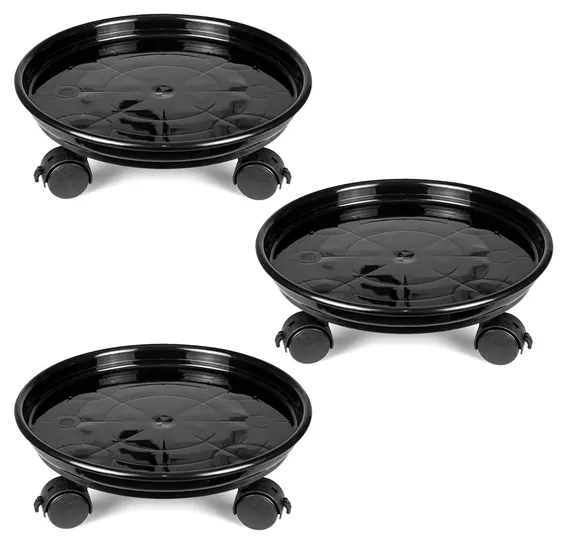
Drainage is the trade-off people miss. A caddy with an open center or slots lets water run out of the pot's drain hole and away, which is what roots want. A solid saucer or dish catches that water, which saves floors and decks but can leave the pot standing in a puddle. With a dish, water less at a time, empty it after heavy rain, or raise the pot on pot feet inside it. Bosmere USA sells its open-star caddy in several sizes and colors for this reason.
If you only need to move a pot twice a year, a square of exterior plywood with four outdoor casters is a common weekend build. It won't carry a rated load, so keep it for lighter pots.
How we researched this
We compared 19 planter caddies from 17 brands, from plastic stars and discs to wood slats, steel saucers, adjustable frames and an omni-wheel glider. We read each maker's weight rating and the conditions attached to it, cross-checked sizes and materials against garden retailers' spec sheets, and looked for patterns in owner complaints, especially loose screws, stiff brakes and bent wheels. We found no independent lab test of plant caddies, and no safety standard covers them, so the ratings here are makers' claims. We checked the U.S. Consumer Product Safety Commission's recall database for the brands and for plant caddies and dollies in general and found no recalls. Prices were checked on 2026-11-16.
Frequently asked questions
What size planter caddy do I need?
Measure the bottom of the pot, not the rim, and choose a caddy at least that wide so the pot rests fully on it. For a mix of pot sizes, an adjustable frame covers roughly 15 to 22 inches.
How much weight should a plant caddy hold?
More than the pot will ever weigh wet with the plant full grown. A margin of about 50 percent over that weight is a common rule, and keep the pot centered, since ratings assume an even load.
Should a plant caddy have a drain hole?
Outdoors, yes: an open center or slots let water escape so roots don't sit wet. Indoors, a dish-style caddy protects floors, but empty it so the pot doesn't stand in water.
Does Home Depot sell plant caddies?
Yes. Home Depot, Lowe's and Walmart all carry plant caddies, usually in the garden center near the planters, and stock more sizes online.
How do you move a large planter?
Tip it slightly and slide a caddy under it, or set the pot on the caddy before you fill it. Push rather than pull, go slowly over thresholds, and lock the wheels once it's in place.
Can I make my own plant caddy?
Yes. A square of exterior plywood with four outdoor casters is a common weekend build. It's fine for lighter pots, but it has no rating, so use a commercial caddy for heavy ones.