The 10 Best Prepared Microscope Slides
Updated by · How we research

Staining varies inside any box of slides, so we compared ten glass and plastic sets by specimen mix, mounting and case. The AmScope PS100A leads. When users buy our independently chosen editorial selections, we may earn commissions to help fund the Wiki.
Inside one box of prepared slides, quality can swing from a sharp, well-stained onion root tip to a slide that looks almost blank, and that is normal for budget sets. Glass slides of the standard size fit any school microscope, while the plastic kids' versions are smaller. This guide is for parents, homeschoolers and biology students choosing a set.


Editor's Notes
October 23, 2026, by Ezvid Wiki Admin:
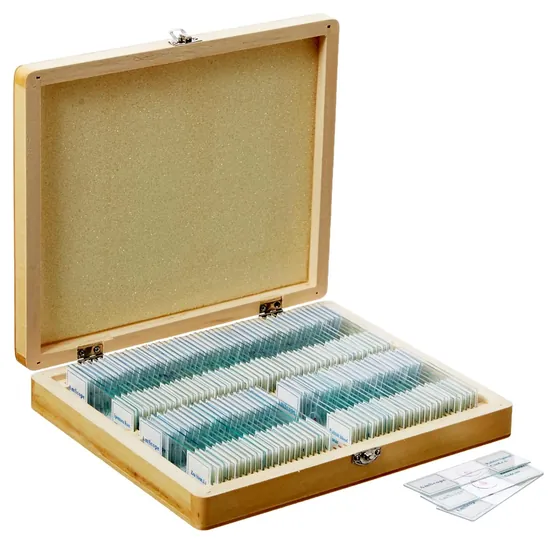
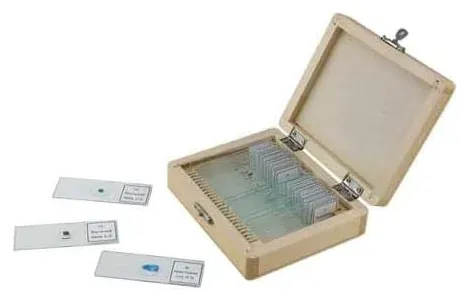
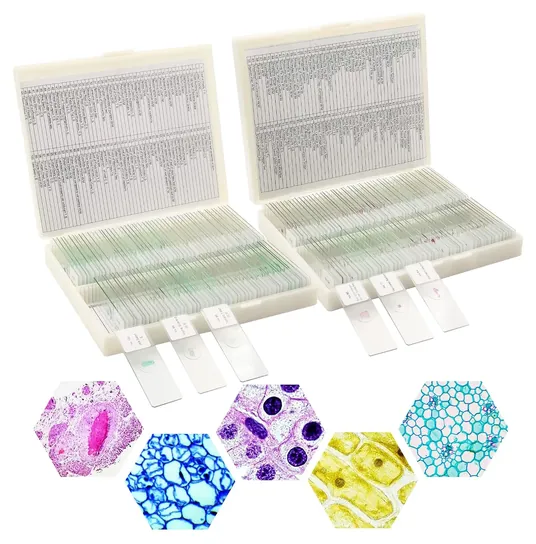
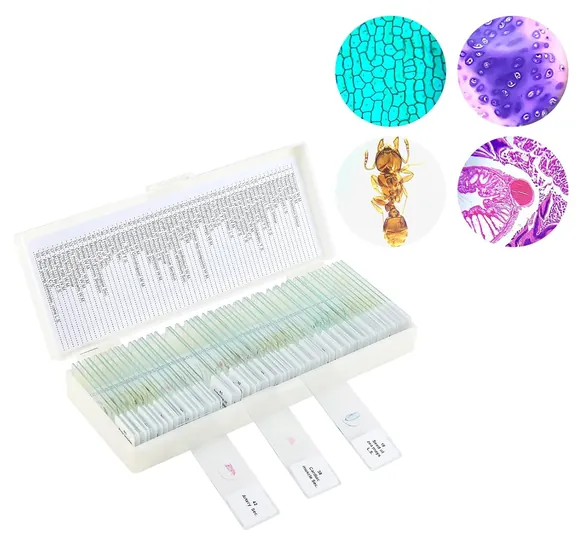
The AmScope PS100A takes the top spot. It is a big, general set of glass slides sealed in cedar oil and stored in a wooden case, and AmScope publishes what's in it. We matched specimen lists against what high school and college biology labs ask students to find, read the AmScope and Celestron spec pages, and leaned on what buyers across several stores say about staining and breakage.
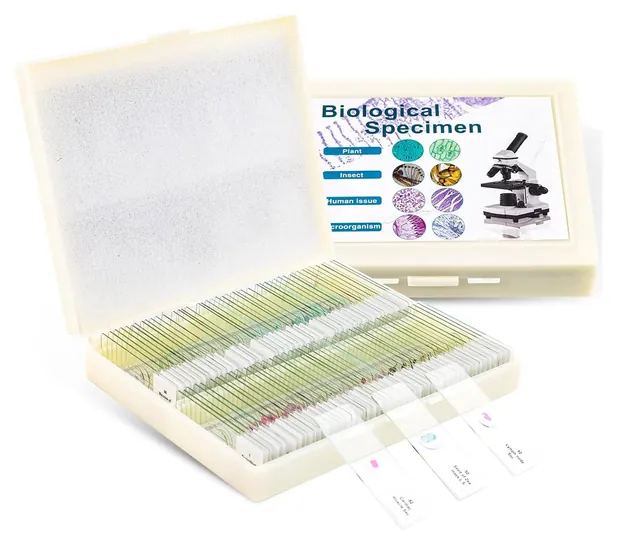
The Celestron 44410 and the AmScope PS-4P12X1-A plastic set stay. Most of the old list is gone: the AmScope PS25, AmScope PS200A, Omano 50 Count, National Geographic Mega Biology, R's Science Beauty of Biology and My First Lab PS72 are no longer available, the BestOfferBuy set was an unbranded copy of other plastic sets, and the WhizKidsLab kit wasn't really a slide set. New picks cover cell division, human tissue, big classrooms, the Apologia course and making your own slides with the AmScope SP-14.
One honest warning: even good sets carry a dud or two. Hold a faint slide up to the light before you blame your microscope.
October 07, 2020:
Whether you’re a science teacher, a parent who home schools, or simply know a child who enjoys biology, these prepared microscope slides can provide hours of fun and education. Today we replaced the AmScope Basic Biological, which is unavailable at this time, with the popular AmScope PS25. This set of 25 slides features a human blood smear as well as cross sections of a mushroom, connective tissue, a dog’s cardiac muscle, a dog’s esophagus, bee mouth parts, onion skin, and more. They’re preserved in cedar wood oil and sealed with coverslips. We also replaced the R’s Science All-In-One, which does not feature prepared slides, with the R’s Science Beauty of Biology. This kit includes specimens from algae, fungi, animals, plants, and the human body. It comes with a helpful guidebook with descriptions and colorful pictures, as well the instructions for eight mini-projects. Each slide is made of safe, rounded corners. It carries a money-back satisfaction guarantee.
For a set of humanely acquired samples from a century-old nonprofit organization, look to the National Geographic Mega Biology, which includes 25 slides with tissues from muscles, nerves, skin, plants, and more. They come with a colorful learning guide, as well as a slotted wooden box that helps you keep them organized. To help bring out a love of science in your little one, check out the BestOfferBuy 48 Piece, which comes with a colorful preserved butterfly, and the WhizKidsLab Science Kit, which brings you a preserved beetle. For a professionally mounted set compatible with most compound microscopes, the Omano 50 Count is worthy of a look. You’ll get 50 slides that provide an in-depth view of anatomical components such as blood, bone marrow, cartilage, and more. They come in sealed coverslips and are durable enough for classroom use, and come in a sturdy slotted plastic container. No matter which kit you go with, for safety’s sake, any set with glass slides should only be used by children under adult supervision.
November 06, 2018:
Looked at the various options offered by popular manufacturer AmScope, selecting their Basic Biological and Kids sets for their blend of affordability and range of samples. Also chose the Omano 50 Count as a viable option for anyone studying biology at a more in-depth level.
Special Honors
Home Science Tools Prepared Slide Sets Home Science Tools, a Montana homeschool science supplier, sells hand-prepared slide sets by subject, including anatomy, botany, pathology, zoology and general biology, plus two six-slide beginner sets and a companion set for Apologia's biology course. The sets carry the company's satisfaction guarantee. homesciencetools.com
Ward's Science Prepared Slides Ward's Science supplies schools and colleges, and many of its prepared slides are made by technicians in its own slide lab. It offers specimen slides for cytology, histology and microbiology, plus blank glass and vinyl slides, frosted and color-coded options, and storage boxes. It suits teachers ordering for a lab rather than a single family. wardsci.com
Glass Or Plastic, And Why Size Matters
Glass stays clear for years, and the specimen sits sealed under a thin cover glass.
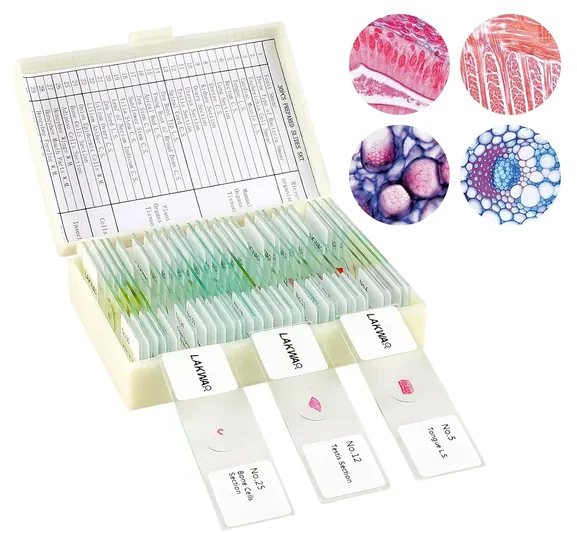
Standard prepared slides are glass, about 3 by 1 inches (75 by 25 millimeters) and about 1 millimeter thick. AmScope lists exactly that size for its PS100A set, and it's what the stage clips on a school or hobby microscope are built to hold. Glass stays clear for years, and the specimen sits sealed under a thin cover glass.
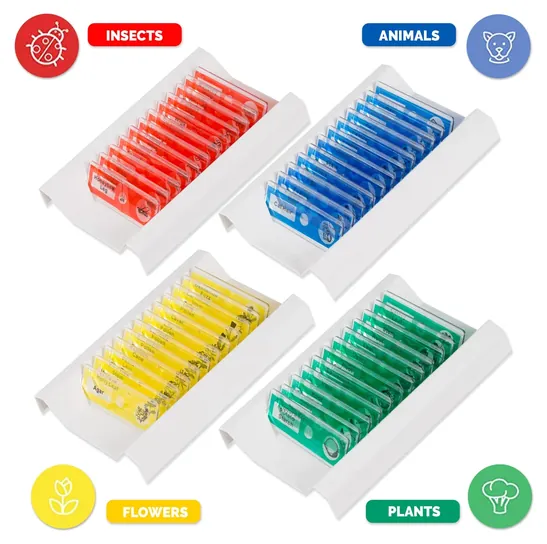
Plastic slides are the kids' option. They don't shatter, but most are smaller than glass, around 60 by 20 millimeters, so they can sit loosely under clips, and they scratch more easily. Ward's Science, a school lab supplier, sells economical vinyl slides next to its glass ones for the same reason: cost and safety for young hands. Plastic sets like the AmScope PS-4P12X1-A, DIY-SCIENCE 48 and Jiusion 60 are fine for a toy or starter scope.
Whatever you buy, prepared slides need a compound microscope with light shining up through the slide. Whole insects and thicker specimens are easier to see on a stereo microscope lit from above.
Read The Specimen List, Not The Count
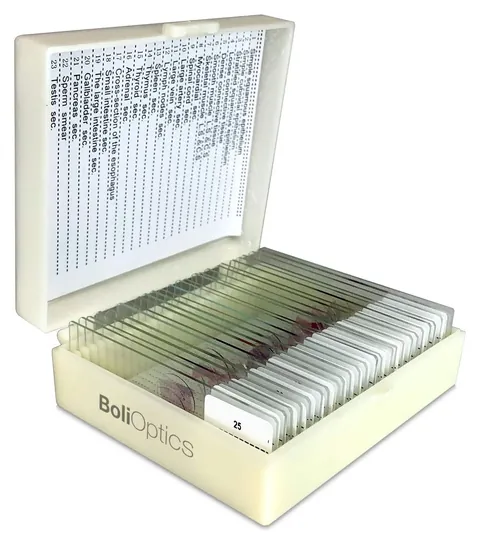
A box of 200 slides isn't twice as useful as a box of 100. Many big sets repeat similar plant and tissue sections. Before buying, look at the printed list and check it against what you'll study: onion root tip and whitefish for mitosis, a leaf or stem cross section for plant structure, a blood smear, bacteria and yeast for microbiology.
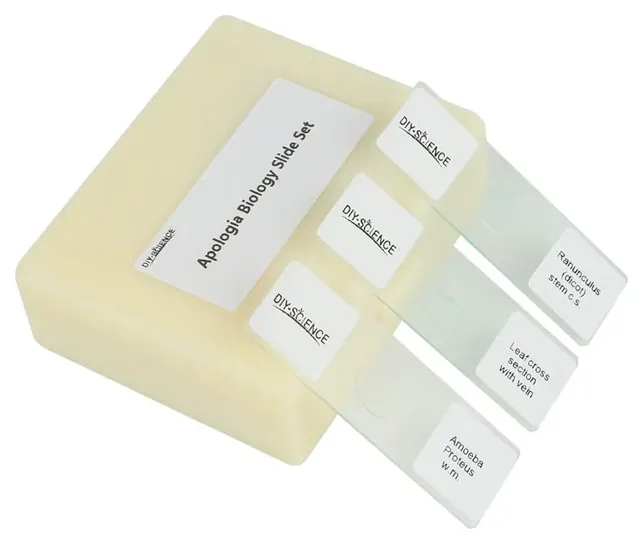
Courses with a set syllabus are easiest. Apologia's biology course has companion slide sets from DIY-SCIENCE and from Home Science Tools, which also sells sets by subject: anatomy, botany, pathology and zoology. Anatomy and nursing students do better with a tissue set than a general one, because it covers the epithelium, muscle and organ sections their labs ask for.
For younger kids, variety beats depth. A set with insects, pollen, hair and pond life holds attention longer than one full of tissue sections that look alike to an untrained eye.
Quality, Care And Making Your Own
Many budget sets share the same boxes and label style, a sign they come from a few factories, and quality varies inside a single box. Expect most slides to be well stained and a few to be faint, and know that hobbyists on the Microbehunter forum note that cheap slides can look fine at low power and show their flaws at high power. Teaching labs that need perfect slides buy hand-prepared sets from school suppliers.
Store slides flat or on edge in their case, away from heat, damp and sunlight, and hold them by the edges. Wipe the glass with lens tissue, not a shirt. If a slide breaks, throw it away wrapped in paper.
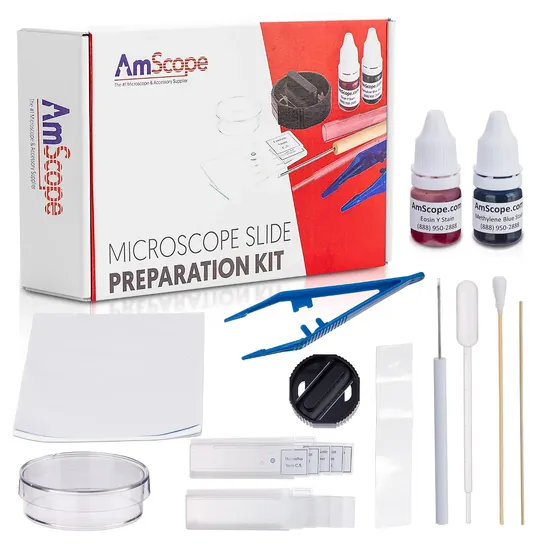
Making your own takes stains, blank slides, cover glasses and a way to cut thin sections. The AmScope SP-14 bundles eosin and methylene blue powders, blanks, cover slips and a hand microtome. Start with onion skin and a cheek swab, label each slide in pencil, and keep the best ones next to the prepared set.
How we researched this
We compared 20 prepared slide sets, read the maker pages for the AmScope and Celestron sets and the published specimen lists for the rest, looked at classroom slide guidance from Ward's Science and Home Science Tools, analyzed owner feedback on staining, labeling and breakage, and checked every brand against U.S. Consumer Product Safety Commission recall records. None had a recall.
Sources (9)
- AmScope: PS100A prepared slide set
- AmScope: SP-14 slide preparation kit
- Celestron: 25-piece prepared microscope slide kit
- Celestron: warranty
- Ward's Science: experts pick their favorite lab slides
- Home Science Tools: microscope slide sets
- Bitesize Bio: microscope slides 101
- Microbehunter microscopy forum
- U.S. Consumer Product Safety Commission: SaferProducts.gov
Frequently asked questions
What is a prepared microscope slide?
It's a slide with a specimen already sliced thin, stained, sealed under a cover glass and labeled, so you can look at it right away and keep it for years. Sets bundle plant, animal, insect and microbe specimens.
What is the best prepared slide set for biology students?
Pick one whose specimen list matches the course. A general glass set like the AmScope PS100A covers most high school labs, a set with mitosis and meiosis stages helps with cell division, and anatomy students should get a tissue set.
Are glass or plastic slides better for kids?
Plastic suits kids under about eight because it won't shatter. Glass is clearer, standard size and lasts longer, so it's the better choice once a child handles slides carefully, with an adult nearby at first.
How do I prepare microscope slides at home?
Put a thin sample, such as onion skin or a cheek swab, on a clean blank slide, add a drop of water or stain such as methylene blue, and lower a cover glass at an angle to avoid bubbles. A prep kit includes the stains and tools.
Do prepared slides fit any microscope?
Standard glass slides, about 3 by 1 inches, fit almost every compound microscope. Smaller plastic kids' slides may not sit snugly under the clips. Thick insect mounts are easier to see with a stereo microscope.
How should I store prepared slides?
Keep them in their case, flat or on edge, away from heat, damp and sunlight. Hold slides by the edges and clean them with lens tissue.