The 9 Best Smart Bike Helmets
Updated by · How we research

Lights, turn signals, speakers and crash alerts compared across nine smart bike helmets. The Lumos Ultra leads for commuters who want to be seen from all sides. When users buy our independently chosen editorial recommendations, we may earn commissions to help fund the Wiki.
A smart helmet's electronics add nothing to crash protection; the foam shell and the U.S. safety sticker inside do that work. The tech earns its place before and after a fall: drivers spot you sooner, and some helmets text a contact if you go down and don't get up. That matters most to commuters and e-bike riders out after dark.


Editor's Notes
November 1, 2026, by Ezvid Wiki Admin:
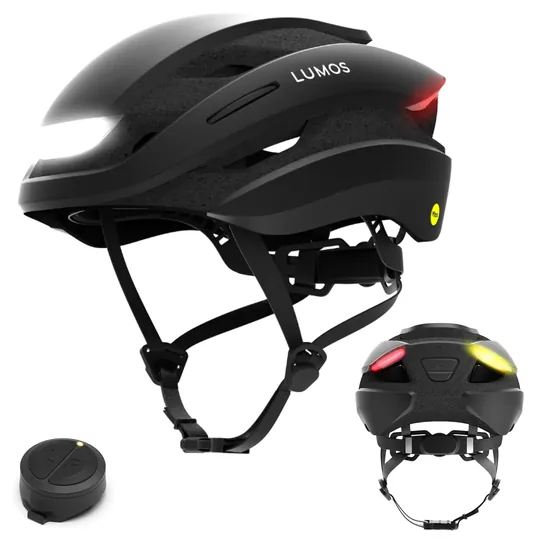
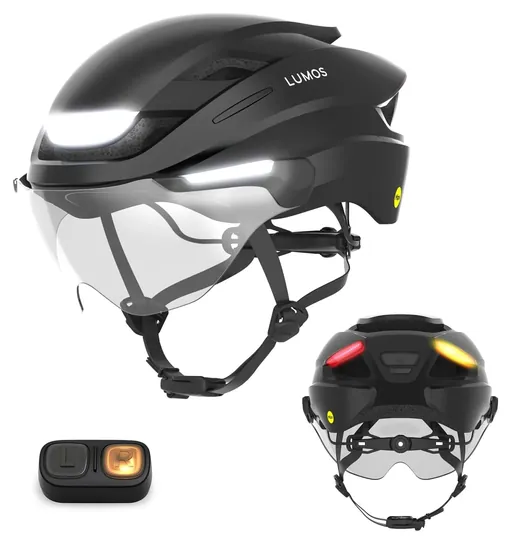
The Lumos Ultra now leads this list. Its lights cover every side, the remote in the box runs the turn signals, and it costs far less than the helmets with the strongest safety credentials. Its weak spot is the brake light, which needs the pricier Lumos Remote.
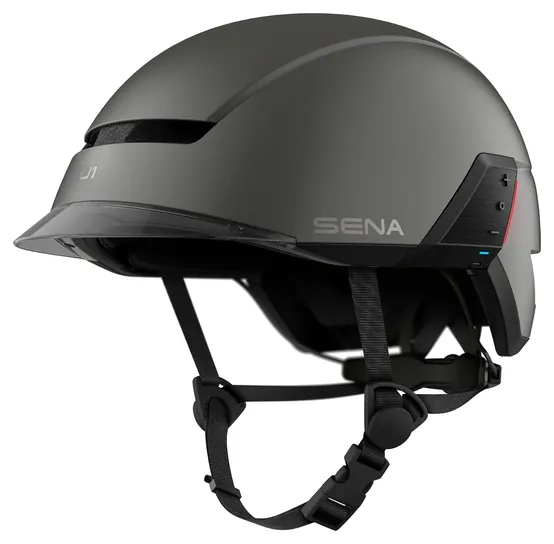
None of the old picks made it back. Coros discontinued the Coros Linx, Lumos replaced the Lumos Matrix Urban and Lumos Kickstart with the Ultra line, and we found no current sale for the Sena X1, Livall Auto, Coros SafeSound Urban, LifeBeam Integrated Dual Connectivity, Airwheel C5 or Safe-Tec Tyr 3. The newcomers match what readers ask for: the Unit 1 Aura Mips for crash protection, the Livall EVO21 with its remote included, the Sena R1 EVO for group intercom and the Lumos Ultra E-Bike for fast e-bikes.
No consumer magazine or lab has rated smart helmets as a group, so this page rests on makers' spec pages, a few independent reviews such as New Atlas on the Ultra and Cyclingnews on the Aura, e-bike forum threads and federal recall records. A camera helmet and a run of young budget brands didn't make it, since nothing backed them up beyond their own sales pages.
August 25, 2020:
While this sector has moved a bit slowly, one important development occurred in the arrival of the Lumos Matrix Urban. Not only does this model integrate a particularly large LED array with customizable configurations, it also integrated the MIPS safety system, which dramatically increases a helmet's safety, as it helps prevent it from rolling out of place mid-crash. We also saw fit to remove the Safe-Tec Tyr 3 from our special honors section and include it in our regular list. It also has MIPS, and used to be one of the only smart options on the market to feature it.
Riders in warm climates would do better with that Safe-Tec model than the Lumos Urban, as it's significantly better ventilated. From a pure safety perspective, however, the Lumos is superior, as the Safe-Tec sacrifices valuable surface area on which LEDs could be installed in the name of airflow.
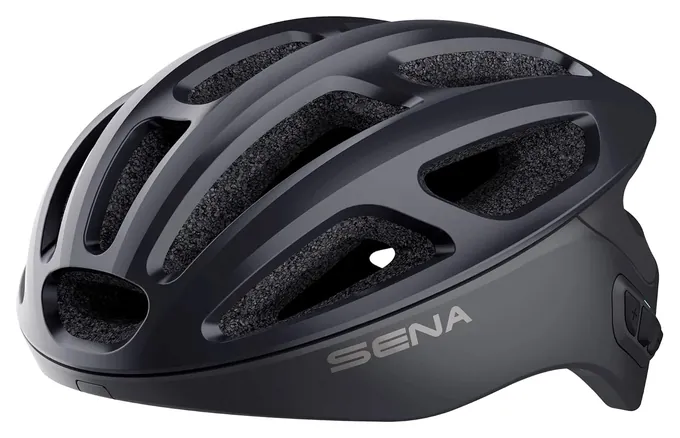
If you find that MIPS isn't important to you, you might be looking into a smart helmet purely for audio purposes, as you see with the bone conduction systems on many models like the Coros Linx. The Sena X1 takes that system a step further by integrating an intercom function inspired by the company's many motorcycle communication devices. This is great for a family riding together in close formation.
July 03, 2019:
Thanks to the increasing ubiquity and reliability of Bluetooth technology, the number of options in this category seems to be on the rise. As a result, we've added five models to our ranking, in addition to one that was given a spot as a special honor. Interestingly, however, our current top three is made up entirely of models from last time around, implying that new models don't necessarily mean better models. One case where an old offering fell off a bit was the Airwheel C6, which had to depart for availability reasons.
Among new additions you'll find the Coros Omni, which is a great option for riders who like to brave the heat, as its ventilation is more significant that almost any other lid. It couldn't quite break into the top five, however, as its LED lights are harder to see at night than much of the competition, even from within its own company. Our previous number four pick, the Lumos Kickstart, has been elevated to number one on the strength of a special feature that senses the momentum of a sudden stop and activates bright brake lights to notify those around you that you're slowing down.
What The Electronics Do, And What They Don't
A smart helmet is one of those helmets with lights, a battery and sometimes speakers or a motion sensor added.
Every bike helmet sold in the U.S. since 1999 has to meet the Consumer Product Safety Commission's standard, 16 CFR 1203 (Bicycle Helmet Safety Institute). A smart helmet is one of those helmets with lights, a battery and sometimes speakers or a motion sensor added. The foam liner still does all the work in a crash, so check for the CPSC sticker inside before you look at any feature.
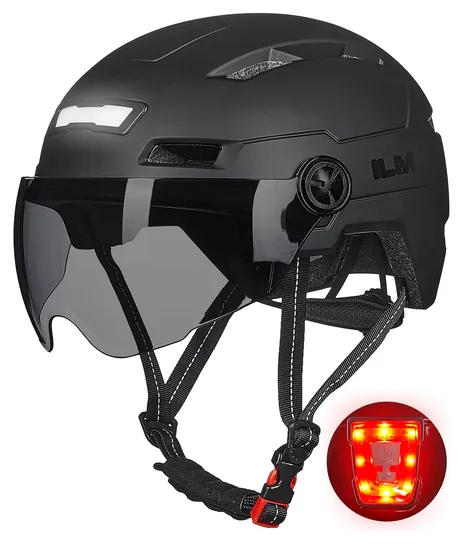
The lights are for being seen, not for seeing the road. A review of the Lumos Ultra found its front light too weak to ride by, and noted that the turn signal on the side away from traffic may be hidden from drivers behind you (New Atlas). Keep a real headlight on the bars and keep using hand signals.
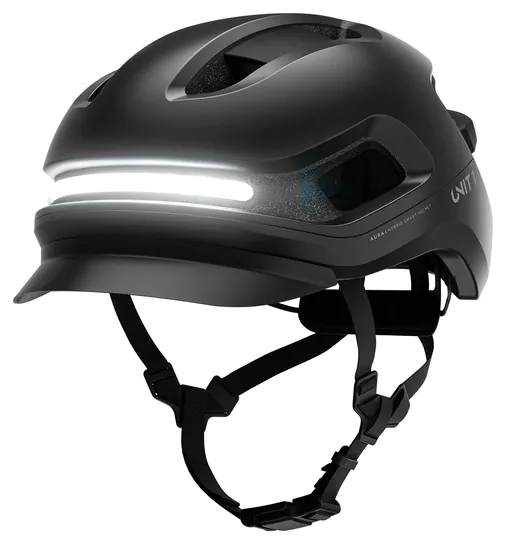
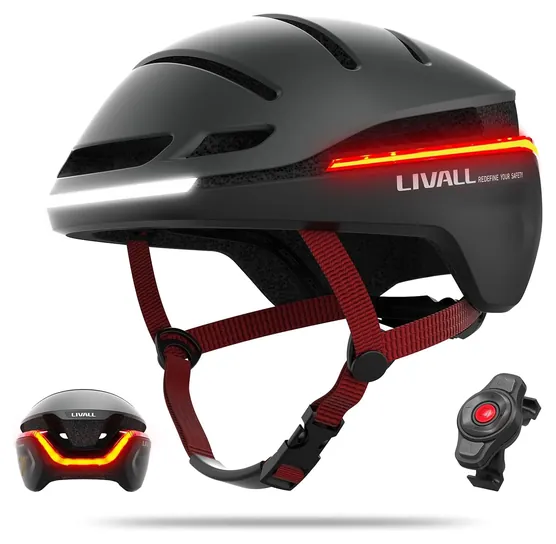
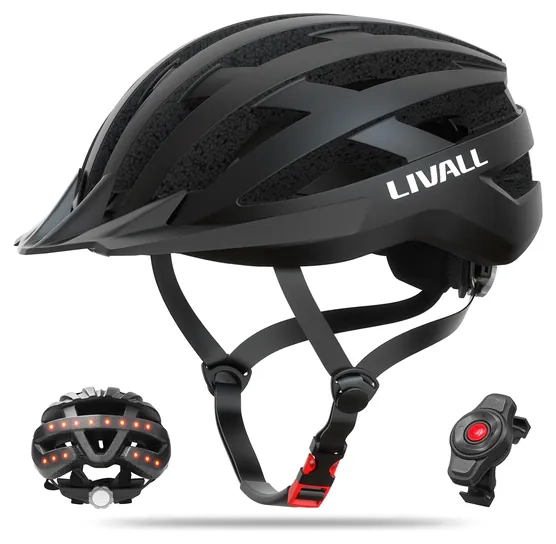
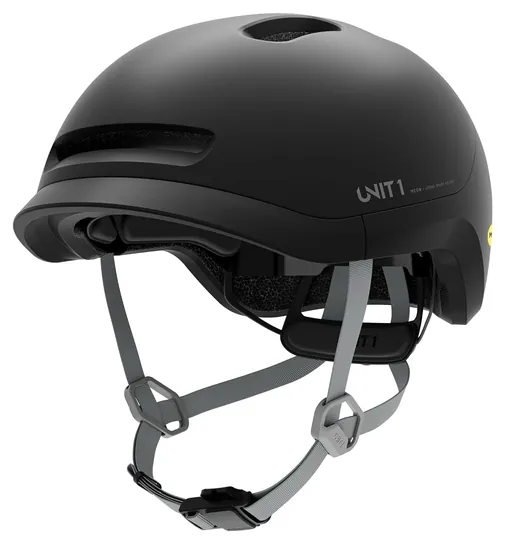
Read the fine print on remotes. The Lumos Ultra ships with a basic remote for turn signals, and the brake light needs the full Lumos Remote. Unit 1 sells its remote separately for the Aura and Neon, while the Livall EVO21 includes one with signals and brake light. Audio helmets such as the Sena R1 EVO skip signals and spend the battery on speakers and an intercom instead.
Safety Labels: CPSC, MIPS, NTA 8776 And Lab Scores
CPSC certification is the legal floor in the U.S. MIPS is an add-on: a thin liner that slides a little in an angled impact to cut the twisting force on the brain. Several picks here offer it, and Lumos sells the Ultra with and without it.
NTA 8776 is a Dutch standard written for speed pedelecs, e-bikes that assist up to 45 kilometers an hour (about 28 miles an hour). It tests at higher impact speeds and asks for more coverage at the temples and the back of the head (Lumos). U.S. law doesn't require it, and it doesn't replace the CPSC label, but it's worth having on a fast class 3 e-bike.
Virginia Tech's helmet lab rates bike helmets from one to five stars on how well they reduce concussion risk. Unit 1 says the Aura and Neon both earned five stars. The lab tightened its thresholds in 2025, and many helmets lost their top score (Pinkbike), so check the current rating on the lab's site before you buy for that reason. Fit counts as much as any label: the helmet should sit level, low on the forehead, with the straps snug (Consumer Reports).
Batteries, Crash Alerts And When To Replace One
The batteries in these helmets are sealed lithium packs on most models, so when the battery wears out, the electronics do too. Makers' runtimes vary with the light mode: Lumos rates the Ultra at four to ten hours, Livall rates the EVO21 at about 10, and Unit 1 rates the Aura at three hours on solid light up to 15 on a flashing beacon (Unit 1). Speakers drain them faster: Livall gives the MT1 Neo three to six hours with music. Charge before every long ride.
Crash alerts work through your phone. A motion sensor in the helmet flags a hard fall, the app starts a countdown, and if you don't cancel it, it texts your location to an emergency contact. Livall waits about 90 seconds (Livall). None of it works if the app is closed or the phone is out of battery, so set it up and run the test mode before you rely on it.
Replace any helmet after a crash, even when it looks fine, since the foam crushes once. Without a crash, Consumer Reports suggests about five years for a well-used helmet, and the Bicycle Helmet Safety Institute has more on when to retire one (helmets.org). On a smart helmet the battery may set the clock first.
How we researched this
We compared 16 smart bike helmets, read the makers' spec pages and manuals for the 9 finalists, read the independent reviews we could find (New Atlas, Bike Perfect, Cyclingnews and BikeRadar), studied owner feedback on e-bike and cycling forums, and checked every brand against the U.S. Consumer Product Safety Commission's recall records. We found no lab test that compares smart helmets with each other.
Sources (17)
- Lumos: Ultra and Ultra E-Bike helmets and remotes
- Lumos: NTA 8776 explained
- New Atlas: Lumos Ultra bike helmet review
- Unit 1: Aura helmet
- Unit 1: Aura Mips
- Cyclingnews: Unit 1 Aura Mips review
- BikeRadar: Unit 1 Neon first look
- Livall: EVO21
- Bike Perfect: Livall EVO21 review
- Livall: MT1 Neo
- Sena: R1 EVO
- Electric Bike Review forum: Sena R1 EVO thread
- Electric Bike Review forum: Lumos Ultra thread
- Bicycle Helmet Safety Institute: CPSC standard
- Pinkbike: Virginia Tech rating thresholds reset
- Consumer Reports: bike helmet buying guide
- U.S. CPSC: recalls database
Frequently asked questions
Are smart bike helmets safer than regular helmets?
Not in a crash. Impact protection comes from the shell and liner, and every U.S. bike helmet has to meet the same CPSC standard. The lights help drivers see you, and a crash alert can bring help faster if you ride alone.
Do I need an NTA 8776 helmet for my e-bike?
Not by U.S. law. NTA 8776 is a Dutch standard for e-bikes that assist up to about 28 miles an hour. It tests harder hits and more coverage, so it's a sensible upgrade for a fast class 3 e-bike.
How does crash detection work on a smart helmet?
A motion sensor in the helmet detects a hard fall and tells the phone app, which starts a countdown. If you don't cancel it, the app texts your location to a contact. The app must be running and the phone connected.
Can turn-signal lights replace hand signals?
No. The signal on the side away from traffic may be hard for drivers to see, and not every driver knows what helmet lights mean. Use both.
Are there smart bike helmets with a built-in camera?
A few exist, mostly from little-known brands with no independent reviews, so we left them off. A small action camera on a helmet or handlebar mount is the better-supported route.
How often should I replace a smart bike helmet?
After any crash, even if it looks fine. Otherwise about every five years with regular use, sooner if the sealed battery stops holding a charge.