The 6 Best Soy Milk Makers
Updated by · How we research

Six heated soy milk makers compared on cooking, cleanup, batch size and warranty, with the MioMat 8th Generation as the pick for daily soy milk. When users buy our independently chosen editorial recommendations, we may earn commissions to help fund the Wiki.
Raw soybeans carry compounds that interfere with digestion until they boil for about 15 to 20 minutes, so a true soy milk maker heats as well as grinds, and a plain blender can't do the job alone. These machines suit anyone who drinks soy milk often, wants it without gums or added sugar, and doesn't mind rinsing a jug after each batch.


Editor's Notes
October 26, 2026, by Ezvid Wiki Admin:
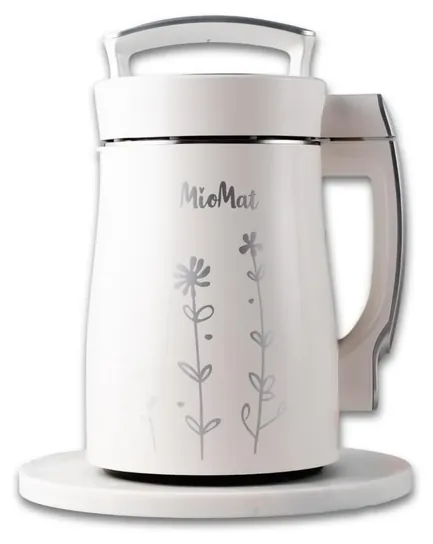
The MioMat 8th Generation now leads this list. It cooks soybeans properly, it's in stock, and it pairs a stainless steel interior with a two-year warranty, which is rare in this category. Most of the old picks had disappeared: the Joyoung DJ13U-P10, Simple Living 4-in-1 SLP-SM-SB1, Chufamix Vegan Premium, Tribest Soyabella SB-130, Idavee Presto Pure and Joyoung Automatic CTS-2038 were all unavailable. We also dropped the Vitamix E310 Explorian, a fine blender that won't cook raw beans.
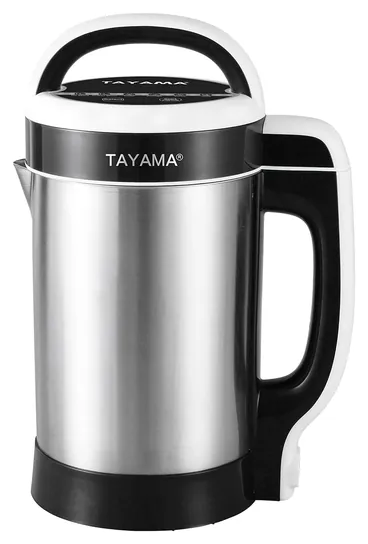
The SoyaJoy G5 was the hardest cut, since so many readers look for it by name. It was sold out everywhere we looked, including SoyaJoy's own store, so it moves to the honors until it returns. The Tayama stays, now sold as the black DJ-15SG.
The cooking time mattered most here. Raw soybeans need a real boil to be safe to drink, so we set aside cold-press machines and any model we couldn't confirm cooks soy, then weighed maker spec pages, a UK magazine's plant milk maker roundup and owner reports of early failures.
March 30, 2021:
We noticed that two of our previous picks, both from the popular Chinese manufacturer Joyoung, weren’t available during this update, so we decided to eliminate them from our rankings, being as the brand was still seeing some representation through a third option: the Joyoung Automatic CTS-2038. Plus, we added the Joyoung DJ13U-P10 to our rankings, which, despite having a capacity that’s comparable to many of our alternate choices, clinched a spot at the top of our list, thanks to its sleek, touch-control interface and integrated timer.
We also replaced the SoyaJoy G4 with its logical successor, the SoyaJoy G5. This new model has a design that closely resembles the G4, but also boasts a few practical improvements. The first, and likely most obvious, differentiator is the layer of thermoplastic insulation that coats the G5, improving the unit’s heat retention, guarding against burnt fingers and significantly altering the device’s overall look. The G5 also brings a basic LED display to the table, which is primarily used as a countdown timer, but also comes in handy for displaying error codes.
Our other new inclusions this time through are the Simple Living 4-in-1 SLP-SM-SB1 — a basic unit with a simple, intuitive interface and a stainless-steel aesthetic that will blend in well in most modern kitchens; and the Tayama DJ-15SS — which was removed from our list in the past, due to availability questions that seem to have since been resolved. It doesn’t have the biggest capacity in the category, but it does come with a few simple accessories to help get you started on your milk-making journey.
Now that you’ve got your soy milk solution all sorted out, don’t stop there. Swing by our list of tofu presses to see if you can find any more equipment to help completely redefine the way your kitchen interacts with soy products.
December 31, 2019:
At this time, it has become difficult to find the Tayama DJ-15S Multifunctional, so we have opted to replace it. We've also removed the Joyoung CTS-1078S and the Sonya SYA19A due to some issues with long-term durability. But we still think that the Soyajoy G4 and the Joyoung Milk Maker both represent a good value. The former is less expensive than the latter, offering fewer features overall. For those who don't like complicated kitchen gadgets, this isn't necessarily a bad thing. We kept the Tribest Soyabella SB-130, as well, even though some find it a little hard to wash. Finally, we've opted to add two options that help you make delicious soy milk, but that aren't actually all-in-one soy milk specific machines. These are the Chufamix Vegan Premium, a strainer that pairs with an immersion blender, and the Vitamix E310 Explorian, a blender that makes a fine addition to just about any kitchen. It can heat ingredients as it blends, but don't expect it to fully cook a nut milk, the way that some of our other selections will.
Special Honors
SoyaJoy G5 The SoyaJoy G5 is the soy milk maker many people search for by name. It has a stainless steel cooking chamber, programs for dry or soaked beans and no internal filter to clean. It was sold out at retail and at SoyaJoy's own store at our last check. The store also sells open-box units with the same one-year warranty as new ones when it has them, so it's worth watching. soymilkmaker.com
Heat Is The Safety Step
Hot foam is the main hazard during a run: fill no higher than the max line, leave the lid closed until the cycle ends, and never put the motor base in water.
Soy milk isn't just blended beans and water. Raw soybeans contain trypsin inhibitors, compounds that block an enzyme the body uses to digest protein, and cooking the slurry for roughly 15 to 20 minutes breaks most of them down (Wikipedia: Soy milk). That's why every machine on this list has a heating element and a soy or bean program that brings the mix to a boil and holds it there. Cold-press machines built for almond and oat milk skip that step, so they aren't a substitute.
If you already own a blender, you can still make soy milk. Blend soaked beans with water, strain, then simmer the milk on the stove for about 20 minutes while stirring, because it foams up fast and scorches on the bottom. A dedicated maker does the grinding, boiling and timing in one jug and shuts itself off.
Soy is one of the major food allergens the FDA tracks (FDA: Food Allergies), so rinse the jug well before making nut or oat milk for someone who avoids soy. Hot foam is the main hazard during a run: fill no higher than the max line, leave the lid closed until the cycle ends, and never put the motor base in water.
Jug Makers Versus Heated Blenders
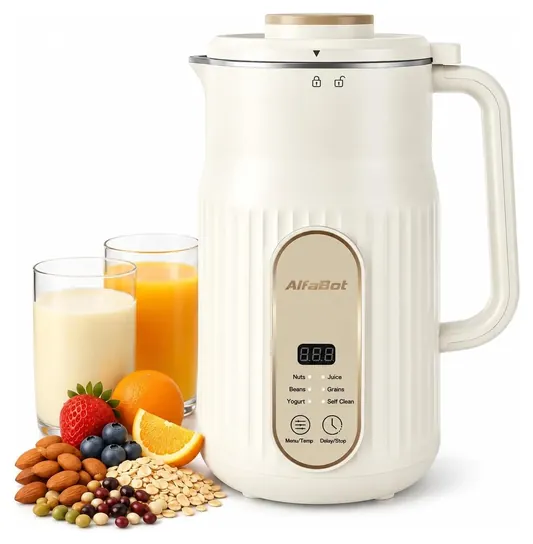
Most soy milk makers are tall jugs with the motor in the lid and a blade that hangs down into the beans, the design SoyaJoy and Joyoung made popular. They're compact and pour like a kettle. The catch is cleaning: the blade and heating plate stay attached, so you wash the jug by hand or run its rinse cycle. MioMat builds its jug with a stainless interior and a double wall, so the outside stays cool while the milk boils.
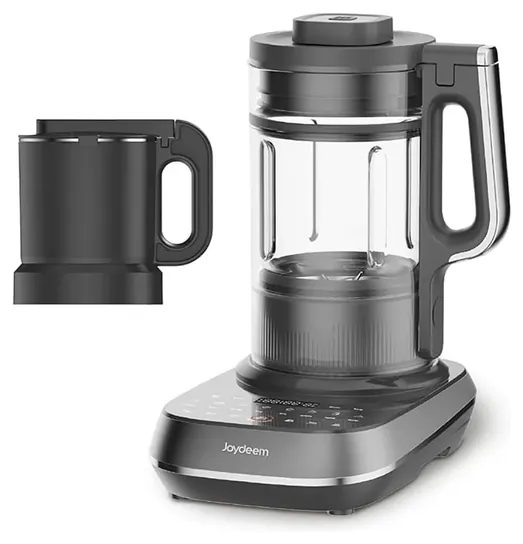
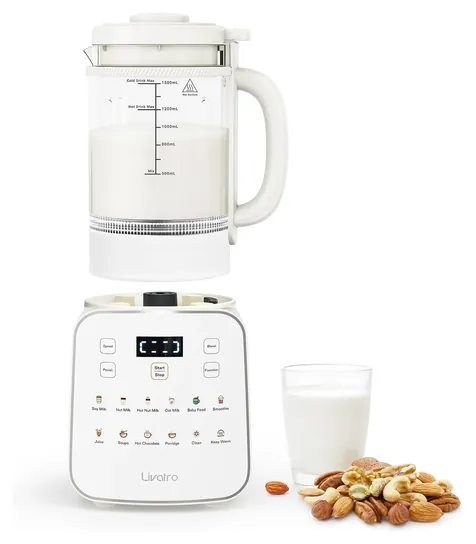
Heated blenders put a glass jar on a motor base, like a regular blender with a heater added. Joydeem uses this layout, and it lists a lower capacity for hot drinks than for cold ones, because hot liquid foams and expands. Check the hot figure, not the bigger cold one, when you size a machine for your household. Jars that lift off and blades that come out are much easier to scrub.
Batch sizes on boxes describe the jug's limit. After the beans take up space and some pulp is strained out, you'll get less milk than the number suggests, often three to five cups.
Soaking, Straining And The Leftover Pulp
Many makers have a dry-bean program, and it works, but soaking the beans for several hours or overnight still gives smoother, milder milk, a point one owner of a Joyoung machine makes in a detailed write-up (The Whole Health Practice). Soaking also shortens the grind and leaves less grit.
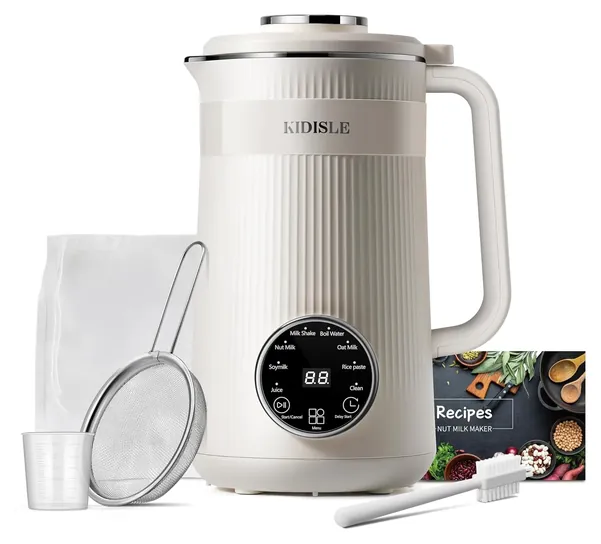
Filter-free makers grind fine enough that some people drink the milk as is. Most people still pour it through a fine strainer or a cloth bag for a smooth texture. Several of the machines here include a strainer or bag; MioMat sells its strainer separately. The pulp left behind is okara, and it's worth keeping for baking, veggie burgers or stir-fries.
Buying guides still rank the SoyaJoy G5 near the top (Australian Women's Weekly), but SoyaJoy's store showed it sold out. Clean any maker soon after each batch, since dried soy film is hard to remove from the heating plate.
How we researched this
We compared 21 soy and plant milk makers, including every machine from the old list, read maker pages and spec sheets for the finalists, a UK magazine's plant milk maker roundup and an Australian buying guide, analyzed owner feedback for patterns, and checked every brand against U.S. Consumer Product Safety Commission recall records. Independent lab tests of soy-specific machines are scarce. Updated October 26, 2026 by Ezvid Wiki Admin.
Sources (12)
- MioMat: plant milk maker
- Joydeem: soymilk maker and warranty
- SoyaJoy: G5 product page
- SoyaJoy: G5 open-box
- Wikipedia: Soy milk
- FDA: Food Allergies: What You Need to Know
- Olive Magazine: best plant milk makers
- Australian Women's Weekly: best nut milk maker
- The Whole Health Practice: Joyoung soy milk maker review
- Consumer Reports: best nut milk makers
- CPSC: Kidisle coffeemaker recall (2026)
- CPSC SaferProducts.gov
Frequently asked questions
Do I need to soak soybeans before using a soy milk maker?
Not always. Many machines have a dry-bean program. Soaking the beans for several hours or overnight usually gives smoother, milder milk and less pulp, so it's worth doing when you can plan ahead.
How long does a soy milk maker take?
Most jug makers finish a batch of soy milk in about 20 minutes. Some heated blenders offer a quick program near 15 minutes and a slower, smoother one that runs about 45 minutes.
Can I make soy milk in a regular blender?
Yes, but you have to cook it yourself. Blend soaked beans with water, strain, then simmer the milk for about 20 minutes, stirring so it doesn't foam over or scorch. Raw soy milk shouldn't be drunk unheated.
Do I have to strain homemade soy milk?
No, but most people do. Filter-free machines grind fine, yet a strainer or cloth bag gives a smoother drink. The leftover pulp, called okara, can go into baking or veggie burgers.
Is there a good soy milk maker made in Japan or Korea?
None of the machines on this list is sold as made in Japan or Korea, and we didn't find one in stock for U.S. buyers. Most countertop soy milk makers sold here are built in China.
Can a soy milk maker make almond or oat milk?
Yes. Every machine here has programs for nut, oat or grain milks, and most also make soup, porridge or smoothies. Rinse well between batches if anyone in the house avoids soy.