The 5 Best Traveling Sprinklers
Updated by · How we research

Nelson, Orbit and Melnor still make hose-guided tractor sprinklers. The Nelson Rain Train leads five picks compared by warranty, speeds, hose and yard size. When users buy our independently chosen editorial selections, we may earn commissions to help fund the Wiki.
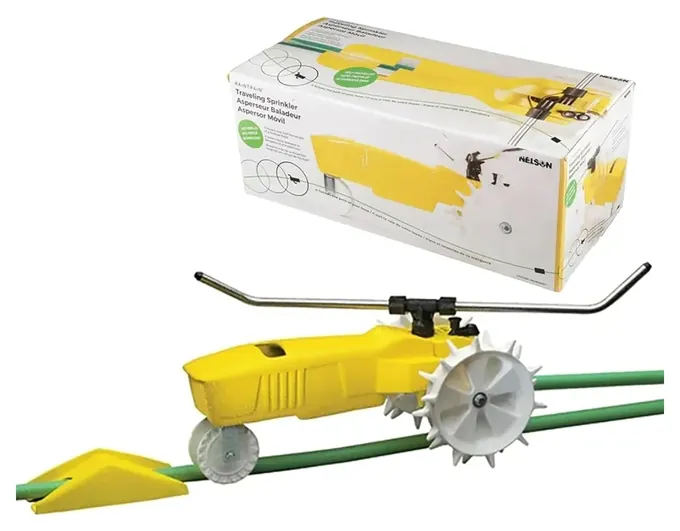
A traveling sprinkler is a small cast-iron tractor run by nothing but water pressure: it follows a garden hose you lay across the lawn and shuts itself off at a ramp at the end. Only three home models are still widely sold, and they're close cousins. It suits large, open lawns; small yards and farm fields need a different tool.


Editor's Notes
October 26, 2026, by Ezvid Wiki Editors:
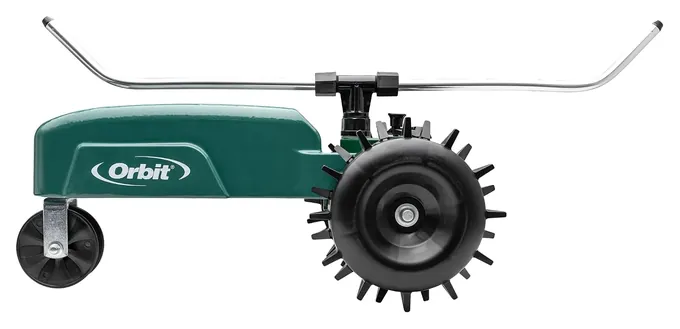
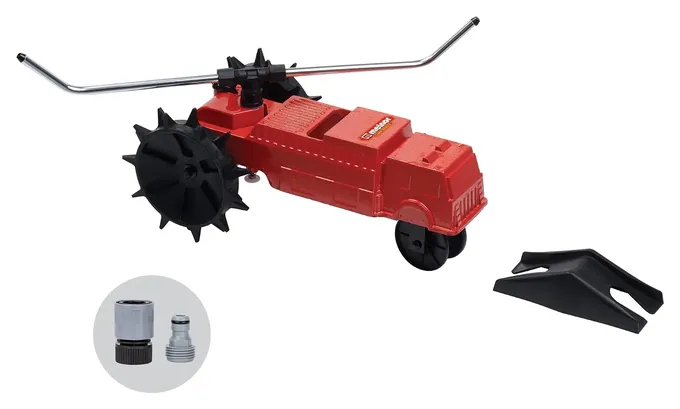
The Nelson Rain Train keeps its place at the top, but the field around it has thinned. The Watex WX044 is no longer available, and we dropped the Underhill Tracker, a cable-pulled machine for golf courses and ball fields that costs thousands. The Melnor Lawn Rescue stays in its current form, the Melnor 65193AMZ, which is the same sprinkler with quick-connect fittings, and the Orbit 58322 stays on the strength of its six-year warranty.
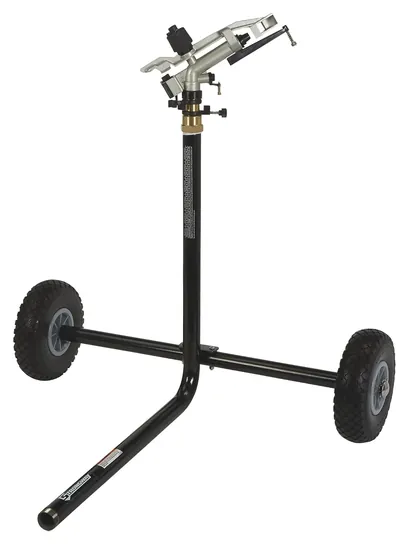
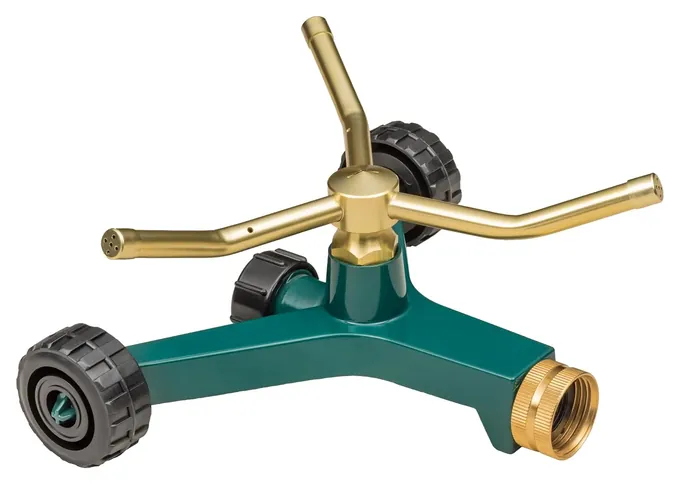
Only three hose-following tractors are still sold to homeowners, so the rest of the list covers the jobs they can't: the Orbit 58257N for small yards and the Strongway Wheeled Sprinkler for pasture. To settle Nelson versus Orbit we weighed the two makers' coverage and warranty terms against thousands of owner reviews, where the Orbit's habit of hopping off the hose came up again and again. A federal recall search found nothing for any brand here.
Earlier notes
October 5, 2020, by Karen Bennett:
Unlike stationary sprinklers, these traveling models can water either small or large yards without your needing to keep manually moving them to cover all of your grass evenly. In today’s update, we moved the Orbit 58322 into a more prominent spot, thanks to its rustproof cast iron body, easily adjustable speed settings, and convenient automatic shutoff capability. It’s a cinch to adjust the spray diameter by twisting each spray arm up or down, accordingly. You can set up the included ramp in any spot along the hose path to trigger a lever to stop it from proceeding, so you won’t need to worry about being outside to shut it off when it’s done watering. We’re also still partial to the Nelson RainTrain, which features a cheery yellow color that’s easy to spot, and features a powder-coated exterior that resists chipping and other damage. Similar to the Orbit model, you can turn the arms to set the spray diameter. You can buy it with confidence, thanks to its lifetime warranty. The Watex WX044 still holds a prominent spot on the list, as well. This one is good for use with large yards, since it can traverse a 200-foot hose path and cover an area up to almost 12,000 square feet. Many users appreciate the cosmetic steering wheel and exhaust pipe that make it resemble a real tractor.
The Melnor Lawn Rescue features high-traction back wheels that help it make its way across terrain effortlessly, and you can also set it to the handy neutral mode for stationary watering. Like the RainTain model, this one is backed by a lifetime warranty, and some proceeds are donated to charity. It’s quite an investment, but the Underhill Tracker can handle football fields and farm fields with ease, and can save you the hassle and money of installing an underground irrigation system. It comes with the required nylon cable, as well as an anchor stake for stability.
October 28, 2018, by Jeff Newburgh:
Added the Watex WX044 and Nelson Rain Train for their practicality for consumer applications, durable construction, and ease of use. Despite its price point, also included the Underhill Tracker for its power and ability to cover large swaths of land (i.e. fields and cemeteries).
How A Hose-Guided Sprinkler Works, And Where It Struggles
That area assumes a long route and the arms set wide; a short or tight route covers far less.
A traveling sprinkler has no motor and no battery. Water from the hose spins the spray arms on top and turns a small gearbox that drives the rear wheels, while the front wheel rides on the hose itself. You lay the hose in the shape you want watered, S-curves and loops included, and the sprinkler follows it. A plastic ramp clipped onto the hose at the end of the route trips a lever that closes the valve. Melnor rates its Lawn Rescue for up to 200 feet of hose and 13,500 square feet of lawn, the same figures Nelson gives for the Rain Train. That area assumes a long route and the arms set wide; a short or tight route covers far less.
The hose matters more than most buyers expect. Melnor asks for a 5/8-inch reinforced hose. A thin or soft hose kinks under the weight, starves the arms, or lets the front wheel slip off. Leaving a loop of slack behind the sprinkler and laying wide, gentle curves helps, according to A Green Hand.
These machines like flat, open, mowed grass. They stall in tall or overgrown turf, struggle to hold a route on steep ground, and can't steer around beds, trees or toys left on the lawn. Melnor claims its wheels grip on slopes, but no maker publishes a slope limit. For small or crowded yards, a wheeled sprinkler you move by hand costs a fraction as much and does the job.
Nelson Rain Train Vs. Orbit 58322
This is the question most readers bring. On paper the two are near twins: cast-iron bodies, three settings (high, low and neutral, which stops the wheels so the sprinkler waters in place), a ramp shut-off and coverage of up to 13,500 square feet. The Nelson is a few pounds heavier, at about 19 pounds, and has aluminum spray arms and a powder-coated finish. The Orbit is about 16 pounds and comes with a six-year limited warranty, which Orbit states in writing; Nelson's sellers don't spell out its warranty terms.
The difference shows up in owner feedback. The Orbit's most common complaints are about staying on course: the front wheel jumps off the hose on uneven ground, the arms can work loose and fall out, and it can crawl along slowly on the high setting. The Nelson's reported weak points are some plastic gears, rear wheels that sometimes lock, and a tendency to be overpowered by very high water pressure, as A Green Hand notes.
Our pick is the Nelson for a large, level lawn with normal water pressure. Choose the Orbit if the long warranty matters most to you, and lay its hose on smooth, mowed ground with gentle bends.
Watering Well: How Much, When, And Local Rules
A traveling sprinkler makes it easy to over-water, because it keeps going while you're away. The EPA's WaterSense program says most landscapes need about an inch of water a week, rainfall included, and suggests a simple check: set a few empty tuna cans on the lawn and time how long the sprinkler takes to fill them halfway, then set the speed to match (EPA WaterSense). Water early in the morning, not in the midday sun, when much of it evaporates, and skip windy days.
Many towns limit sprinkler days or hours in summer, and drought orders can ban them outright. Check your water utility's rules before you plan a long route, and keep the path away from sidewalks, driveways and the street, where runoff is wasted and can be cited.
Cast iron is heavy, so lift it with care, and the hose across the lawn is a trip hazard for kids and visitors. Before the first frost, drain the sprinkler and the hose and store them indoors, so trapped water can't freeze and crack the fittings. Farm-size wheeled sprinklers are a different matter: the Strongway's own nozzle chart starts at 16 gallons a minute with its smallest nozzle, more than a typical garden hose can deliver, so they belong on a pump, well or irrigation line.
How we researched this
We compared 14 sprinklers, including every hose-guided tractor model still sold to homeowners and the wheeled sprinklers people buy instead. We read the makers' specs and warranty terms, Melnor's product page, a review site's comparison and EPA WaterSense watering guidance, analyzed owner feedback patterns, and checked every brand for recalls with the U.S. Consumer Product Safety Commission. No independent lab has tested this category that we could find.
Frequently asked questions
Which is better, the Nelson Rain Train or the Orbit traveling sprinkler?
They have the same coverage, speeds and ramp shut-off. The Nelson is heavier and has aluminum arms; the Orbit has a six-year warranty but more owner complaints about the front wheel leaving the hose and arms falling out. We rank the Nelson first for large, level lawns.
How much lawn can a traveling sprinkler cover?
Nelson and Melnor rate theirs for up to 13,500 square feet on a route of up to 200 feet of hose, with the spray arms set wide. A shorter or tighter route covers less.
Does a traveling sprinkler need electricity?
No. Water pressure from the hose spins the arms and drives the wheels, and a ramp on the hose shuts the water off at the end of the route.
What hose works best?
A 5/8-inch reinforced hose, which Melnor recommends. Thin or soft hoses kink, cut the water flow and let the front wheel slip off. Lay wide, gentle curves and leave some slack behind the sprinkler.
Do traveling sprinklers work on hills?
On gentle slopes, usually. Melnor says its wheels grip on slopes, while the Orbit is often hard to keep on route on inclines. No maker publishes a slope limit, so steep yards are better served by fixed or hand-moved sprinklers.
Is the Watex WX044 still sold?
Not as of October 2026; it is listed as unavailable. The Nelson, Orbit and Melnor tractors are the hose-guided models still on sale.